
A mudroom is one of those spaces that can either set the tone for your entire home or completely unravel it. If yours currently looks like a shoe graveyard with coats piled on every surface, these mudroom organization ideas will help. The goal is simple: create a system where everything that comes in the door has a designated spot, so clutter never makes it past the entryway. These 25 ideas are practical, budget-friendly, and designed for real American homes.
What are mudroom organization ideas? Mudroom organization ideas are storage strategies that use hooks, cubbies, benches, baskets, and wall systems to control the daily flow of coats, shoes, bags, and gear that enters your home. A well-organized mudroom acts as a buffer zone between the outside world and your living space, keeping dirt, clutter, and chaos contained at the door.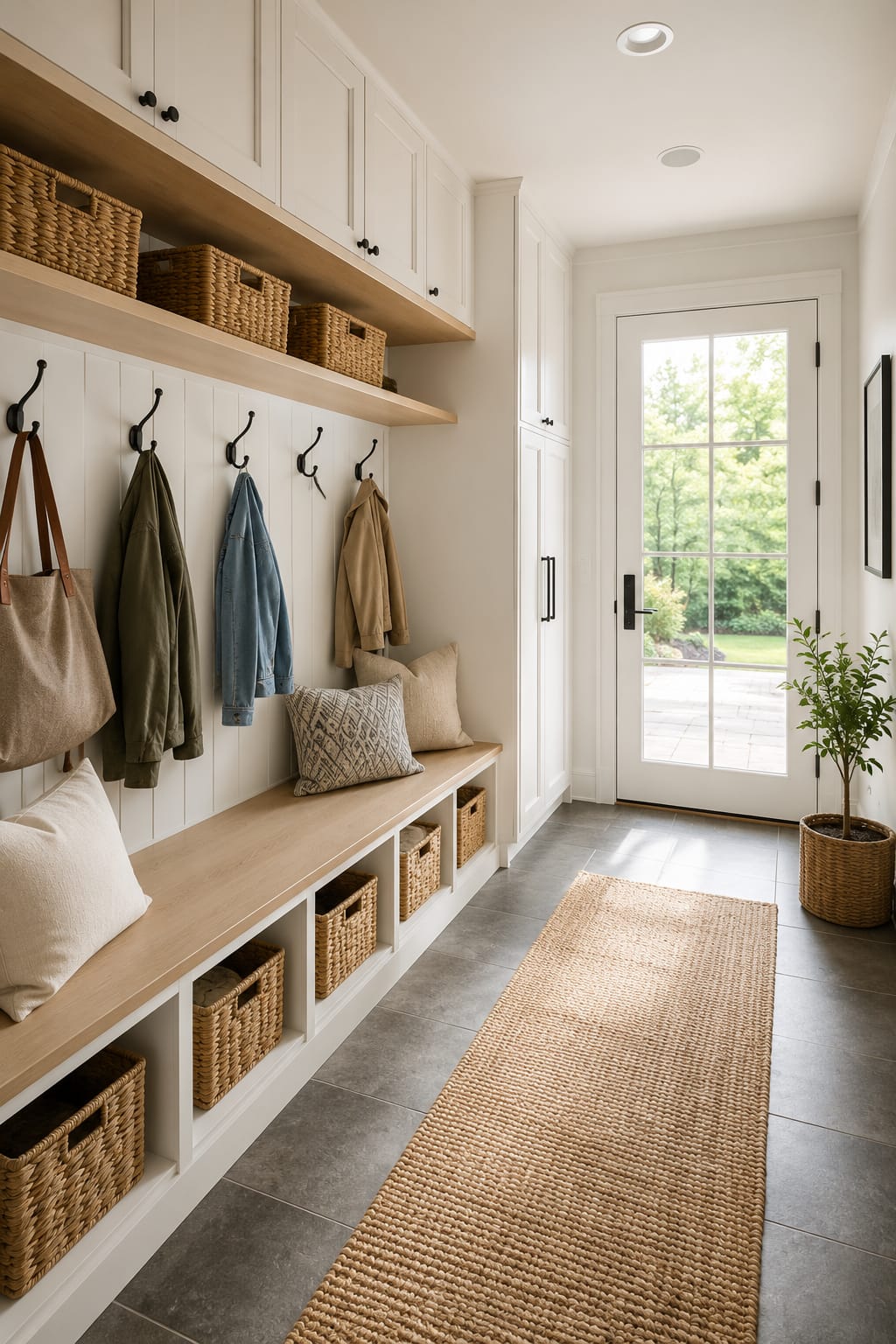
25 Mudroom Organization Ideas
1. Start With a Full Mudroom Cleanout
Before adding a single hook or basket, pull everything out and sort it into keep, donate, and toss piles. I’ve found that most mudrooms hold at least one season’s worth of items that nobody uses anymore. Clearing out the excess immediately reveals how much usable space you actually have to work with.
Bonus Tip: Take photos of your empty mudroom before organizing. Measurements and photos together make it much easier to plan storage layouts and shop for the right products without guessing.
2. Assign Every Family Member Their Own Zone
The single most effective mudroom organization tip I’ve come across is giving each person their own dedicated space. A cubby, a set of hooks, and a basket per person means everyone knows exactly where their stuff goes. In a family of four, four vertical zones side by side work better than one shared area where everything gets mixed together. If your home does not have a dedicated mudroom, many of these same zoning ideas also work in an entryway. See our Entryway Organization Ideas guide for more inspiration.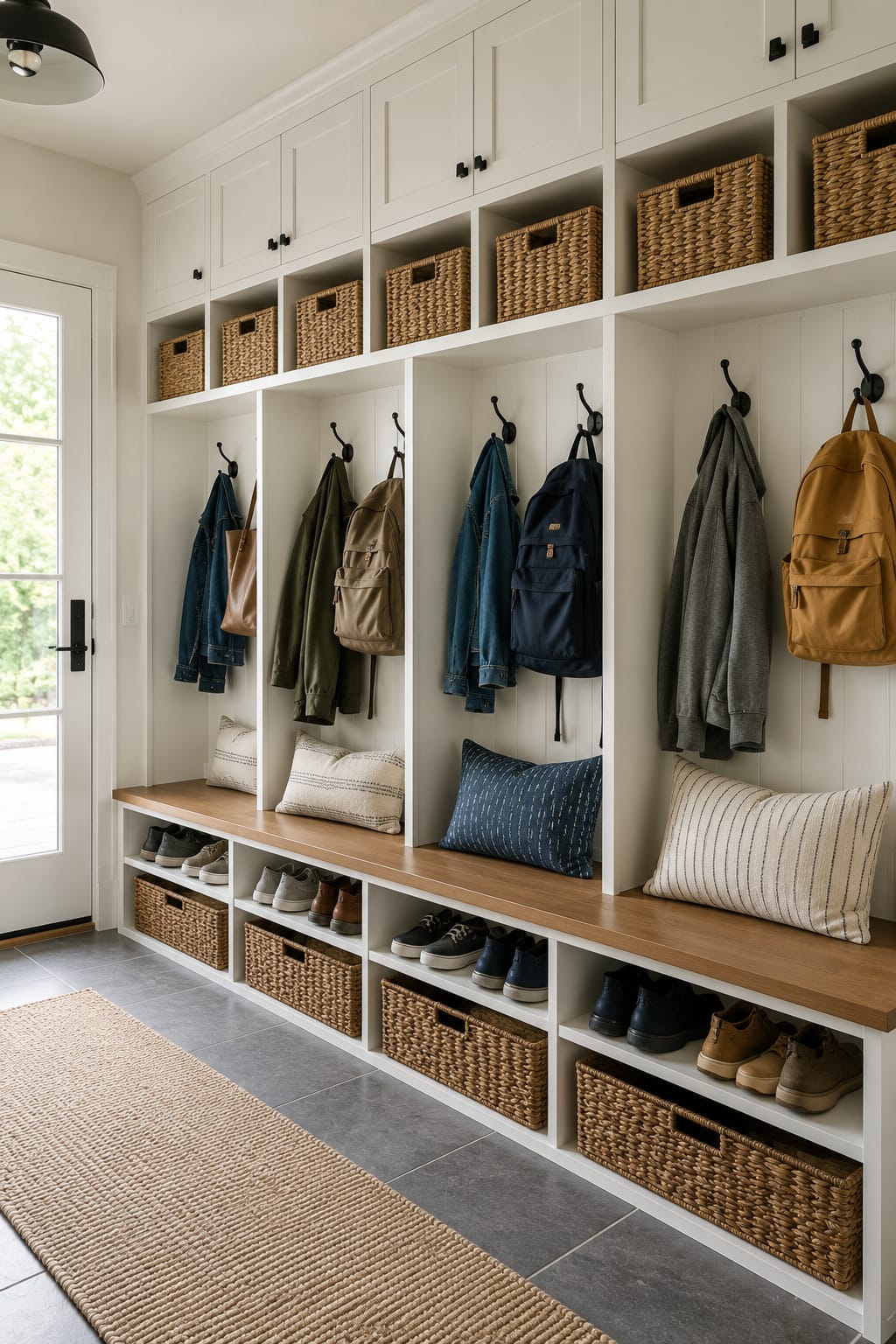
Bonus Tip: Label each zone with the person’s name. In my experience, labeled zones reduce the “that’s not mine” argument significantly and make it easier for kids to take ownership of their space.
3. Install a Wall-Mounted Hook Rail
A wall-mounted hook rail is the backbone of any functional mudroom. It keeps coats, bags, and backpacks off the floor and at eye level where they are easy to grab on the way out. A six-hook rail in a standard 36-inch wide mudroom handles a family of four comfortably with room for guests.
Bonus Tip: Mount the rail at two heights if you have young children. A lower rail at 36 to 40 inches keeps kids’ coats within reach, and they are far more likely to hang things up when the hook is at their level.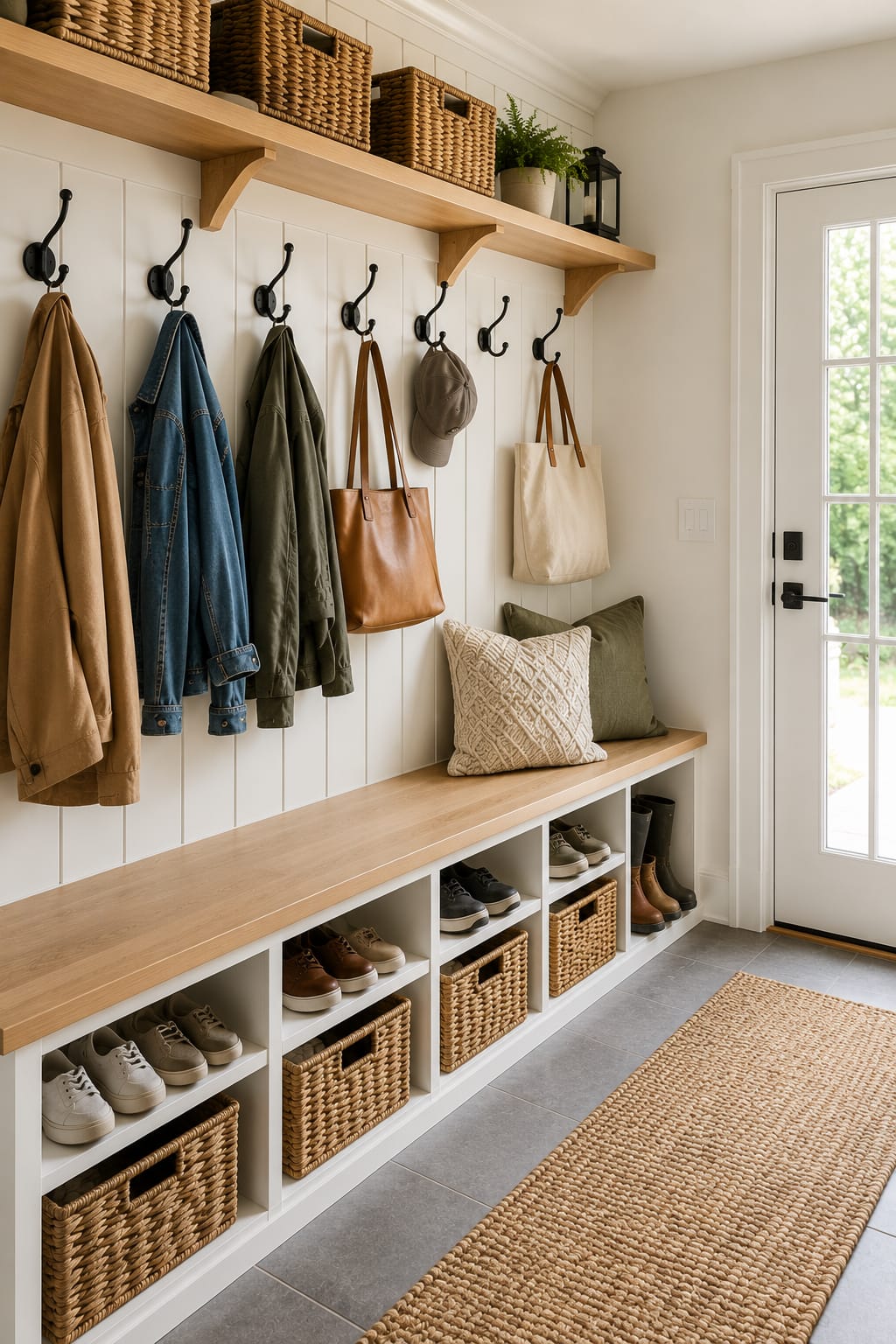
Expert Tip: Space hooks at least 6 inches apart to prevent coats from overlapping and falling off. Crowded hooks defeat the purpose of having them because bulky winter coats push each other off when the rail is too full.
4. Add a Storage Bench With Cubbies
A storage bench with cubbies below is one of the hardest-working pieces of furniture in any mudroom. The bench gives you a place to sit while putting on shoes, and the cubbies below hold shoes, boots, or baskets for each family member. A 48-inch wide bench with four cubbies fits comfortably in most standard mudrooms and handles a family of four.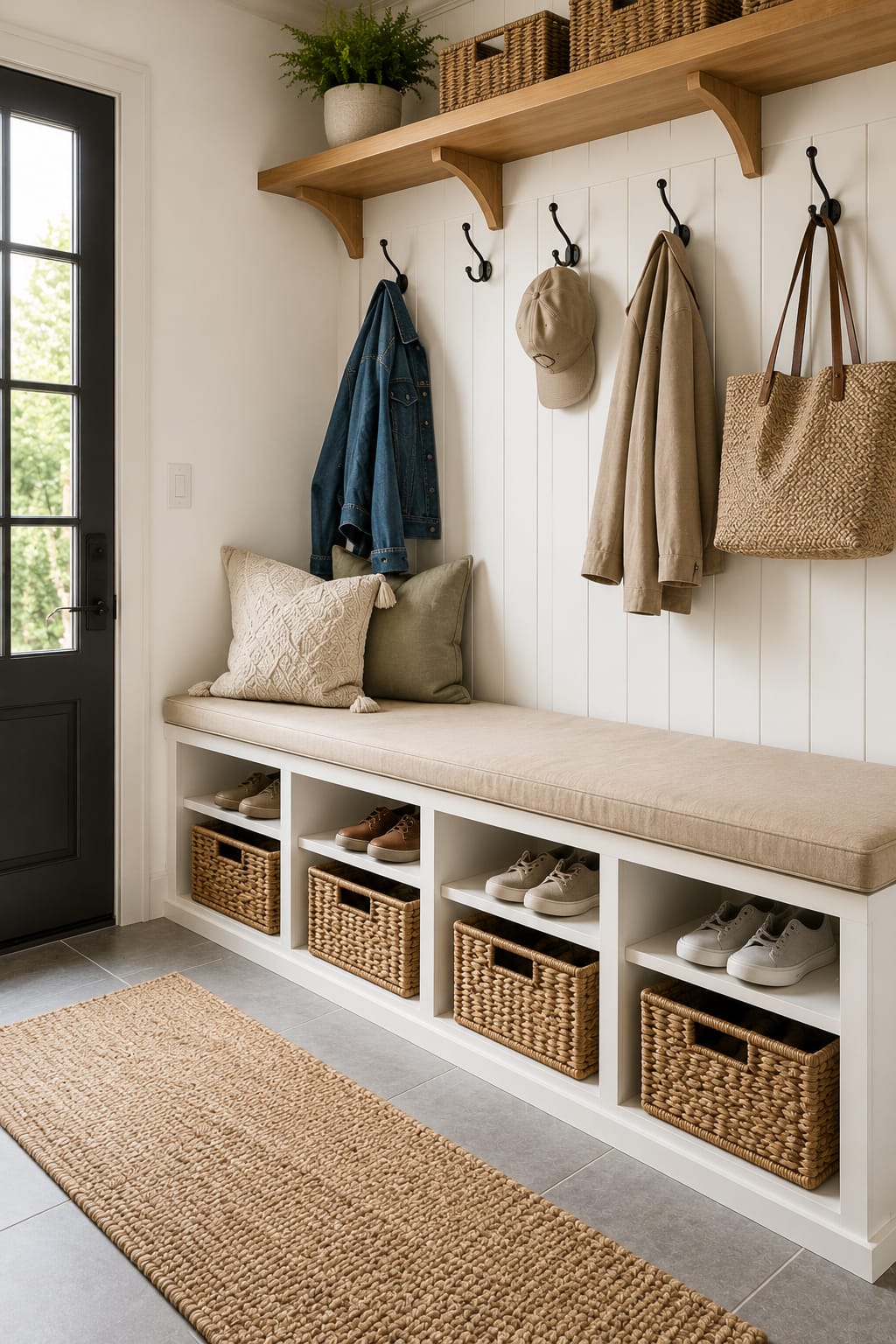
Bonus Tip: Line the bottom of each cubby with a small boot tray to catch mud, snow, and moisture. I’ve found this single addition dramatically reduces the amount of dirt that tracks further into the house.
5. Mount a Pegboard for Flexible Storage
A pegboard mounted in the mudroom gives you completely customizable storage that adapts to your family’s changing needs. Hang hooks for bags, small baskets for sunglasses and keys, and shelves for hats and gloves. Unlike fixed cabinets, you can rearrange the entire layout in minutes without drilling new holes.
Bonus Tip: Paint the pegboard the same color as your wall for a cleaner, more intentional look. A white pegboard on a white wall almost disappears visually while still providing all the functionality.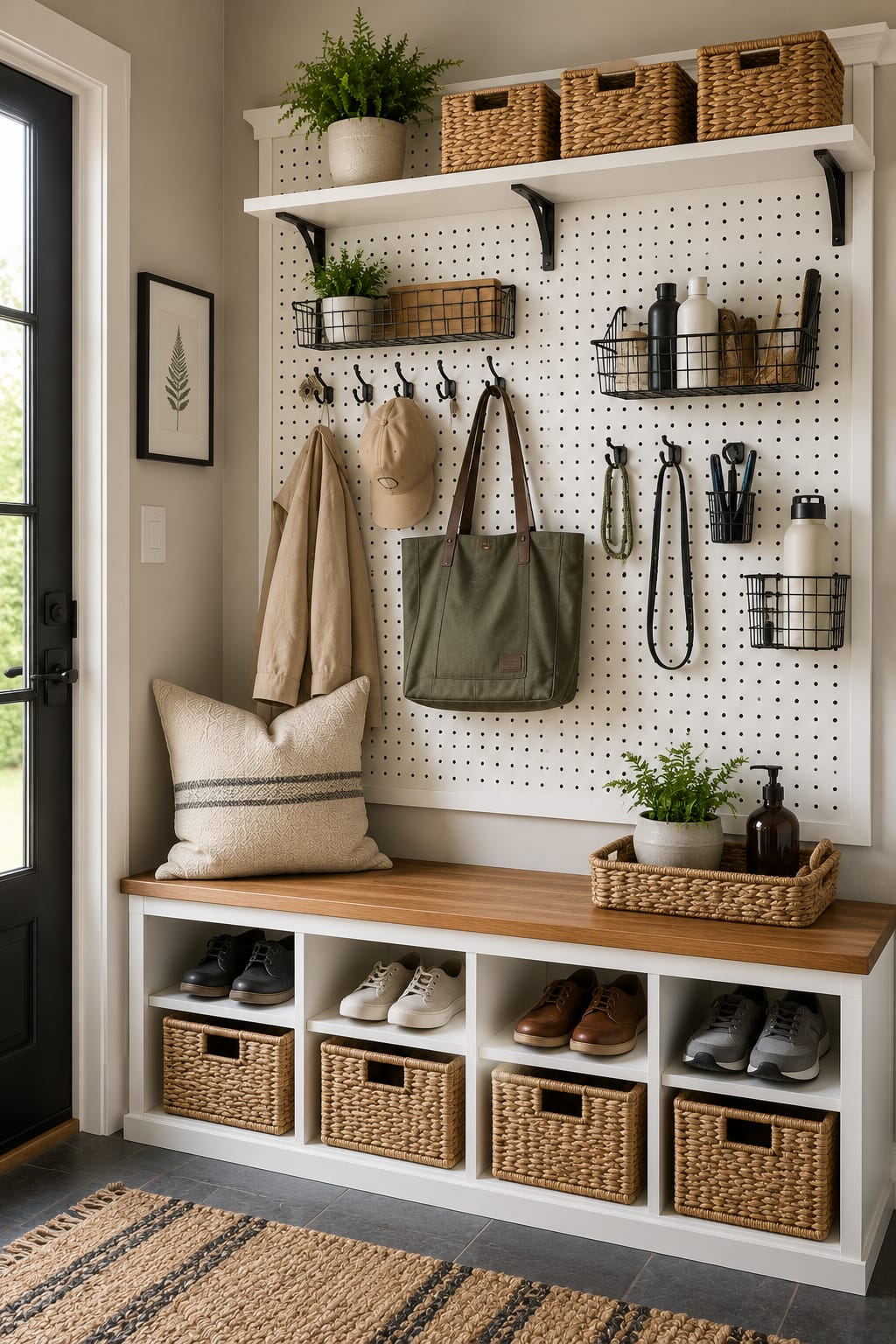
Expert Tip: Use a pegboard section specifically for sporting equipment like helmets, shin guards, and small balls. In my experience, sports gear is the second biggest source of mudroom clutter after shoes, and having a dedicated spot for it prevents the pile-up that happens before and after practices.
6. Create a Dedicated Shoe Zone
Shoes left anywhere and everywhere are the fastest way to make a mudroom feel chaotic. Designating a specific zone for shoes, whether that’s a wall-mounted shoe rack, a boot tray, or individual cubbies, trains everyone in the household to drop shoes in one place. A four-tier shoe rack holds 16 to 20 pairs in a 24-inch wide footprint.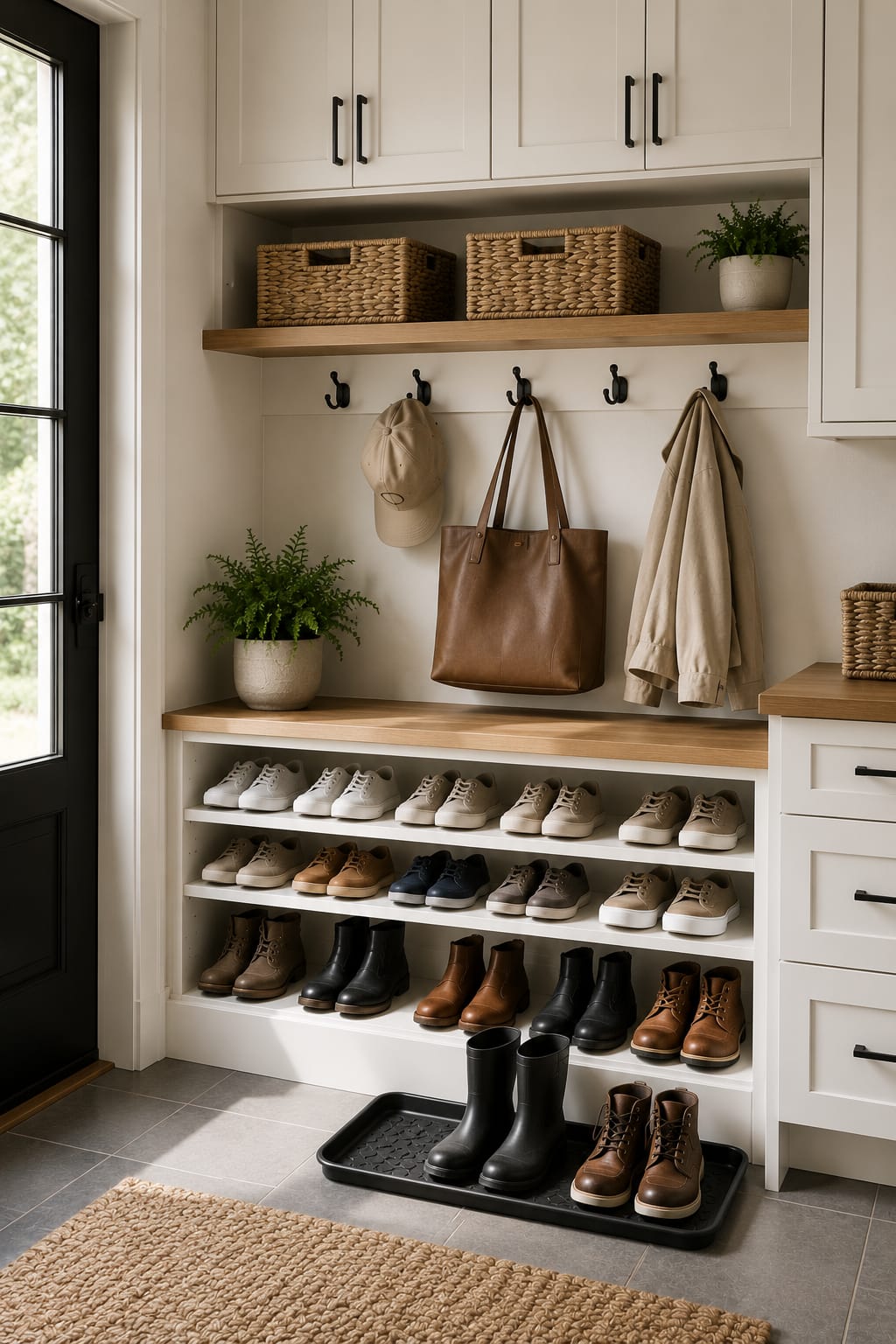
Bonus Tip: Keep a boot scraper just outside the door and a mat inside. In my experience, having both dramatically cuts down on the amount of mud and debris that ever reaches the shoe storage area in the first place.
7. Use Labeled Baskets for Each Category
Open baskets with clear labels keep small, loose items like hats, gloves, scarves, and sunglasses organized without the need for lids or latches. Label one basket per category and place them on shelves or in cubbies at eye level. I’ve found that labeled baskets are especially effective for kids because they can see exactly where things go even before they can read.
Bonus Tip: Use baskets with handles so the whole container can be pulled out easily when you’re searching for something buried at the back. Fixed baskets without handles get ignored once items pile up inside them.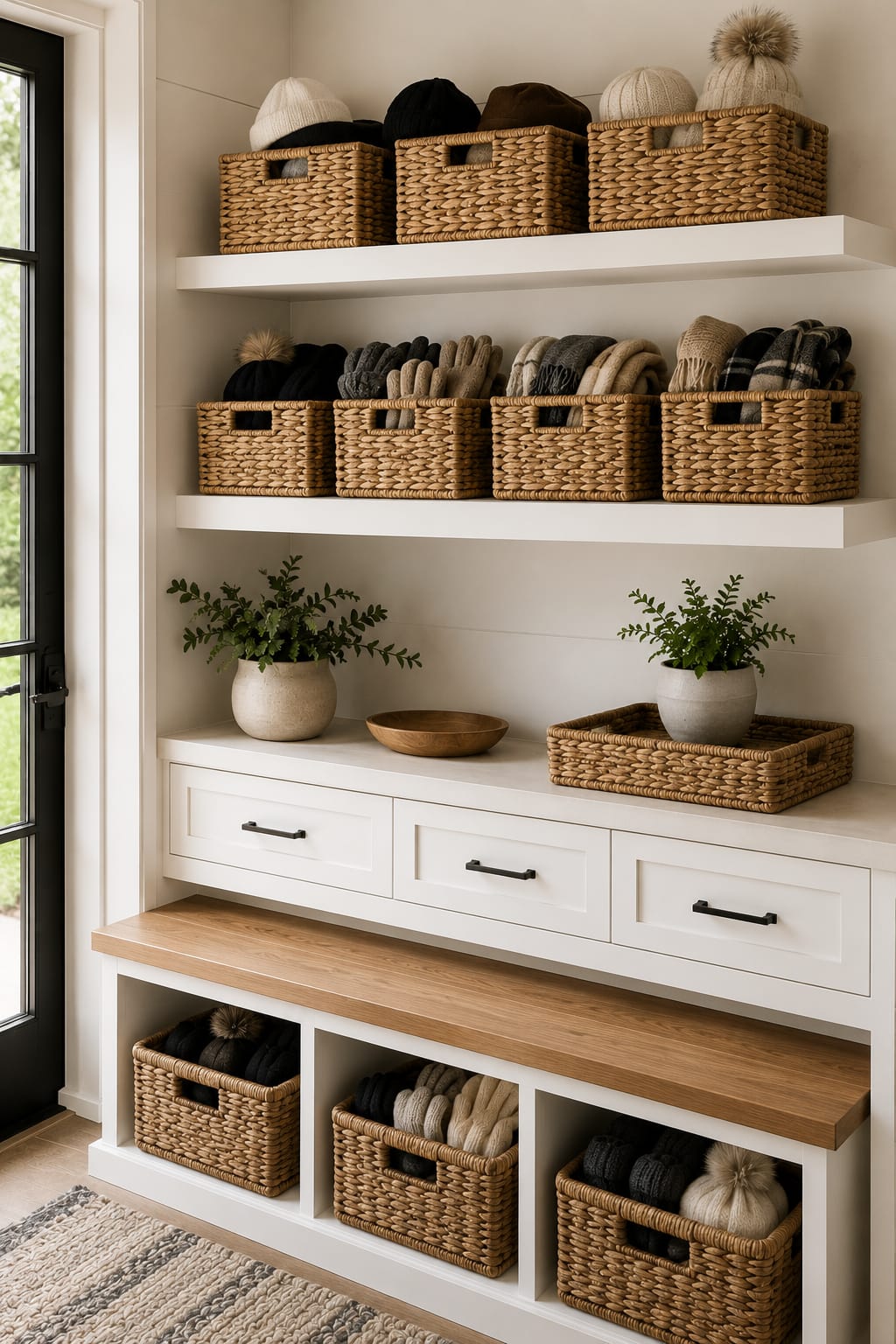
Budget Tip: Wire baskets from a discount home store cost $5 to $15 each and work just as well as premium options. Add a printed label or a small chalkboard tag and they look intentional and polished without the premium price tag.
8. Install a Coat Closet System If Space Allows
If your mudroom has a closet, a custom closet system makes far better use of the space than a single hanging rod. Double hanging rods, pull-out shoe shelves, and a built-in shelf above maximize every inch. In my experience, a well-organized coat closet holds three times as much as a standard one-rod closet and stays neater because everything has a specific home.
Bonus Tip: Store out-of-season coats and jackets in a hall closet or bedroom and keep only the current season’s outerwear in the mudroom closet. Mudroom closets get overwhelmed quickly when they hold items for every season at once.
9. Hang a Mirror to Add Function and Space
A mirror in the mudroom serves a practical purpose and makes the space feel larger. Checking your appearance before leaving the house is something everyone does, and having a mirror in the mudroom means you’re not running back to the bathroom. A 24×36 inch wall mirror adds significant visual depth to a small mudroom.
Bonus Tip: Choose a mirror with a small shelf or hooks built into the frame. The combination of a mirror and a few hooks in one unit takes up minimal wall space but adds both function and style to the mudroom.
Expert Tip: Position the mirror at a height that works for the tallest person in your household while still being useful for children. A mirror hung too high becomes useless for everyone under five feet tall, which in most families includes at least one or two people.
10. Build or Install a Locker System
Individual locker-style units give each family member a fully enclosed personal storage space with a door. This works especially well for families with school-age children because backpacks, sports gear, lunchboxes, and library books all go behind one door and stay contained. A set of four lockers in a standard mudroom runs 72 to 96 inches wide and holds a family of four comfortably.
Bonus Tip: Add a small hook inside each locker door for keys, lanyards, or earbuds. The inside of locker doors is free storage space that most people never use.
11. Create a Command Center for Keys and Mail
A command center near the mudroom door handles the small items that create big chaos when they don’t have a home. A key hook, a small mail sorter, and a notepad or small whiteboard keep daily essentials organized and easy to find. I’ve noticed that homes without a command center tend to have keys on every surface and mail piled on the bench.
Bonus Tip: Mount the command center at eye level right next to the door so using it becomes automatic. The closer it is to the point of entry and exit, the more consistently everyone in the household will actually use it.
Pro Tip: When planning your mudroom layout, prioritize the items your family uses every single day first. Hooks for bags and coats, a shoe zone, and a key drop need to be the most accessible elements. Seasonal and occasional items like sports gear and holiday accessories can go in less prime locations.
12. Designate a Seasonal Storage Bin
Every mudroom needs a place for seasonal items that rotate in and out throughout the year. A labeled bin or basket for winter accessories like hats, gloves, and scarves keeps them contained and easy to swap out when the season changes. In my experience, a single 18-gallon bin per season handles most families’ seasonal mudroom needs perfectly.
Bonus Tip: At the end of each season, wash or air out seasonal items before storing them. Mudroom gear gets a lot of use and storing dirty gloves or damp scarves leads to odors and mildew inside the bin.
13. Mount Hooks at Kids’ Height
Standard hook heights work for adults, but children need hooks at their level to actually use them. I’ve found that kids are significantly more likely to hang up their own coats and bags when the hook is between 36 and 42 inches from the floor, which puts it at comfortable arm height for most elementary school children. Adult hooks at 60 to 66 inches are simply unreachable for small kids.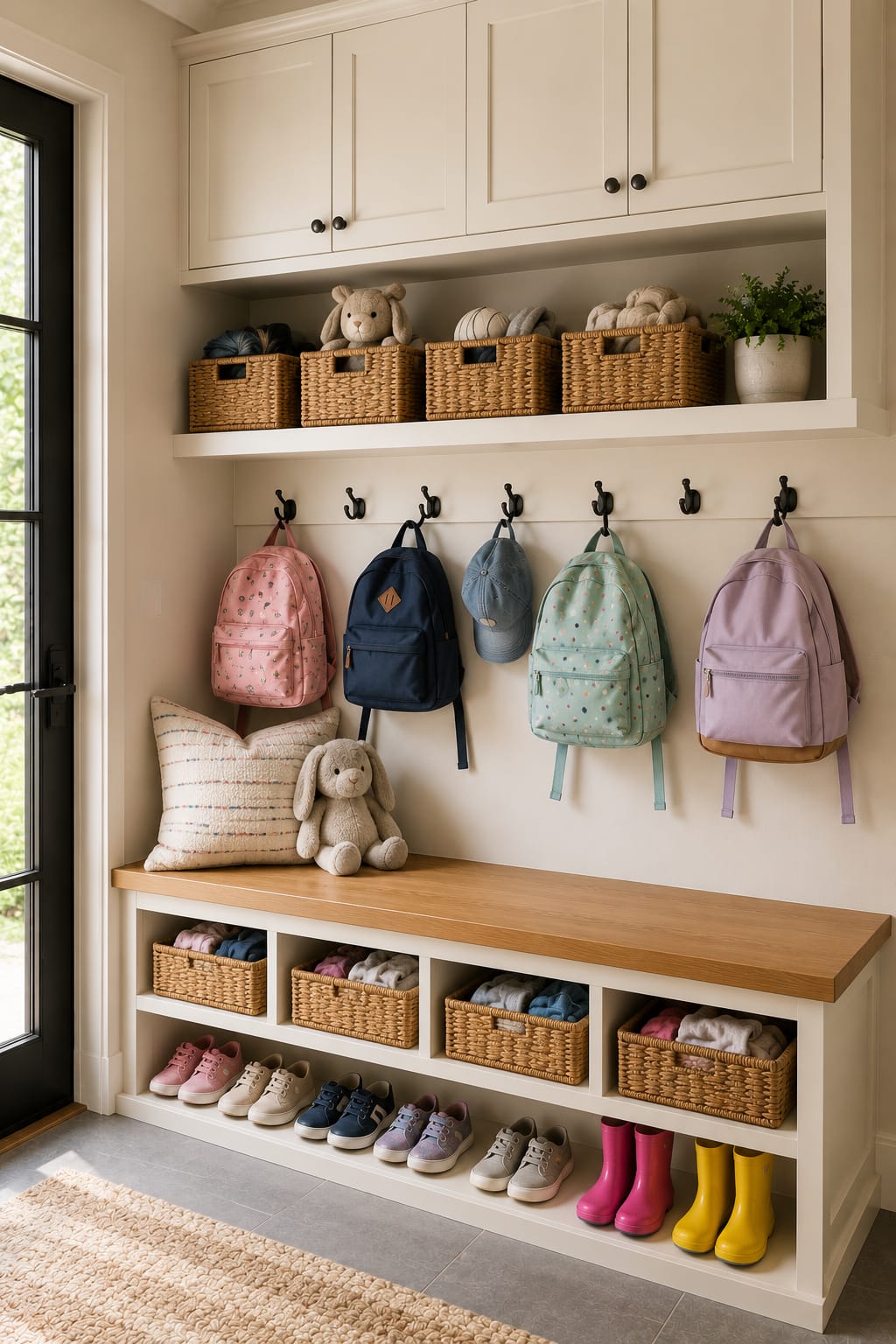
Bonus Tip: Use brightly colored or uniquely shaped hooks for kids’ sections so they can identify their personal hook at a glance without reading a label. A star-shaped hook for one child and a heart-shaped hook for another makes the system fun and functional at the same time.
14. Store Sports Equipment in a Dedicated Zone
Sports gear is one of the most common sources of mudroom clutter in American families. Helmets, cleats, shin guards, and sports bags scattered across the floor create both a tripping hazard and visual chaos. A dedicated sports zone with labeled hooks for bags and a shelf for helmets keeps gear contained and ready to grab before practices.
Bonus Tip: After each season ends, move out-of-season sports gear to the garage or a storage closet and bring in the next season’s equipment. Keeping only active-season gear in the mudroom prevents the space from becoming overwhelmed. For larger gear collections, our Garage Organization Ideas guide covers dedicated sports zones that work alongside your mudroom setup.
Safety Tip: Avoid storing sports helmets on high shelves where they can fall onto people below. Helmets are heavy and can cause injury if they drop from shelf height. Store them at a low, stable level or hang them on secure hooks at a safe height.
15. Install a Charging Station for Devices
Phones, tablets, earbuds, and smart watches need charging daily, and a mudroom charging station keeps cords and devices off the kitchen counter where they tend to pile up. A small wall-mounted shelf with a power strip and cable management clips creates a clean, organized charging zone near the door. This is especially practical for families with school-age children who charge devices overnight.
Bonus Tip: Label each charging cable with a small tag showing whose device it belongs to. In households with multiple devices and multiple people, unlabeled cables create daily friction when everyone is trying to leave in the morning.
16. Use a Boot Tray to Contain Wet Shoes
A boot tray placed just inside the door catches wet, muddy, and snowy footwear before it tracks moisture further into the house. A standard 24×15 inch boot tray holds three to four pairs of shoes and is easy to wipe clean or rinse off outside. In my experience, a boot tray is one of the highest-impact, lowest-cost mudroom additions available.
Bonus Tip: Place a small absorbent mat under the boot tray to catch any overflow drips. During heavy rain or snow seasons, a single boot tray is rarely enough on its own without something underneath it to protect the floor.
Expert Tip: Rubber boot trays with raised edges work better than flat fabric mats in wet climates because they contain water rather than absorbing it. A soaking wet mat spreads moisture and creates a slip hazard, while a rubber tray keeps everything contained and easy to dump outside.
17. Keep a Cleaning Supply Caddy in the Mudroom
A small caddy with a microfiber cloth, a multi-surface spray, and a small brush handles the everyday cleaning that mudrooms require. Mudrooms collect dirt, mud, and debris faster than almost any other room in the house, and having cleaning supplies right there means quick cleanups happen immediately instead of being postponed. I’ve found that a two-minute wipe-down at the end of each day keeps a mudroom looking clean with almost no effort. The same habit works just as well in the laundry room. See our Laundry Room Organization Ideas for more tips on keeping high-traffic utility spaces clean and organized.
Bonus Tip: Store the cleaning caddy inside a cabinet or on a low shelf rather than in plain sight. A visible caddy adds visual clutter to a space you are trying to keep looking organized.
18. Make the Most of a Small Mudroom
Not every home has a dedicated mudroom, and many families work with a small landing zone near the back door or in a hallway. Even a 24-inch wide wall can hold a hook rail, a small shoe rack, and a basket for everyday items. In my experience, the key to small mudroom organization is ruthless editing. Only the daily essentials belong in a small space.
Bonus Tip: Use vertical space aggressively in a small mudroom. A tall, narrow cabinet with hooks on the door and shelves inside can hold everything a standard mudroom holds in a footprint of just 12 to 18 inches wide.
19. Add a Rug That Hides Dirt
The floor of a mudroom takes a beating and a good rug is one of the best functional investments you can make. A dark-colored or patterned rug hides dirt between cleanings and adds warmth and texture to a utilitarian space. Low-pile, washable rugs work best in mudrooms because they lay flat, dry quickly, and can go straight into the washing machine.
Bonus Tip: Size the rug to cover the area from the door to the bench so anyone removing shoes is standing on the rug rather than the floor. A rug that’s too small provides none of the protection of a properly sized one.
20. Group School Items Together
For families with school-age children, a dedicated school zone in the mudroom prevents the morning chaos of searching for homework, permission slips, and library books. A small shelf or cubby labeled “school stuff” with a hook for the backpack and a basket for papers keeps everything together and ready for the next morning. I’ve found that this single habit reduces morning stress more than almost any other mudroom change.
Bonus Tip: Make emptying and repacking the backpack part of the after-school routine rather than a morning task. When the backpack is ready to go the night before, mornings become significantly calmer for everyone in the household.
Expert Tip: Place a small bin or tray near the school zone specifically for items that need to go back to school, like library books, signed permission slips, and borrowed sports equipment. A visible reminder bin prevents the frustration of arriving at school without something important.
21. Store Pet Supplies at the Door
If you have a dog, the mudroom is the natural home for leashes, waste bags, a small towel for muddy paws, and even a container of treats. Keeping pet supplies right at the door means walks start and end without hunting for gear in multiple rooms. A small basket or a section of the hook rail dedicated to pet items keeps everything contained and accessible.
Bonus Tip: Hang a small towel hook near the door specifically for drying off dogs after rainy walks. A dedicated paw-drying towel that lives at the door is one of those small changes that makes a surprisingly big difference to how clean the rest of the house stays.
22. Install Overhead Shelving for Seasonal Items
The wall space above a hook rail or a bench is often completely unused in most mudrooms. A shelf installed at 72 to 84 inches holds seasonal items like travel bags, sports helmets, and holiday gear that you only need a few times a year. In a small mudroom, overhead storage is often the only option for items that need to be accessible but not necessarily within daily reach.
Bonus Tip: Use uniform bins with lids on overhead shelves to keep contents dust-free and the shelf looking tidy. Open bins on high shelves collect dust quickly and look messy from below when they are not neatly organized.
23. Create a Drop Zone for Daily Essentials
A dedicated drop zone for wallets, sunglasses, keys, and everyday carry items prevents the daily scramble before leaving the house. A small tray or a shallow bowl on a shelf works perfectly for this purpose. I’ve found that when the drop zone is visible and positioned right at the door, people actually use it consistently rather than setting things down wherever is convenient.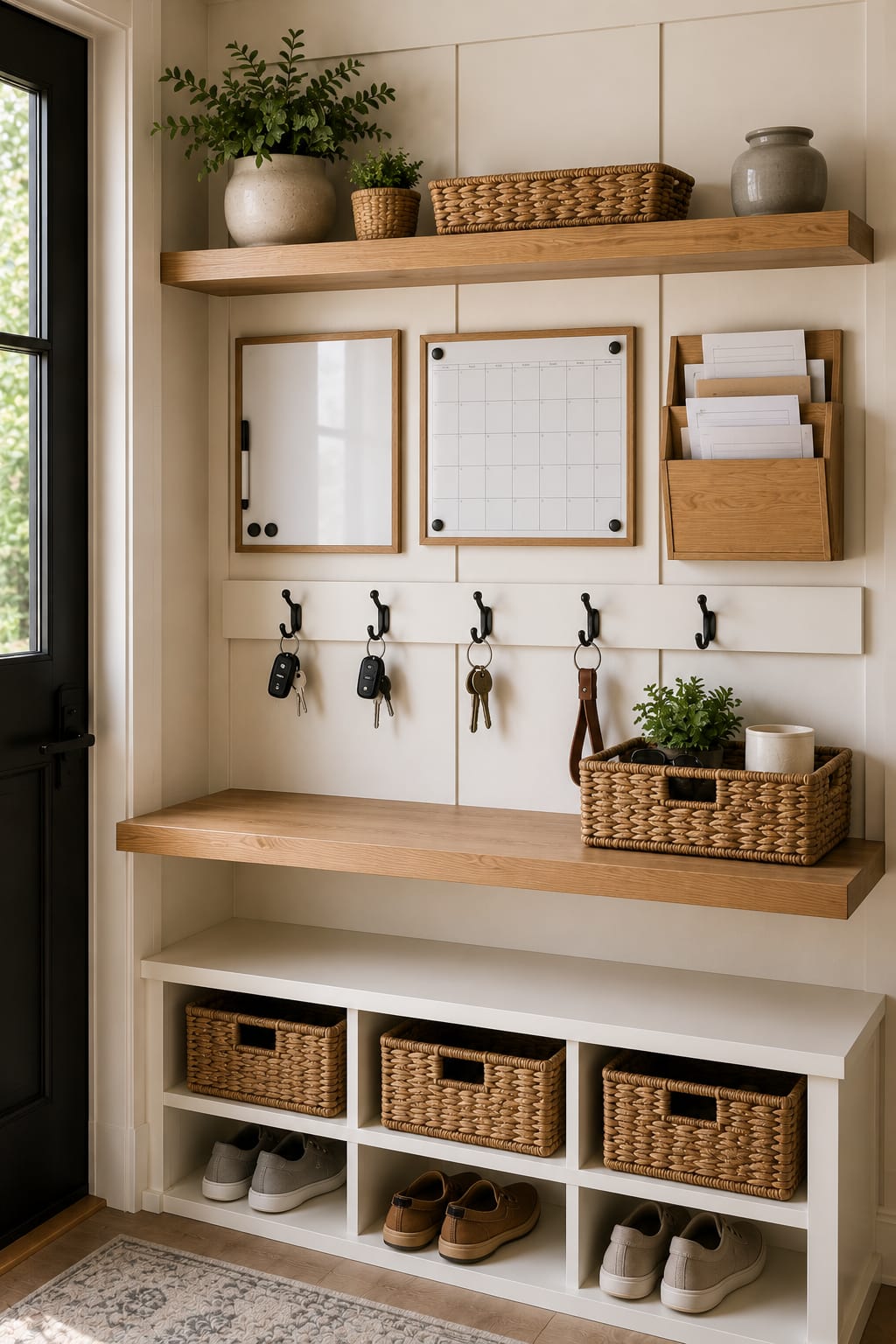
Bonus Tip: Keep the drop zone small and intentional: one tray, a key hook, and a small basket. A drop zone that becomes a catch-all for everything loses its purpose quickly. Edit it weekly and return stray items to their proper homes.
24. Use the Back of the Door
The back of the mudroom door, closet door, or interior door is free storage space that most people completely ignore. An over-door organizer with pockets holds umbrellas, reusable shopping bags, hand sanitizer, and other small items that otherwise clutter hooks and shelves. A standard over-door organizer with eight to ten pockets adds meaningful storage in a space with zero footprint.
Bonus Tip: Avoid overloading the back of the door with heavy items that put stress on the hinges. Lightweight items like bags, hats, and small accessories work perfectly. Heavy items like shoes or bottles belong on shelves or racks instead.
25. Schedule a Weekly Five-Minute Mudroom Reset
Even the best-organized mudroom drifts toward clutter within a few days of heavy use. A weekly five-minute reset that returns stray items to their zones, wipes down the bench, and sweeps the floor keeps the system functional without requiring a full reorganization. I’ve found that the families with the neatest mudrooms are not the ones with the most storage, but the ones with the most consistent maintenance habits.
Bonus Tip: Do the weekly reset on the same day as another household task, like grocery shopping or laundry, so it becomes part of an existing routine rather than something that gets forgotten.
Common Mistakes to Avoid
Skipping individual zones and creating one shared space for the whole family is the most common mudroom mistake. Shared spaces become nobody’s responsibility, and clutter builds quickly.
Buying storage products before measuring leads to hooks, benches, and racks that don’t fit. Always measure wall width, ceiling height, and door clearance before purchasing anything.
Ignoring vertical space wastes the most valuable storage real estate in any mudroom, especially in small spaces where floor and bench space is already limited.
Storing too many items in the mudroom turns it from a buffer zone into a storage room. Only daily-use items belong here. Seasonal and occasional items belong in a closet or garage.
Skipping labels means the system falls apart within weeks. Without labels, items end up in the wrong spots and the organized mudroom slowly reverts to chaos.
Quick Maintenance Tips
- Return every item to its designated zone immediately after use rather than setting it down temporarily
- Sweep or vacuum the mudroom floor every two to three days to prevent dirt from tracking deeper into the house
- Wipe down hooks, shelves, and the bench surface weekly with a damp microfiber cloth
- Rotate seasonal items at the start of each season so only current-season gear is accessible
- Do a full mudroom audit every three months to remove items that no longer belong
Quick Reference Checklist
- ✅ Assign every family member their own zone with a hook, cubby, and basket
- ✅ Designate specific spots for shoes, coats, bags, and daily essentials
- ✅ Label every basket, bin, and zone clearly
- ✅ Place a boot tray near the door for wet footwear
- ✅ Do a weekly five-minute reset to keep the system working
Best Mudroom Organizers at a Glance
| Organizer | Best For | Budget |
|---|---|---|
| Wall hook rail | Coats, bags, and backpacks | $ |
| Storage bench with cubbies | Shoes, boots, and family zones | $$ |
| Shoe rack or boot tray | Footwear organization | $ |
| Labeled baskets or bins | Hats, gloves, and small accessories | $ |
| Pegboard system | Flexible, customizable storage | $ |
| Wall-mounted coat rack | Small mudrooms with limited floor space | $ |
Recommended Products for Mudroom Organization
Wall hook rail: A wall-mounted hook rail with four to six hooks handles daily coat and bag storage for most families and installs in under 30 minutes with basic tools.
Storage bench with cubbies: Combines seating, shoe storage, and individual family zones in one piece of furniture that anchors the entire mudroom layout.
Shoe rack or boot tray: Keeps footwear contained in a designated zone and prevents mud, moisture, and debris from tracking further into the house.
Labeled baskets or bins: Woven or wire baskets with printed labels organize small accessories like hats, gloves, and scarves into visible, easy-to-access categories.
Pegboard system: A customizable wall storage solution that holds hooks, baskets, and shelves in any configuration and adapts easily as your storage needs change.
Wall-mounted coat rack: A slim, wall-mounted rack with hooks and a small shelf works well in narrow mudrooms or hallway landing zones where floor space is too tight for a bench.
Frequently Asked Questions
How do I organize a mudroom on a budget? Start with a hook rail and labeled baskets, which together cost under $50. A boot tray near the door and a small shelf above the hooks complete a functional mudroom system without expensive furniture or custom cabinetry.
What should go in a mudroom? A mudroom works best when it holds only daily-use items: coats, shoes, bags, keys, and seasonal accessories. Avoid using it as general storage for items you rarely need, which quickly overwhelms the space.
How do I organize a small mudroom? Focus on vertical space with a tall hook rail, overhead shelving, and an over-door organizer. A narrow bench with shoe storage below and hooks above handles most daily needs in a footprint as small as 24 inches wide.
What is the best storage for a mudroom? A combination of a hook rail, a storage bench with cubbies, and labeled baskets covers the needs of most households. Add a pegboard or locker system for families with more gear or more people sharing the space.
How do I keep a mudroom clean? A boot tray at the door, a washable rug, and a five-minute weekly reset keep most mudrooms clean with minimal effort. The key is making cleanup easy by keeping cleaning supplies nearby and having a clear home for every item.
Does a mudroom add value to a home? A functional, well-organized mudroom adds perceived value and appeal to buyers. According to the National Association of Realtors, storage and organization features are among the top priorities for home buyers in the United States.
Conclusion
A well-organized mudroom makes every single day a little easier. When coats have hooks, shoes have a tray, and bags have cubbies, the morning rush becomes manageable and the end-of-day chaos disappears. Start with one of these mudroom organization ideas today, whether that is installing a hook rail or adding a boot tray, and build the system from there.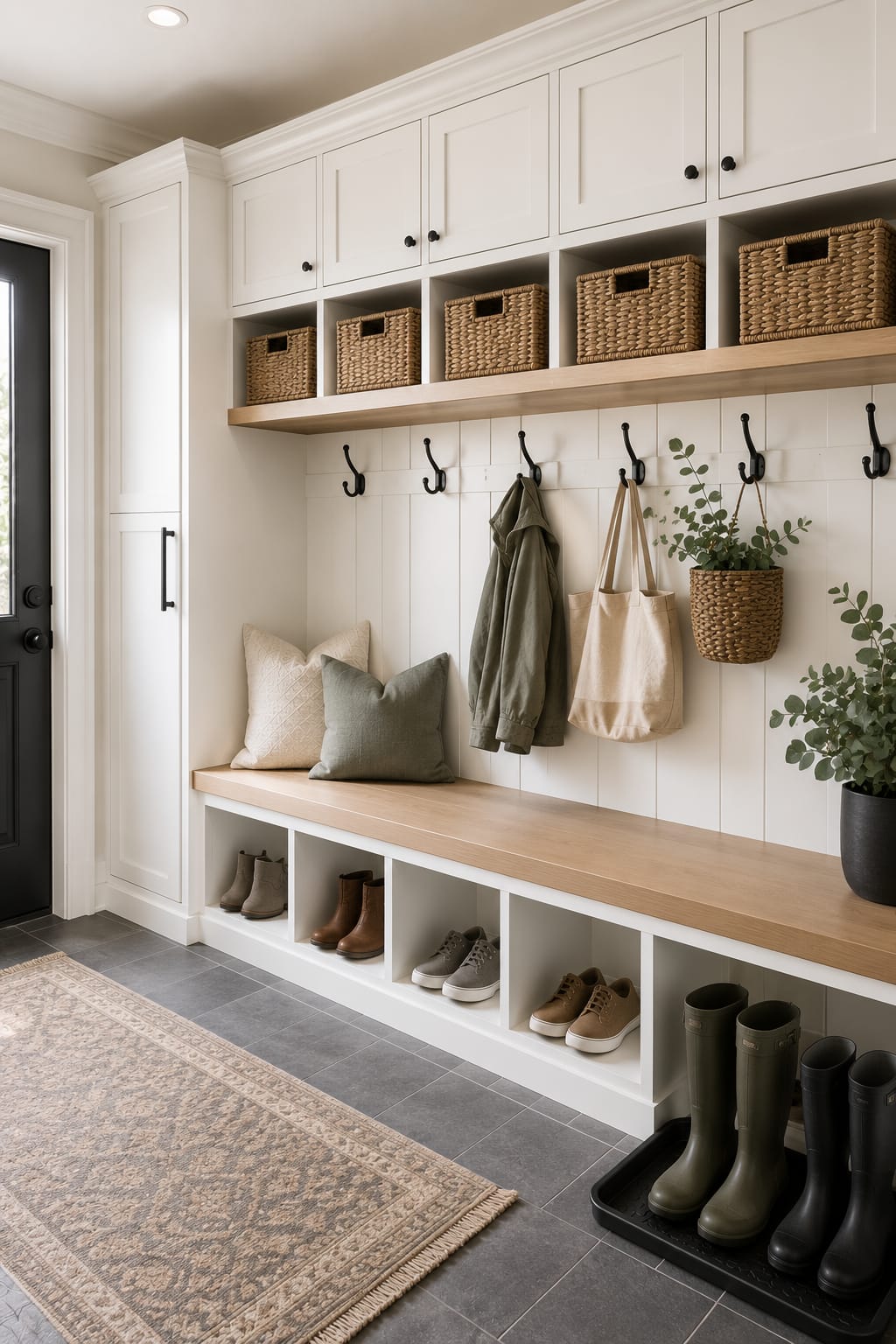
For more room-by-room organization guides, explore our articles on Entryway Organization Ideas, [Garage Organization Ideas], [Laundry Room Organization Ideas], [Linen Closet Organization Ideas], and [Bedroom Organization Ideas].

Hi, I’m Shankar, the founder of Nestory Home. I share practical home organization, storage, and home decor ideas to help you create a clean, functional, and beautiful home. Every guide is designed to be simple, budget-friendly, and easy to put into practice.