
A cluttered home office makes it harder to focus, harder to find what you need, and harder to feel motivated to sit down and work. If your desk disappears under piles of paper and your cables look like a spaghetti disaster, these small home office organization ideas are exactly what you need.
The goal is to create a workspace that supports your productivity instead of working against it. Good workspace organization starts with one simple principle: everything you use daily should be within reach, and everything else should be out of the way. These 25 practical ideas work for dedicated home offices, bedroom corners, and converted closets alike.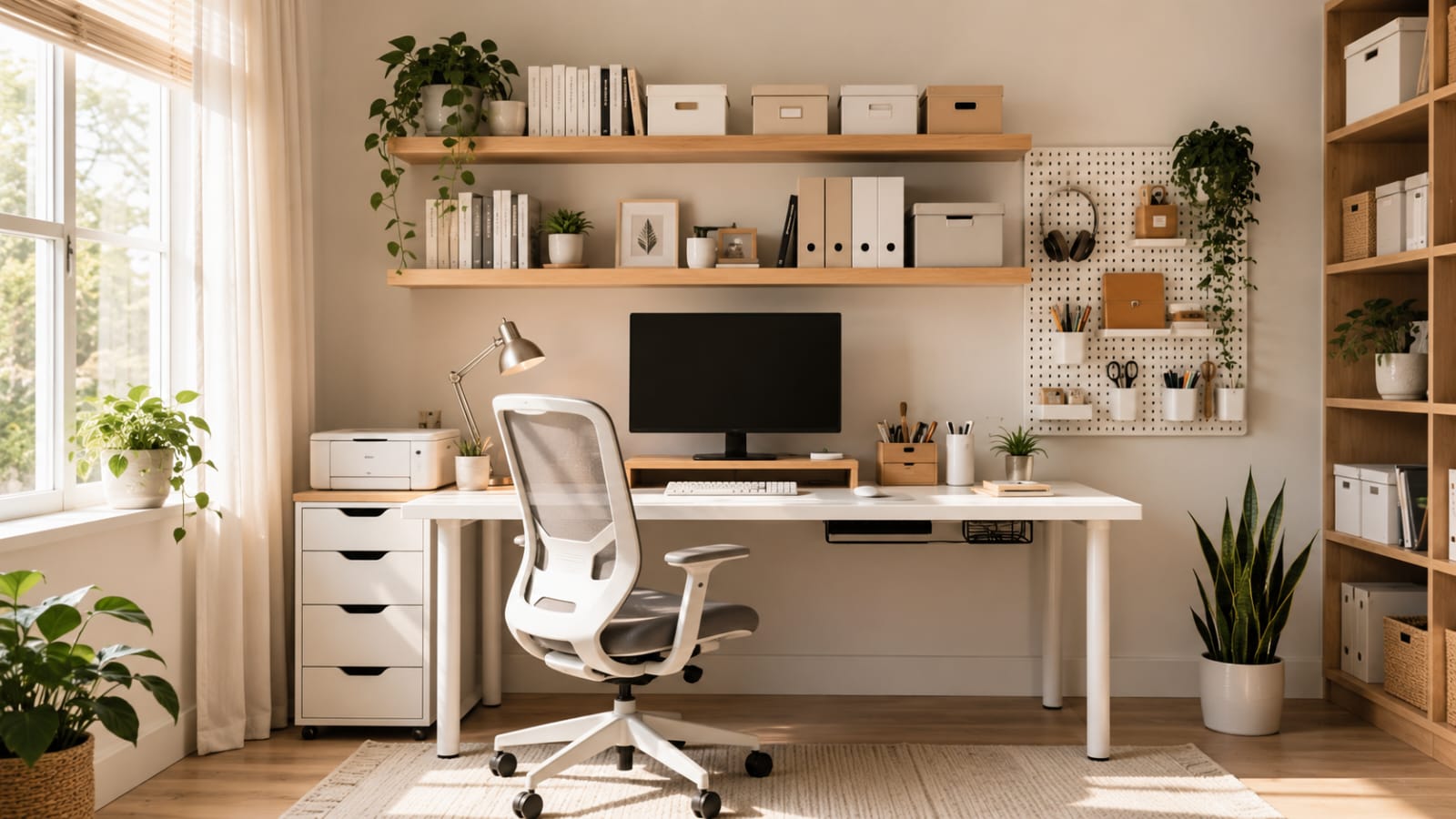
What are small home office organization ideas? Small home office organization ideas are storage and layout strategies that maximize every square foot of a compact workspace. They use vertical wall space, under-desk storage, cable management systems, and smart desk organization to keep a small office functional, clutter-free, and conducive to focused work.
Research from the Princeton University Neuroscience Institute suggests that cluttered workspaces increase distractions and reduce focus, making organization one of the most practical investments you can make in your home office setup.
These small home office organization ideas are ideal for remote workers, students, freelancers, content creators, and anyone working from a compact bedroom office, apartment, or shared living space. They also work well for apartment offices, study corners, and compact workspaces where every inch counts.
25 Small Home Office Organization Ideas
Quick Fact: Studies suggest people lose valuable productive time each day searching for misplaced items in cluttered workspaces. Creating an organized system saves time while reducing daily stress.
1. Start With a Full Desk and Office Cleanout
Before adding a single organizer or shelf, clear everything off your desk and out of your drawers. I’ve found that most home offices hold at least two categories of things that don’t belong there at all: household items that drifted in and work items from projects that ended months ago. Starting fresh reveals exactly how much usable space you actually have.
Bonus Tip: Sort everything into three piles: keep on the desk, store nearby, and remove from the office entirely. Only items you use daily belong on the desk surface.
2. Choose the Right Desk for Your Space
In a small home office, the desk is the most important decision you will make. A desk that is too large overwhelms the room and leaves no space for storage. I’ve found that a 48-inch wide desk hits the sweet spot for most small offices, wide enough for a monitor, a laptop, and basic supplies without taking over the room.
Bonus Tip: Consider a wall-mounted fold-down desk for very tight spaces. It provides a full work surface when open and disappears completely against the wall when folded up, freeing the room for other uses outside working hours.
3. Mount Floating Shelves Above the Desk
The wall above your desk is prime real estate that most people leave completely empty. Floating shelves mounted 12 to 18 inches above the desk surface hold books, binders, plants, and decorative storage without taking up any desk space. This is one of the most effective home office storage ideas for compact workspaces. I’ve found that two shelves spaced 10 inches apart above a standard desk doubles your effective storage without adding any floor footprint.
Bonus Tip: Keep the bottom shelf at eye level when seated so reference materials and frequently used items are visible and within easy reach without standing up.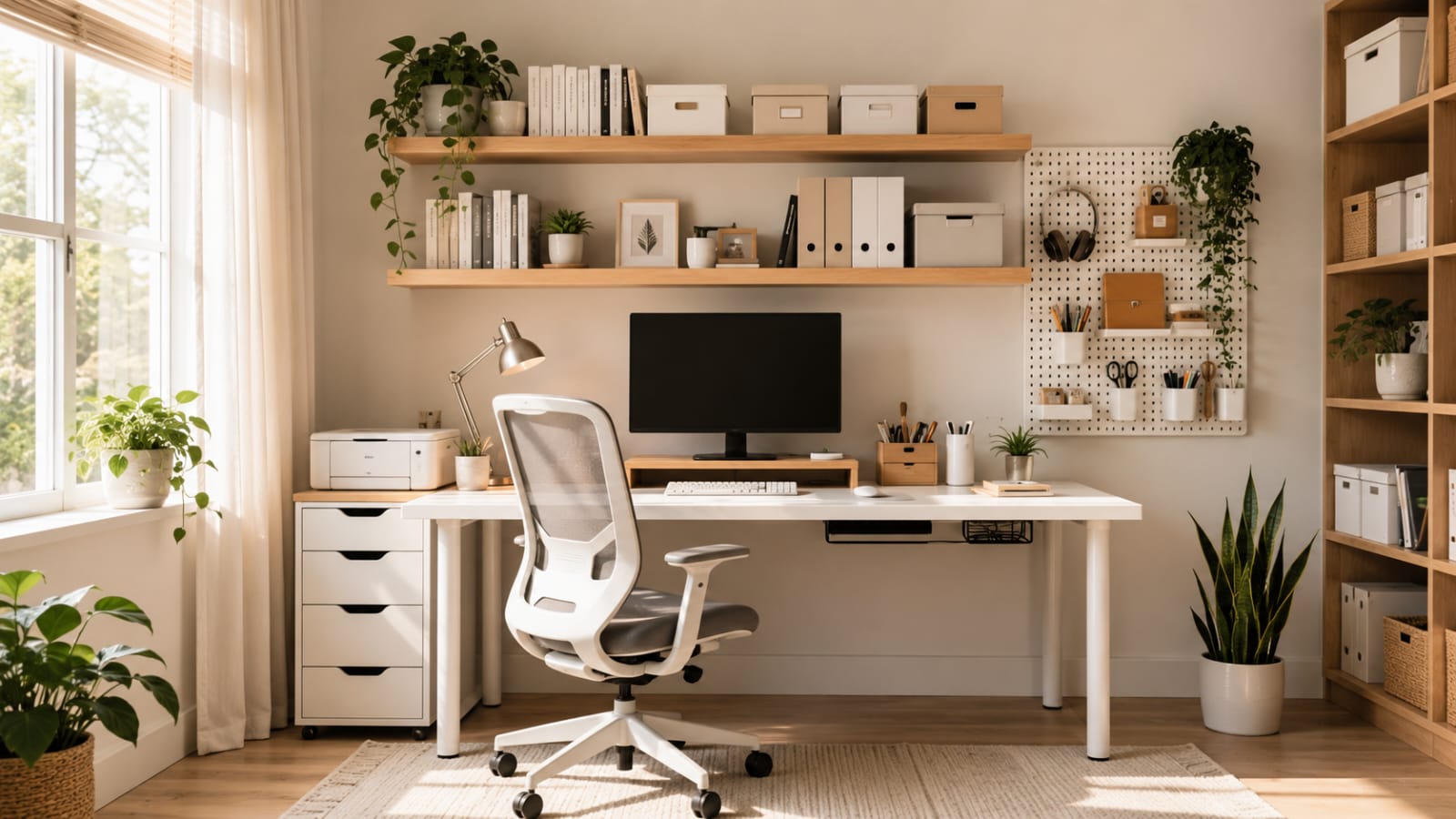
Expert Tip: Use shelf brackets rated for at least 50 pounds per shelf and always anchor into wall studs. Floating shelves loaded with books and binders are heavier than they look, and a shelf that pulls out of drywall is both a safety hazard and a frustrating setback.
4. Manage Cables Before They Take Over
Cable clutter is one of the fastest ways to make a clean desk feel chaotic. I’ve found that most home office cable problems are solved by three things: a cable management box that hides the power strip, adhesive cable clips along the back edge of the desk, and velcro ties to bundle cords together. A tidy cable setup takes about 30 minutes to install and makes a dramatic visual difference.
Bonus Tip: Label each cable at both ends with a small tag before routing them. When you need to unplug something specific, labeled cables save significant time and frustration, especially when cords are hidden behind furniture.
5. Use a Monitor Stand With Storage
A monitor stand raises your screen to ergonomic eye height while creating a storage shelf underneath it. The space below the stand is perfect for a keyboard, notepads, a small plant, or everyday supplies. In my experience, a monitor stand is one of the most impactful single purchases for a small desk because it solves two problems at once: ergonomics and storage.
Bonus Tip: Choose a monitor stand with built-in USB ports or a charging pad if your desk setup includes multiple devices. Combining functions in one piece of equipment reduces the total number of items competing for desk space.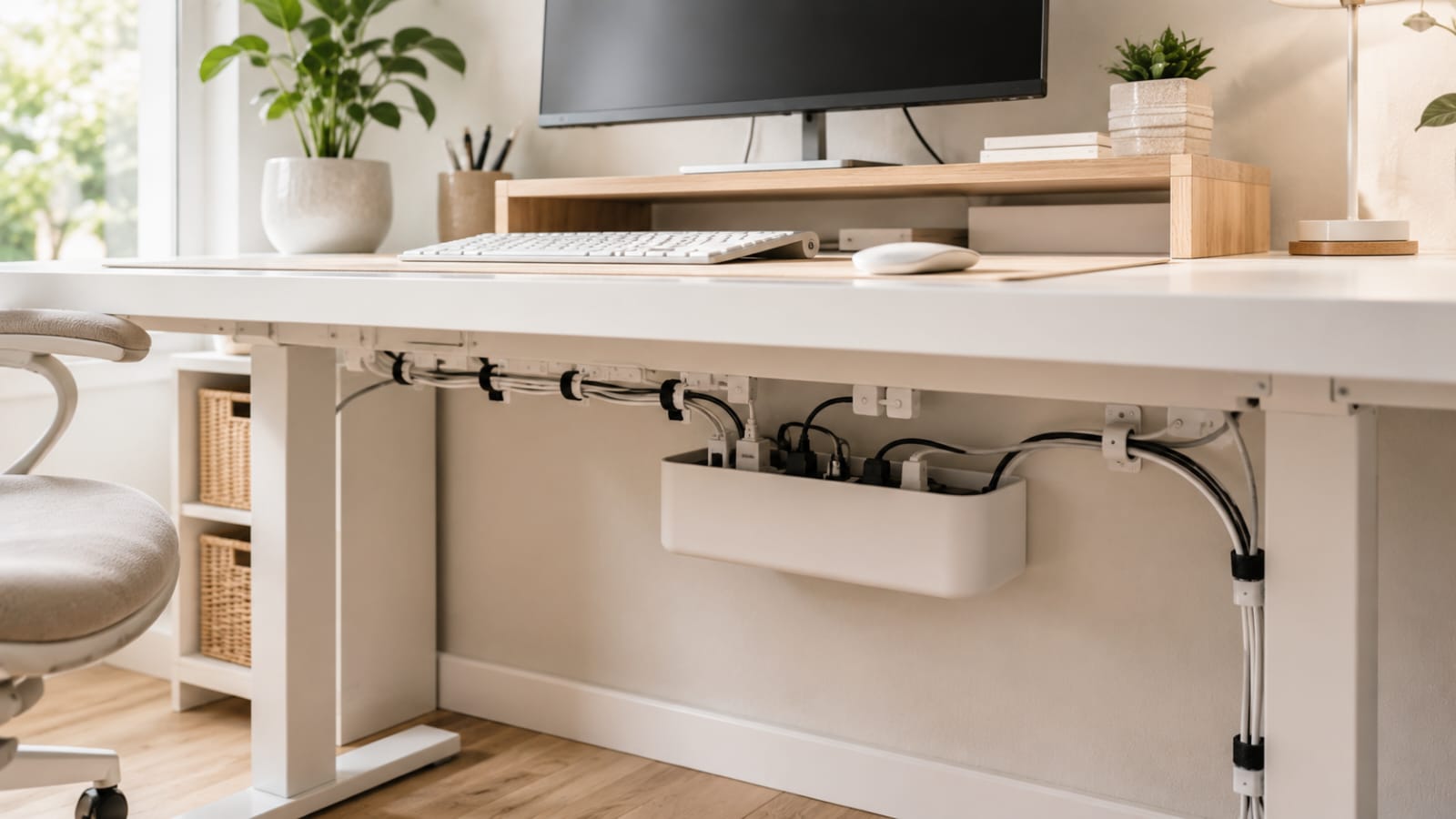
Expert Tip: Position your monitor so the top of the screen is at or slightly below eye level when seated. This reduces neck strain during long work sessions and makes the raised monitor feel natural rather than awkward after the adjustment period. For complete ergonomic guidance for home office setups, the U.S. Occupational Safety and Health Administration (OSHA) provides a free computer workstation ergonomics guide. The National Institute for Occupational Safety and Health (NIOSH) also offers practical workstation setup and productivity resources for remote workers.
6. Create a Dedicated Paper Management System
Paper clutter is the number one enemy of a clean home office. I’ve found that most paper problems come from not having a clear decision point for incoming documents. A three-tray system with labeled trays for inbox, action required, and to file handles the daily flow of paper without letting it pile up on the desk surface.
Bonus Tip: Schedule a 10-minute weekly paper purge where you clear the action tray, file what needs filing, and shred what no longer needs to be kept. Consistency with paper management prevents the weekend pile-up that takes an hour to undo.
7. Install a Pegboard Behind the Desk
A pegboard mounted on the wall behind or beside the desk creates a fully customizable vertical storage surface. Hooks hold scissors, headphones, and chargers. Small baskets hold pens, sticky notes, and small supplies. Shelves hold books or decorative items. I’ve found that a 2×4 foot pegboard handles the storage needs of most small home offices completely.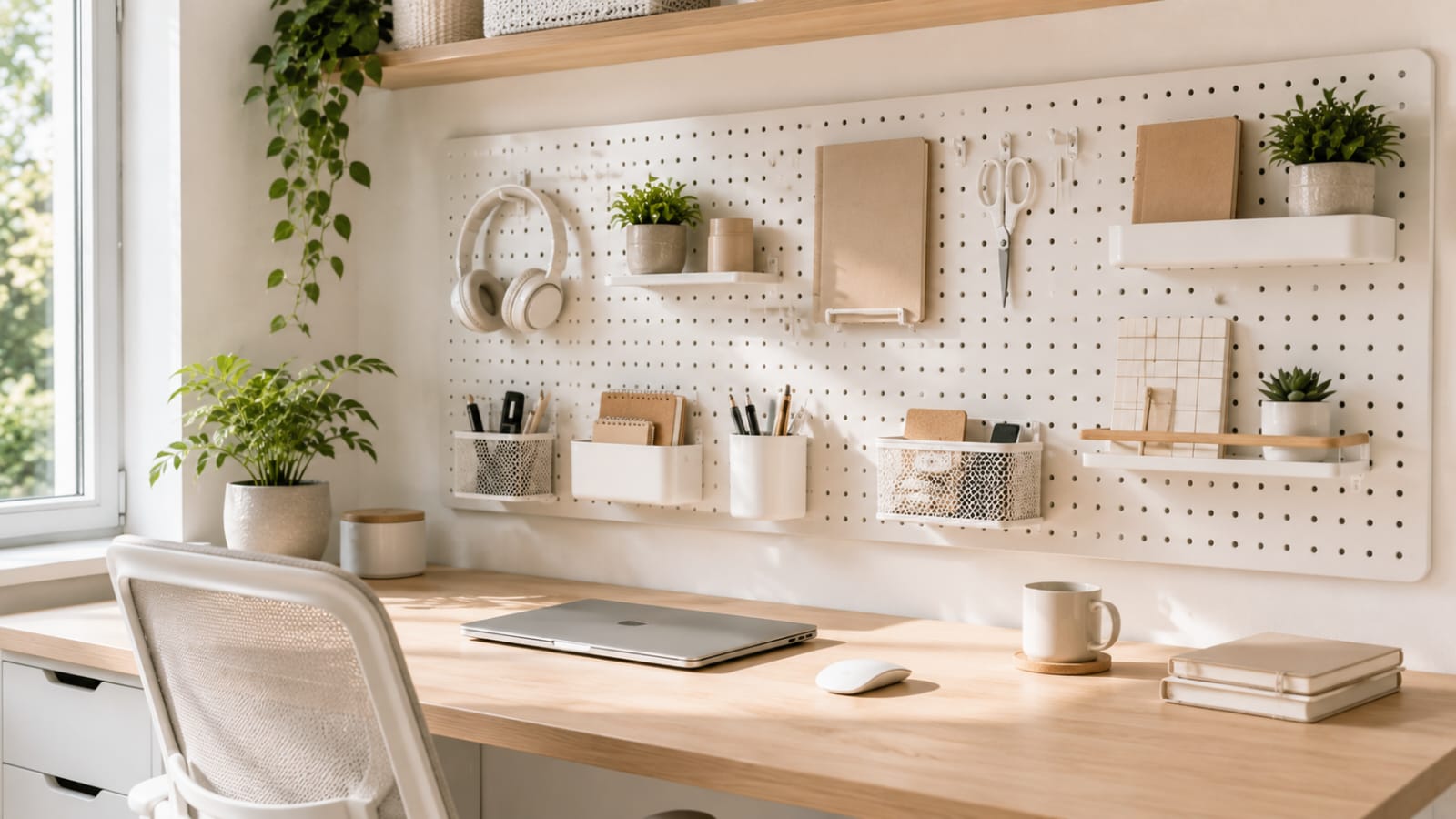
Bonus Tip: Paint the pegboard in a color that complements your office decor before mounting it. A white pegboard blends into the wall while a colored one becomes a design feature that makes the office feel intentional and styled.
8. Dedicate One Drawer to Everyday Supplies
A junk drawer is a productivity killer. Instead, dedicate one desk drawer to everyday supplies only: pens, scissors, tape, sticky notes, and a stapler, organized in a drawer divider. I’ve found that when everyday supplies have a fixed home, reaching for what you need becomes automatic and interruptions to your workflow disappear.
Bonus Tip: Use a modular drawer organizer with adjustable compartments so you can reconfigure the layout as your supply needs change. Fixed compartment organizers often end up with awkward leftover space that becomes a clutter trap. This is one of the simplest desk organization ideas that pays off every single workday.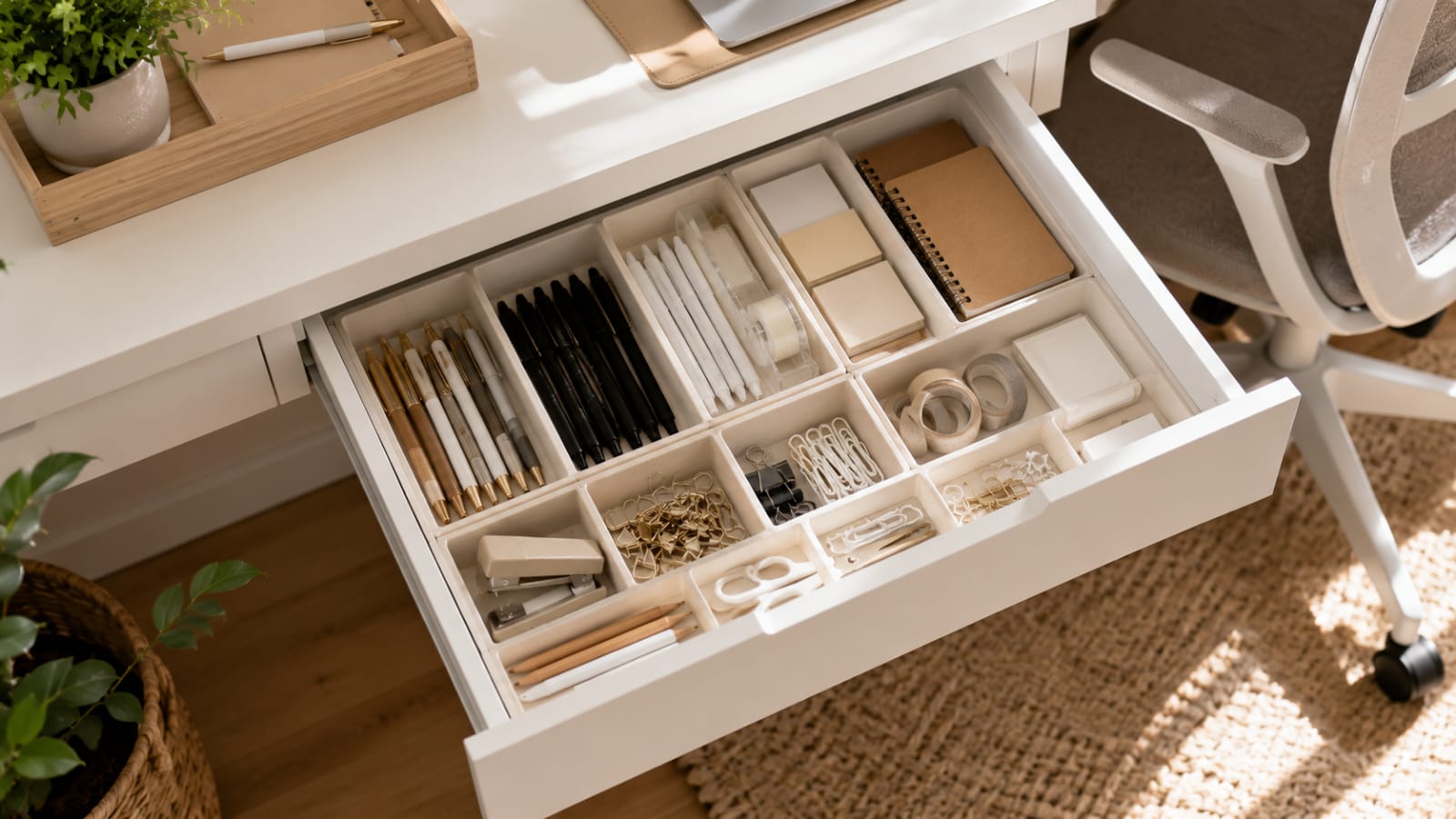
Expert Tip: Keep only one of each supply type in the desk drawer and store backups in a separate location. A drawer stuffed with 15 pens and three tape rolls is still a cluttered drawer even if it’s technically organized.
9. Use Vertical File Holders for Active Projects
Stacking papers flat on a desk creates a pile you have to dig through every time you need something. Vertical file holders keep active project folders upright, visible, and easy to flip through without disturbing other files. I’ve found that a set of three to five vertical holders on the desk or a nearby shelf handles most small business and remote work filing needs.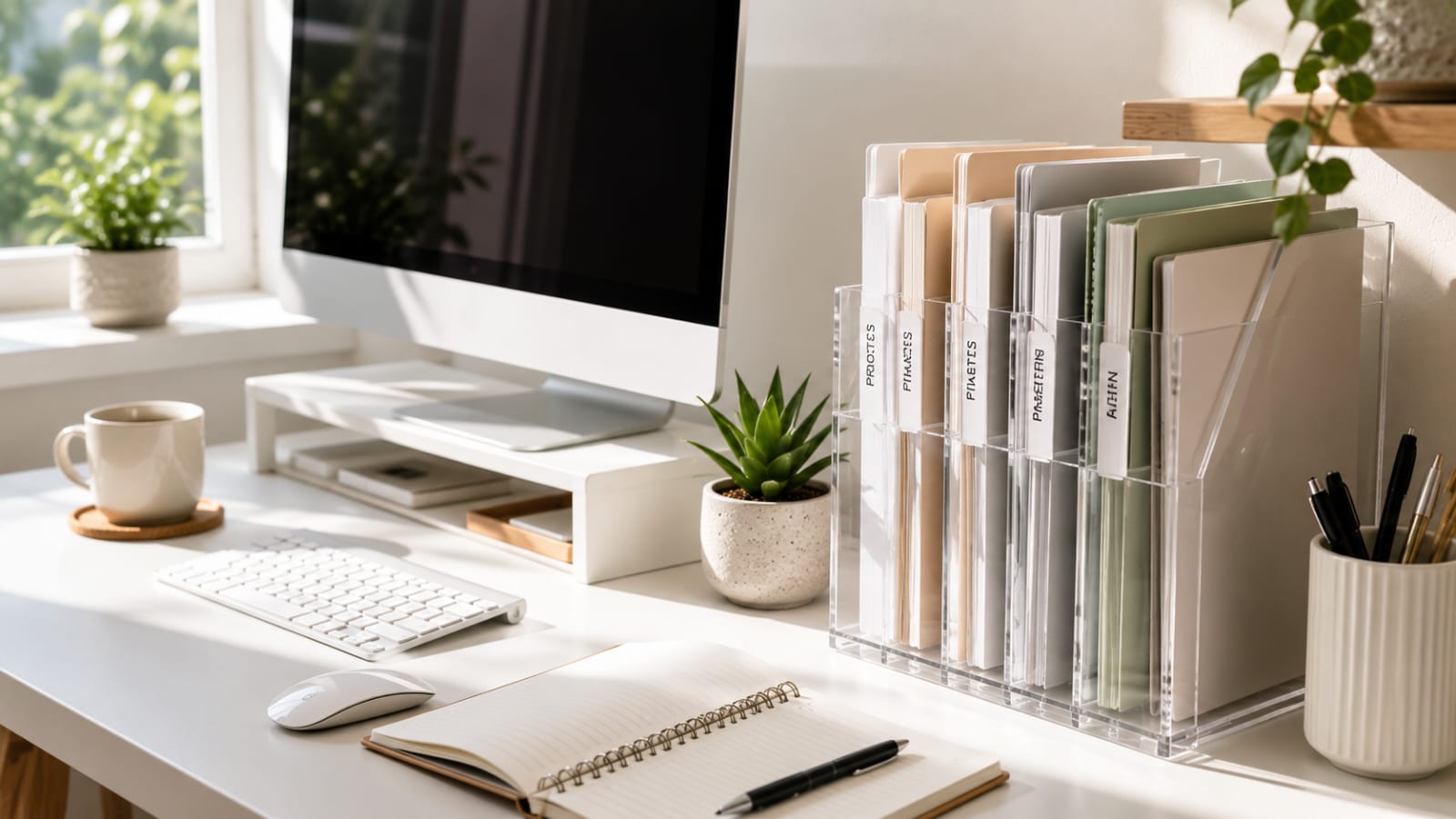
Bonus Tip: Label each file holder with a broad category rather than a specific project name. Categories like “current projects,” “pending review,” and “reference” stay relevant even as individual projects change throughout the year.
10. Mount a Whiteboard or Corkboard on the Wall
A wall-mounted whiteboard or corkboard keeps notes, reminders, and to-do lists off the desk and on the wall where they are visible without taking up any surface space. In my experience, a 24×36 inch whiteboard is large enough to be genuinely useful as a planning tool without overwhelming a small office wall.
Bonus Tip: Position the whiteboard within eyeline of your seated work position so you can glance at your task list without turning your chair. A whiteboard mounted to the side or behind you gets ignored because it requires too much effort to check regularly.
Budget Tip: A self-adhesive whiteboard sheet costs under $20 and sticks directly to the wall without frames or mounting hardware. It works just as well as a framed whiteboard for notes and to-do lists and is ideal for renters who cannot drill into walls.
11. Create a Bookshelf Zone for Reference Materials
Books, binders, and manuals left on a desk take up space and create visual noise. Designating a bookshelf, a set of floating shelves, or even a section of wall-mounted cubes as the reference zone keeps these materials accessible without cluttering the primary work surface. I’ve found that grouping reference materials by topic and labeling each section makes finding what you need significantly faster. The same principles of categorized storage also work well in kitchens. See our [Kitchen Cabinet Organization Ideas] for more inspiration.
Bonus Tip: Use bookends to keep shelved items upright and prevent the slow lean that eventually causes books to pile up rather than stand. Small decorative bookends also add visual interest to an otherwise utilitarian storage space.
12. Store Office Supplies in Clear Desk Organizers
A desktop organizer with clear compartments for pens, scissors, sticky notes, and other small supplies keeps everyday items visible and within reach without creating visual clutter. I’ve found that clear acrylic organizers work especially well in small offices because they don’t add visual weight to an already compact space.
Bonus Tip: Edit your desktop organizer every month and remove any supplies that have drifted in from other rooms or that you haven’t used since the last edit. Desktop organizers have a tendency to accumulate random items that have no business being on a work desk.
13. Use an Under-Desk Drawer for Hidden Storage
The underside of most desks has unused space that can hold a slide-out drawer for frequently needed but not constantly visible items. An under-desk drawer attachment holds pens, a notepad, chargers, or small accessories and clears the desk surface without requiring any additional furniture. In my experience, under-desk drawers are one of the highest-impact small office storage additions available.
Bonus Tip: Choose an under-desk drawer with a soft-close mechanism so it doesn’t bang shut and disturb video calls or focused work sessions. The noise of a slamming drawer is a small but persistent irritation in a home office.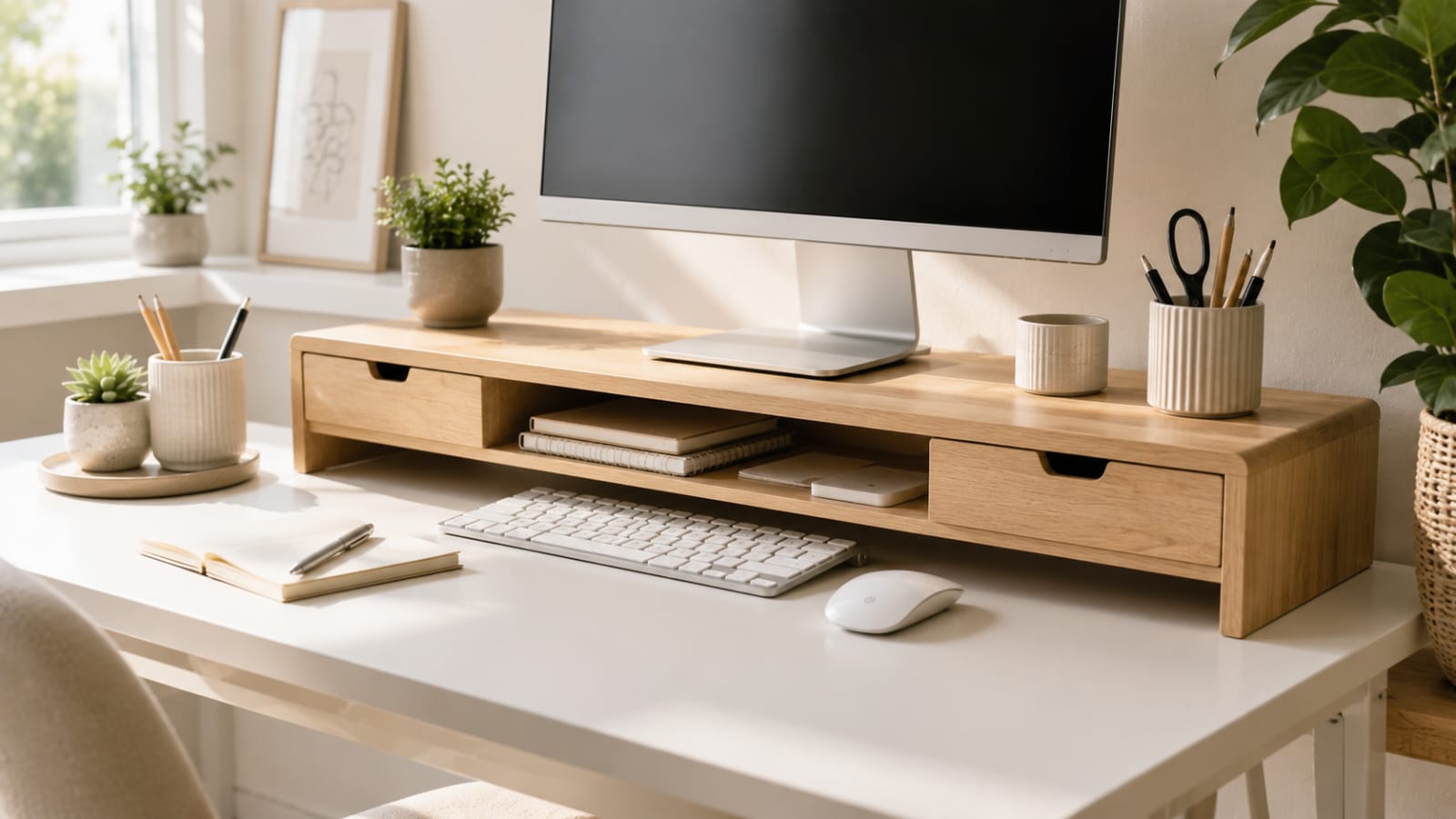
Expert Tip: Measure your knee clearance before purchasing any under-desk storage. Some drawer attachments hang low enough to interfere with comfortable seating, which defeats the purpose of adding storage that is supposed to improve the work experience.
14. Designate a Charging Station Away From the Desk
Charging phones, tablets, and earbuds directly on the desk creates cord clutter and the temptation to check devices during work time. I’ve found that a dedicated charging station on a nearby shelf or side table keeps devices charged and accessible without placing them within arm’s reach of the keyboard during focused work periods.
Bonus Tip: Use a multi-device charging station with a built-in cable organizer so the charging area stays tidy rather than becoming a tangle of cords next to your work desk.
15. Install a Closet Office in an Unused Closet
If you have an unused closet in or near your workspace, converting it into a dedicated office nook is one of the most effective small home office organization strategies available. Remove the closet rod, add a desktop at desk height, install floating shelves above, and run an outlet inside. I’ve found that a standard 24×48 inch closet makes a surprisingly complete mini home office that closes completely out of sight when not in use.
Bonus Tip: Add good lighting inside the closet office, either a small overhead fixture or a clip-on desk lamp, before worrying about storage. Poor lighting in a closet office causes eye strain quickly and makes the space feel unusable even when it is well organized.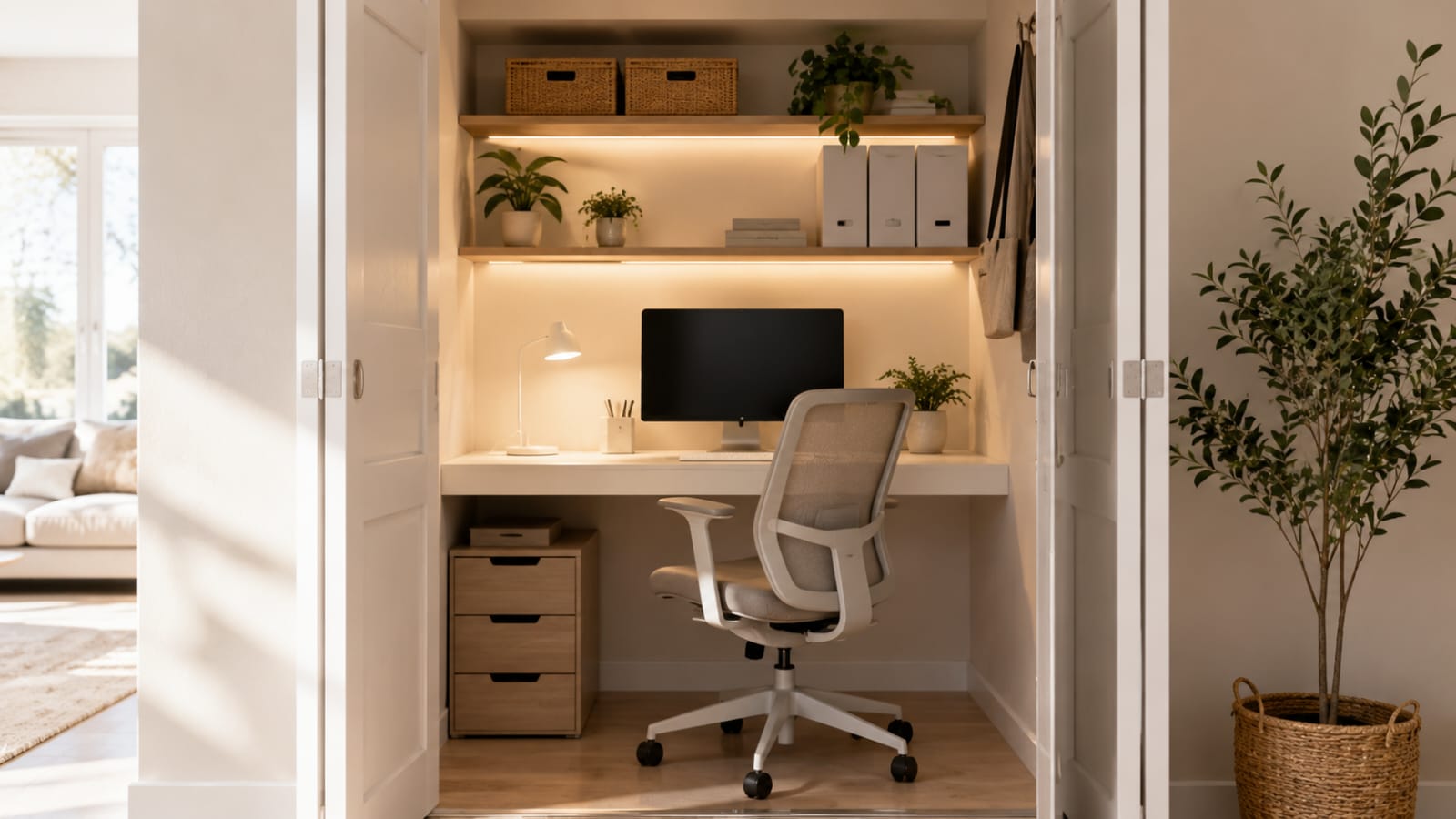
Expert Tip: A closet office works especially well in one-bedroom apartments or studio spaces where there is no dedicated room for a home office. The ability to close the closet doors and visually separate work from home life at the end of the workday has a genuine positive effect on work-life balance.
16. Use a Rolling Cart for Flexible Storage
A rolling cart with two or three tiers adds portable storage that moves with you around the office. Keep supplies on the top tier, files on the middle, and a printer or bulky items on the bottom. In my experience, a rolling cart is especially valuable in shared spaces where the office serves multiple purposes and needs to be quickly reconfigured.
Bonus Tip: Choose a rolling cart with locking wheels so it stays in place during use but moves easily when you need to reconfigure the space. Carts without locks slide unexpectedly and become a minor but persistent annoyance.
17. Create a Dedicated Inbox for Physical Mail
Physical mail that lands on a desk without a designated spot creates paper clutter within hours. A wall-mounted mail sorter or a dedicated letter tray keeps incoming mail contained and visible. I’ve found that processing physical mail once daily (open, sort, act, or file) is enough to prevent it from accumulating into an overwhelming pile.
Bonus Tip: Place a small recycling bin or shredder directly under or beside the mail station so junk mail and sensitive documents never make it to the desk in the first place. Dealing with paper at the point of entry keeps it from traveling further into the office.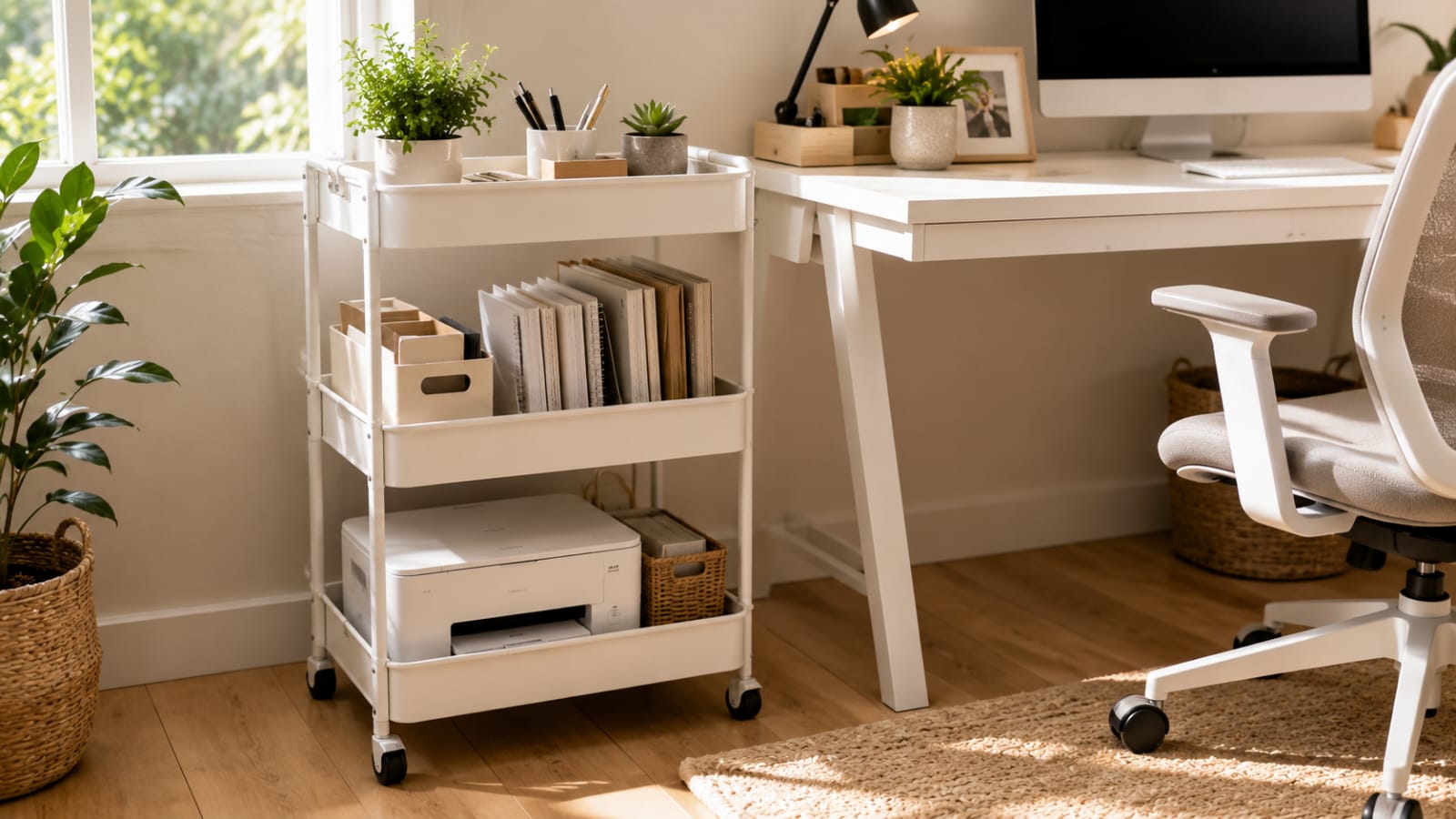
Pro Tip: When setting up your small home office, prioritize these three zones first: a clear desk surface for active work, a vertical storage system for files and supplies, and a cable management solution. Get these three right before adding anything else, and the rest of the organization will fall into place naturally.
18. Label Every Drawer, Shelf, and Container
Labels in a home office serve the same purpose they serve in any organized space. They create a system that maintains itself because everyone knows where things go. I’ve found that labeled storage is especially important in a home office because the line between work items and household items blurs over time without clear boundaries.
Bonus Tip: Use consistent label fonts and formats throughout the office for a clean, cohesive look. A mix of handwritten labels, printed labels, and masking tape creates visual noise that makes even a well-organized office feel slightly chaotic.
19. Add a Small Bookcase for Overflow Storage
When desk storage and wall shelves are maxed out, a small two or three shelf bookcase tucked beside the desk provides significant additional storage without a large footprint. A bookcase 24 inches wide and 48 inches tall adds three full shelves of storage in a footprint smaller than most office chairs. In my experience, a narrow bookcase beside the desk is one of the most space-efficient pieces of furniture for a small home office.
Bonus Tip: Use the top of the bookcase as additional display or functional surface space for a printer, a small plant, or decorative storage boxes that hide less attractive supplies.
20. Store Seasonal Work Items Out of the Office
Tax documents, annual reports, and project files from completed work accumulate in most home offices and take up space needed for current work. I’ve found that storing completed year files in labeled boxes in a closet, garage, or linen closet frees up significant filing cabinet and drawer space for active materials.
Bonus Tip: Use uniform banker’s boxes for archived files and label each one clearly with the year and general contents. Stacked uniform boxes in a closet take up minimal space and stay retrievable when you need them, which is typically only once or twice a year.
Safety Tip: Never store important documents, hard drives, or irreplaceable work materials in a garage or basement where temperature extremes and moisture can cause damage. Use a climate-controlled storage space or a fireproof document safe for anything that cannot be replaced. For posture and ergonomic guidance during long work sessions, the Mayo Clinic offers a practical office ergonomics guide.
21. Use a Headphone Hook to Clear the Desk
Headphones left on a desk take up a surprisingly large amount of surface space. A small under-desk or wall-mounted headphone hook stores them vertically against the desk or wall and keeps the cord contained. I’ve found that a headphone hook is one of those minor additions that makes a noticeable daily difference in how clean the desk looks and feels.
Bonus Tip: Choose a headphone hook with a cable clip built into the base so the headphone cord hangs neatly rather than puddling on the floor below the hook. A puddled cord on the floor creates a tripping hazard during video calls when you stand up unexpectedly.
22. Create a Meeting Prep Zone
If you take regular video calls, a dedicated meeting prep zone keeps everything you need within reach without cluttering your primary work area. A small tray or section of the desk with a notepad, a pen, and a water bottle is all most people need. I’ve found that having a consistent setup before each call reduces the scramble that happens when you suddenly need something and your desk is in working-mode chaos.
Bonus Tip: Position your webcam or laptop camera so the background behind you shows a clean, organized section of your office. A tidy bookshelf or a simple wall with minimal decoration makes a professional impression on video calls without requiring a dedicated background setup.
23. Mount a Desk Lamp to Free Up Surface Space
A traditional desk lamp with a heavy base takes up valuable desk real estate. A clamp-on or wall-mounted lamp provides the same quality of light without a base competing for space on the desk surface. In my experience, switching from a traditional lamp to a clamp-on version is one of the simplest ways to immediately free up meaningful desk space.
Bonus Tip: Choose a lamp with adjustable color temperature so you can use warmer light in the morning and cooler, brighter light for focused afternoon work sessions. Lighting temperature has a real effect on alertness and eye comfort during long work days.
24. Keep Only Today’s Work on the Desk
One of the most effective habits I’ve developed for maintaining a clean home office is the rule of keeping only today’s active work on the desk surface. Everything else goes into a file, a drawer, a shelf, or a labeled bin. This habit alone eliminates the slow creep of paper and projects that gradually transforms a clean desk into an overwhelming pile.
Bonus Tip: At the end of each workday, spend three minutes clearing the desk surface and returning everything to its designated home. Starting the next workday with a clean desk has a measurable positive effect on focus and morning productivity.
25. Schedule a Monthly Office Reset
Even the most disciplined home office setup drifts toward clutter over time. A monthly 30-minute reset, where you clear surfaces, return stray items to their homes, purge expired supplies, and wipe down the desk, keeps the office consistently functional without requiring a major reorganization. I’ve found that the monthly reset is what separates offices that stay organized from ones that require a half-day overhaul every few months.
Bonus Tip: Pair the monthly office reset with a digital cleanup: clear your downloads folder, organize your desktop icons, and archive completed project folders. A digitally clean workspace reinforces the physical organization and makes the office feel comprehensively tidy.
Common Mistakes to Avoid
Buying storage products before measuring the desk and wall space leads to organizers that don’t fit and wasted money. Always measure first.
Keeping too many items on the desk surface turns the workspace into a storage surface. Only items used multiple times daily belong within arm’s reach.
Ignoring cable management creates visual clutter that makes even an otherwise organized desk feel chaotic. Address cables before adding any other organizational elements.
Skipping labels means the system falls apart within weeks because items drift back to wherever is convenient rather than where they belong.
Storing personal and household items in the office blurs the boundary between work and home life, making it harder to focus during work hours and harder to disconnect after them.
Quick Maintenance Tips
- Clear the desk surface at the end of every workday before stepping away
- Process physical mail and incoming papers once daily rather than letting them accumulate
- Return office supplies to their designated storage immediately after use
- Wipe down the desk, keyboard, and monitor weekly with a microfiber cloth
- Do a full office reset once a month to catch any organizational drift before it becomes overwhelming
Quick Reference Checklist
- ✅ Clear desk surface with only today’s active work visible
- ✅ Cables managed and bundled out of sight
- ✅ All supplies labeled and in designated storage
- ✅ Papers processed daily and filed or discarded
- ✅ Monthly reset scheduled as a recurring calendar event
Best Small Home Office Organizers at a Glance
| Organizer | Best For | Budget |
|---|---|---|
| Floating wall shelves | Books, binders, and reference materials | $ |
| Monitor stand with storage | Screen ergonomics and desk surface space | $$ |
| Pegboard system | Flexible wall storage for tools and supplies | $ |
| Under-desk drawer | Hidden storage for everyday items | $ |
| Desktop file holder | Active project files and documents | $ |
| Rolling storage cart | Flexible portable storage in shared spaces | $$ |
Recommended Products for Home Office Organization
Floating wall shelves: Mount above the desk to create vertical storage for books, binders, and supplies without adding any floor or desk footprint.
Monitor stand with storage: Raises the screen to ergonomic height while creating an organized shelf underneath for keyboards, notepads, and small accessories.
Pegboard system: Provides fully customizable wall storage with hooks, baskets, and shelves that can be rearranged anytime as storage needs change.
Under-desk drawer attachment: Slides onto the underside of most desks to add a hidden drawer for pens, chargers, and small supplies that clutter the desk surface.
Desktop vertical file holders: Keep active project folders upright, visible, and easy to access without digging through flat stacks of paper on the desk.
Rolling storage cart: Adds portable multi-tier storage that moves anywhere in the office and tucks neatly under a desk or beside a bookcase when not in use.
Frequently Asked Questions
How do I organize a small home office on a budget? Start with cable management, a desktop file holder, and a pegboard, which together cost under $60. These three additions address the most common small office problems without requiring new furniture or major investment.
What should go on a home office desk? Only items used multiple times daily belong on the desk: a monitor, keyboard, mouse, a notepad, and one pen. Everything else belongs in a drawer, on a shelf, or in a designated storage zone nearby.
How do I maximize space in a small home office? Use vertical wall space aggressively with floating shelves, a pegboard, and wall-mounted storage. Keep the floor completely clear and store everything on walls or under the desk to make the room feel larger and more functional.
What is the best way to organize home office files? Use a vertical file holder for active projects and a labeled filing system for reference documents. Archive completed year files in uniform boxes stored outside the office. Process incoming papers daily to prevent pile-up.
How do I keep a home office clean and organized? Clear the desk at the end of every workday, process papers daily, and do a 30-minute monthly reset. Consistent daily habits are more effective than occasional major cleanups for maintaining a functional workspace.
Can a well-organized home office improve productivity? Yes. Research consistently shows that a clean, organized workspace reduces cognitive load and distraction, making it easier to focus and transition between tasks. The American Psychological Association has noted that clutter competes for attention and increases stress levels during focused work.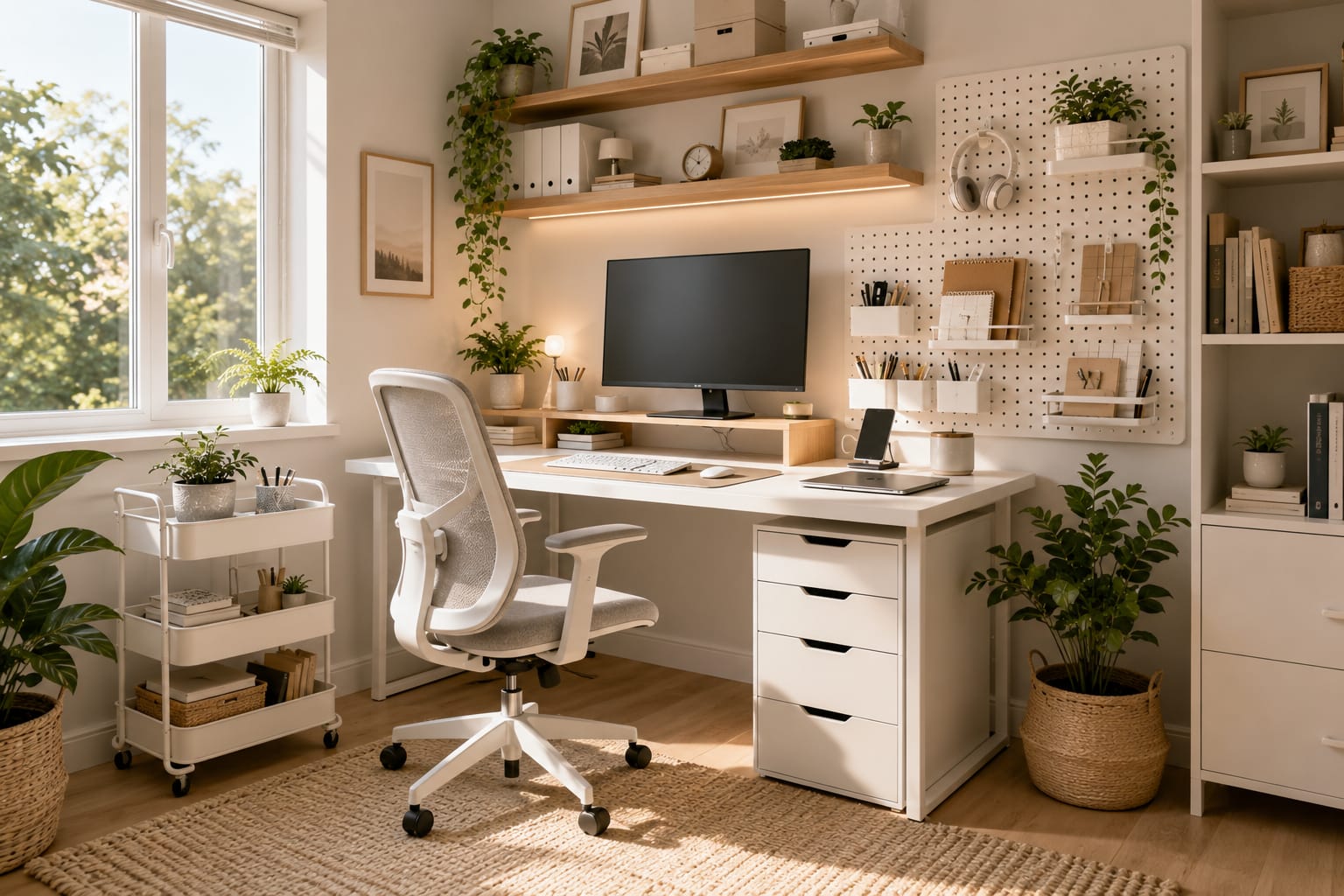
Conclusion
A well-organized small home office makes every workday easier, calmer, and more productive. Start with one idea today, whether that is mounting a floating shelf above your desk or finally managing those cables, and build the system from there. These small home office organization ideas work for every budget, every space size, and every work style.
Ready to organize the rest of your home? Explore our [Kitchen Cabinet Organization Ideas], [Bedroom organization ideas ], [Mudroom Organization Ideas], [Garage Organization Ideas], and [Linen Closet Organization Ideas] to create a cleaner, more functional home one room at a time.

Hi, I’m Shankar, the founder of Nestory Home. I share practical home organization, storage, and home decor ideas to help you create a clean, functional, and beautiful home. Every guide is designed to be simple, budget-friendly, and easy to put into practice.