
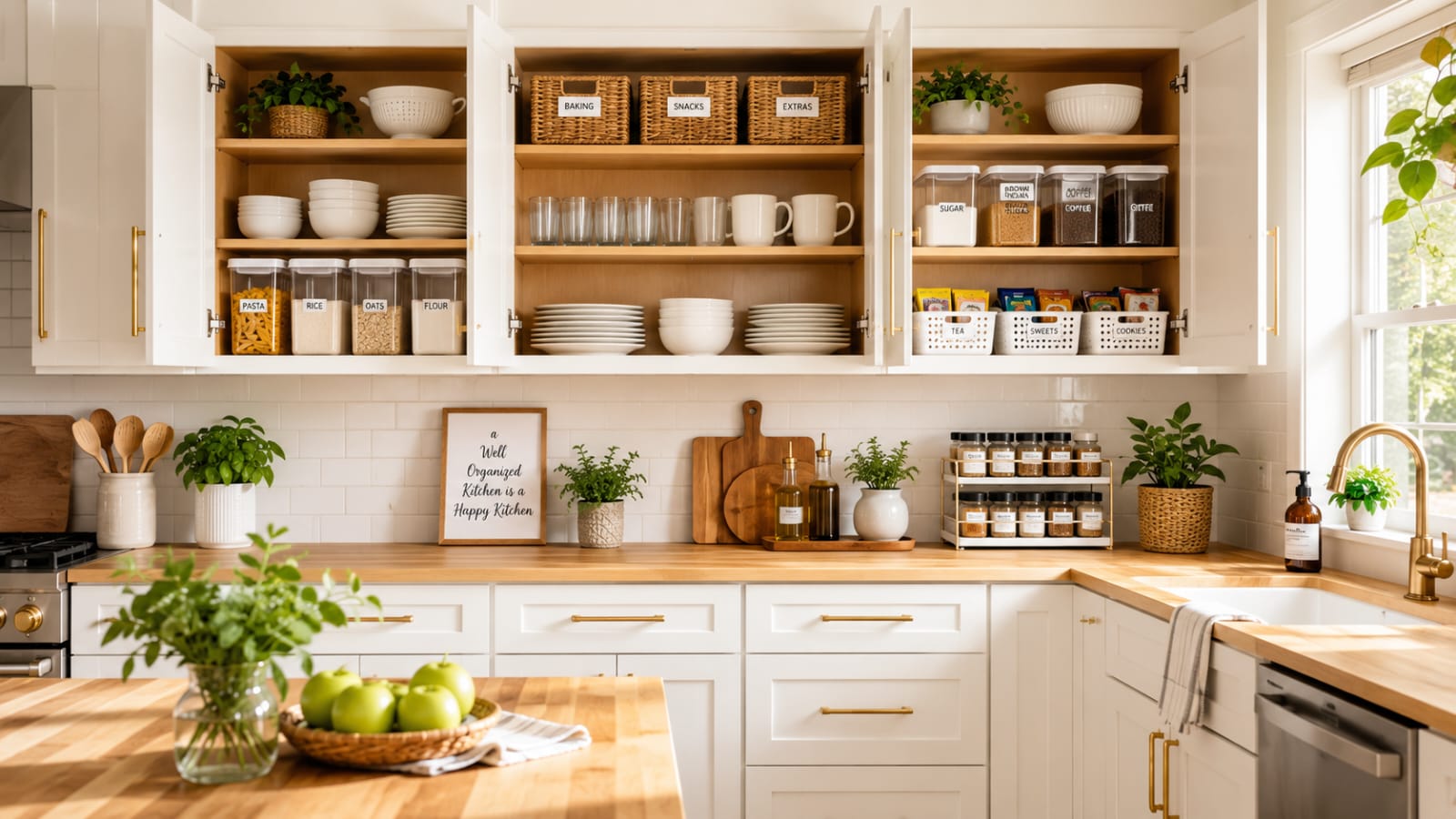
If you open your kitchen cabinets and things practically fall out at you, you’re not alone. Most kitchens have more storage potential than people realize — it’s just buried under the wrong system. A few smart kitchen cabinet organization ideas can make cooking faster, mornings calmer, and your entire kitchen feel bigger without spending a fortune. Here are 25 practical ideas that actually work in real homes.
The best way to organize kitchen cabinets is to group items by how you use them, not just by category. Keep everyday dishes near the dishwasher, pots near the stove, and snacks at eye level. Add shelf risers, pull-out drawers, and labeled bins to use every inch of vertical space. Small changes add up fast when the system matches the way your household actually works.
25 Kitchen Cabinet Organization Ideas
1. Group Items by How You Use Them
Stop organizing by item type and start organizing by task. Keep your coffee mugs, filters, and sweetener together near the coffee maker. Store baking supplies near the oven. When everything lives where you use it, you stop hunting through cabinets mid-recipe and mornings feel a lot smoother.
2. Use Shelf Risers to Double Your Space
Most cabinet shelves leave a big gap of wasted air above shorter items. A simple shelf riser sits on top of your existing shelf and lets you stack dishes, mugs, or canned goods in two layers instead of one. This is one of the fastest kitchen cabinet storage ideas with an immediate visual payoff.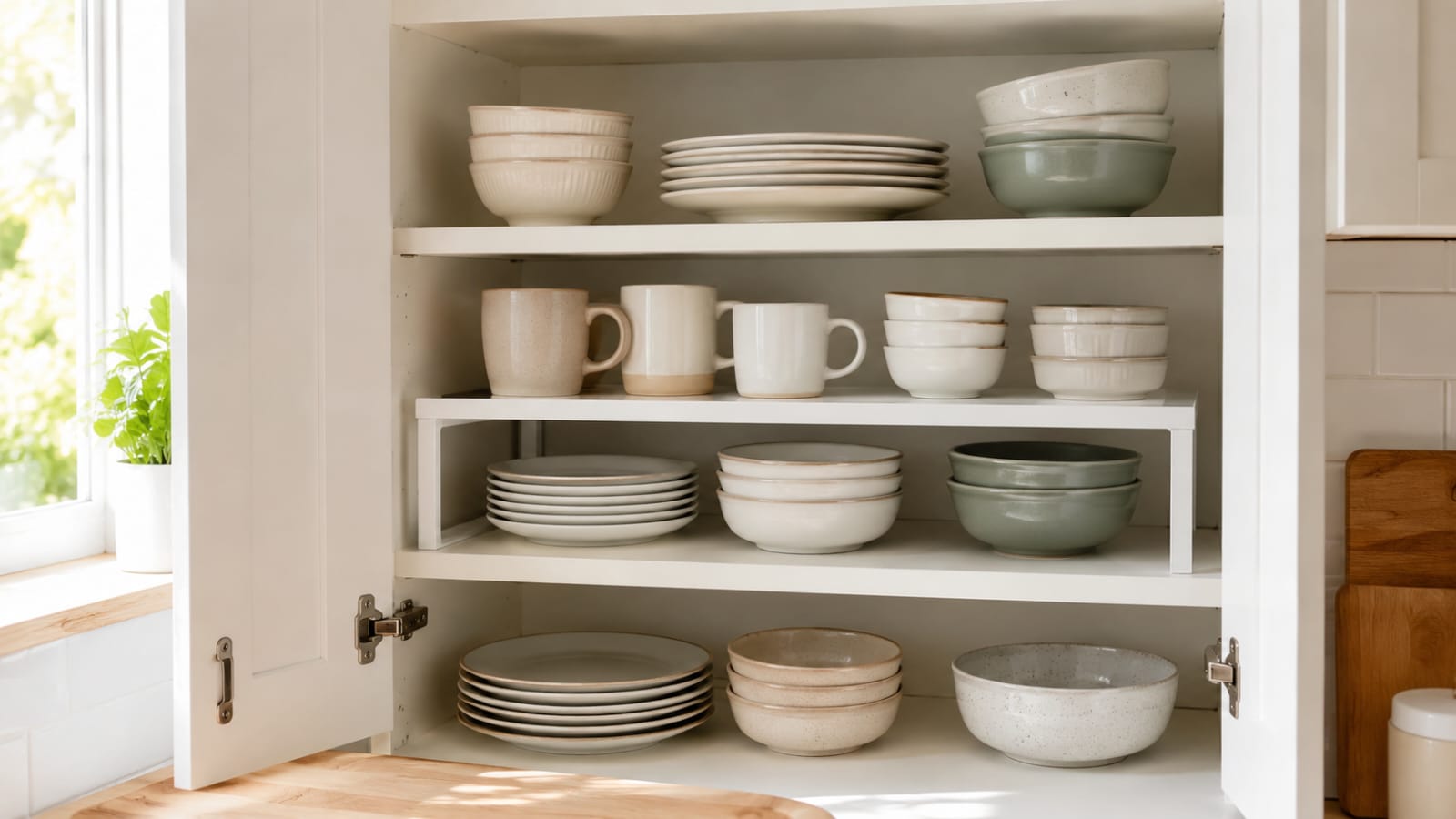
3. Add Pull-Out Drawer Organizers
Deep lower cabinets are where things go to disappear. A pull-out drawer organizer slides out to bring everything to you instead of making you dig. I’ve found this single addition makes lower cabinet storage actually usable rather than a pile you dread opening. They come in wood, wire, and plastic.
4. Install a Lazy Susan in Corner Cabinets
Corner cabinets are some of the most frustrating spaces in any kitchen. A lazy Susan turntable lets you spin items to the front instead of kneeling on the floor to reach the back. Use one tier for oils and vinegars and another for spices or canned goods so each rotation makes sense.
5. Store Pot Lids Vertically
Lids stacked inside pots take up twice the space they need to. A vertical lid organizer, either mounted inside a cabinet door or placed like a file holder on a shelf, stores lids upright and separated. You grab the right one instantly instead of lifting and restacking the whole pile every time.
6. Use the Inside of Cabinet Doors
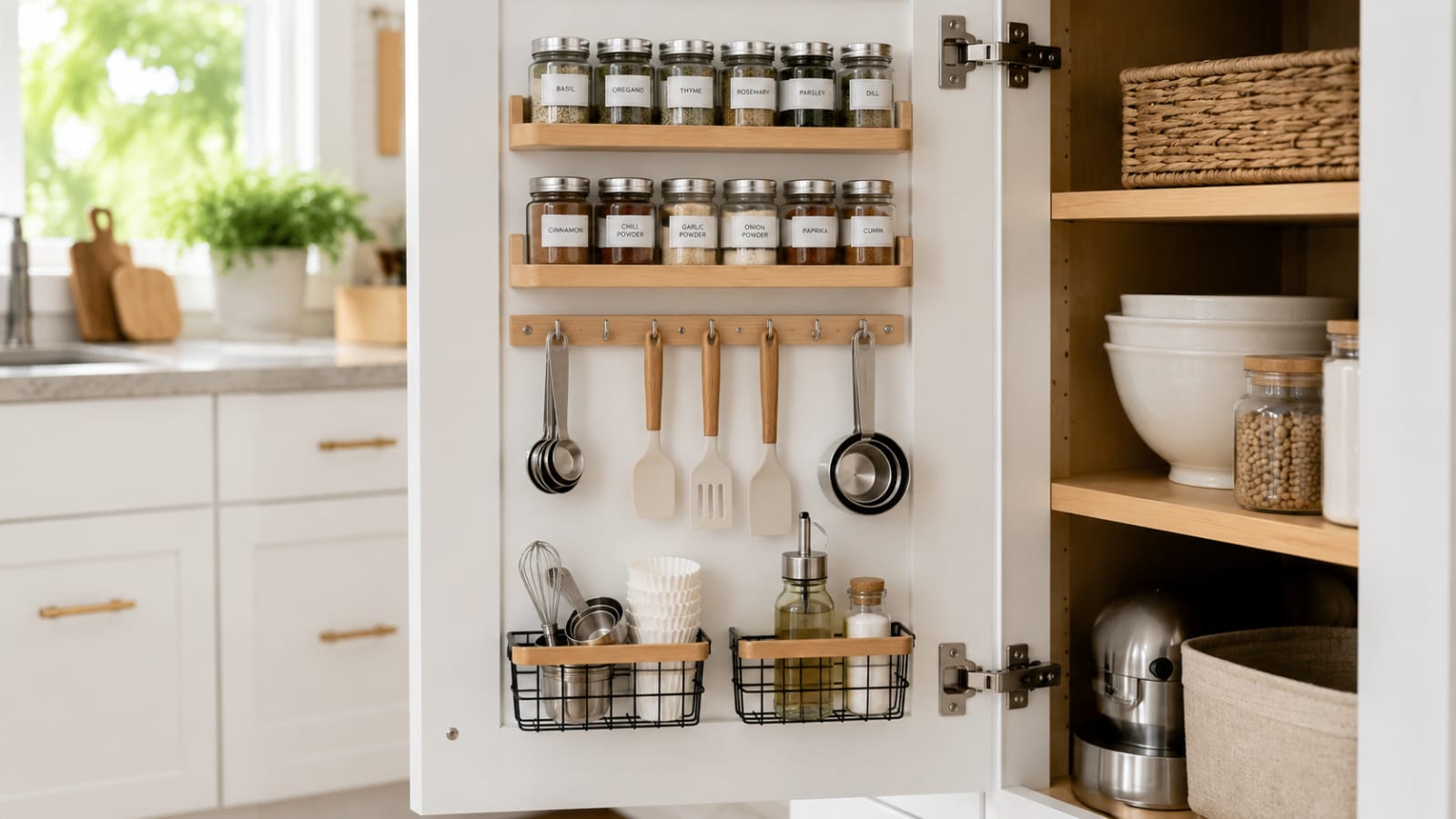
The inside panel of every cabinet door is usable storage that most people completely ignore. Adhesive hooks, over-door organizers, or mounted spice racks attach here without drilling and hold everything from measuring spoons to cleaning spray. In small kitchen cabinet organization especially, this extra surface matters a lot. The same approach works beautifully under the sink. For more smart ideas, check out our Under Sink Storage Ideas guide, where door-mounted organizers keep cleaning supplies off the cabinet floor entirely.
7. Decant Dry Goods Into Clear Containers
Bulky cereal boxes and mismatched bags take up far more shelf space than their contents require. Transferring dry goods like pasta, rice, oats, and flour into matching clear canisters frees up significant shelf space and makes it easy to see when you’re running low. It also keeps pantry pests out.
8. Dedicate One Cabinet to Baking Only
Mixing baking supplies with everyday cooking ingredients creates confusion every time you cook. A single baking cabinet with flour, sugar, baking powder, vanilla, and your hand mixer means everything is in one place when you need it. This kitchen organization idea works especially well for households that bake regularly.
9. Stack Plates and Bowls With Plate Holders
Standard cabinet shelves often leave more vertical space above a stack of plates than the plates themselves need. A plate holder or rack lets you create two separate stacks side by side, doubling how many dishes fit on a single shelf. Choose a coated wire version to prevent scratching.
10. Use Tension Rods for Cutting Boards and Baking Sheets
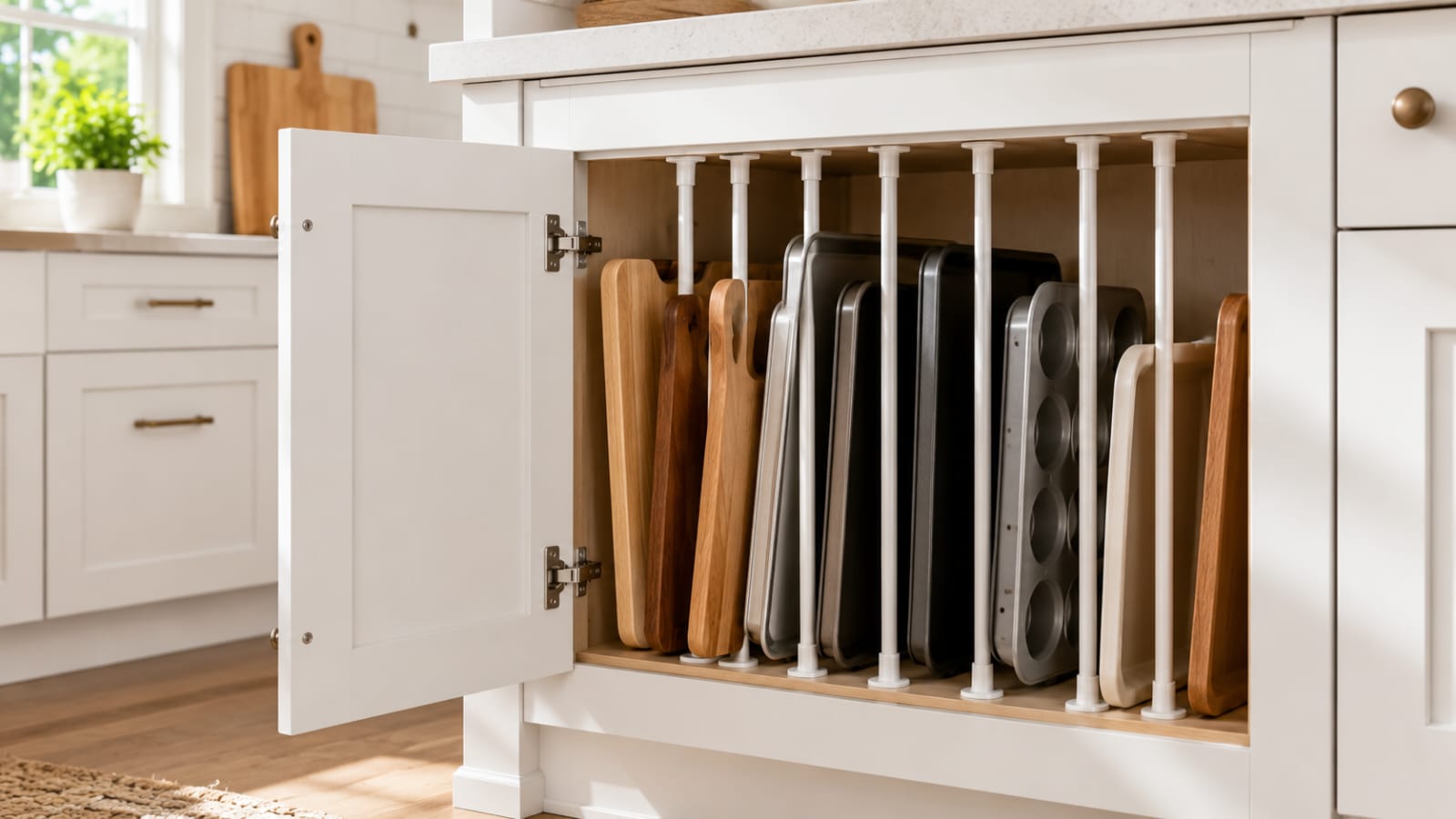
Flat items like cutting boards, sheet pans, and muffin tins are impossible to stack neatly. A few tension rods placed vertically inside a lower cabinet create individual slots so each item stands upright and slides out cleanly. This is one of the cleverest kitchen storage solutions for under a dollar per rod.
11. Add a Drawer Organizer for Utensils
A junk drawer stuffed with spatulas, whisks, and tongs slows down every cooking session. A simple expandable drawer organizer with dedicated sections for each utensil type cuts the search time down to zero. Keep only what you actually use in the drawer and move duplicates or rarely used tools to a secondary spot.
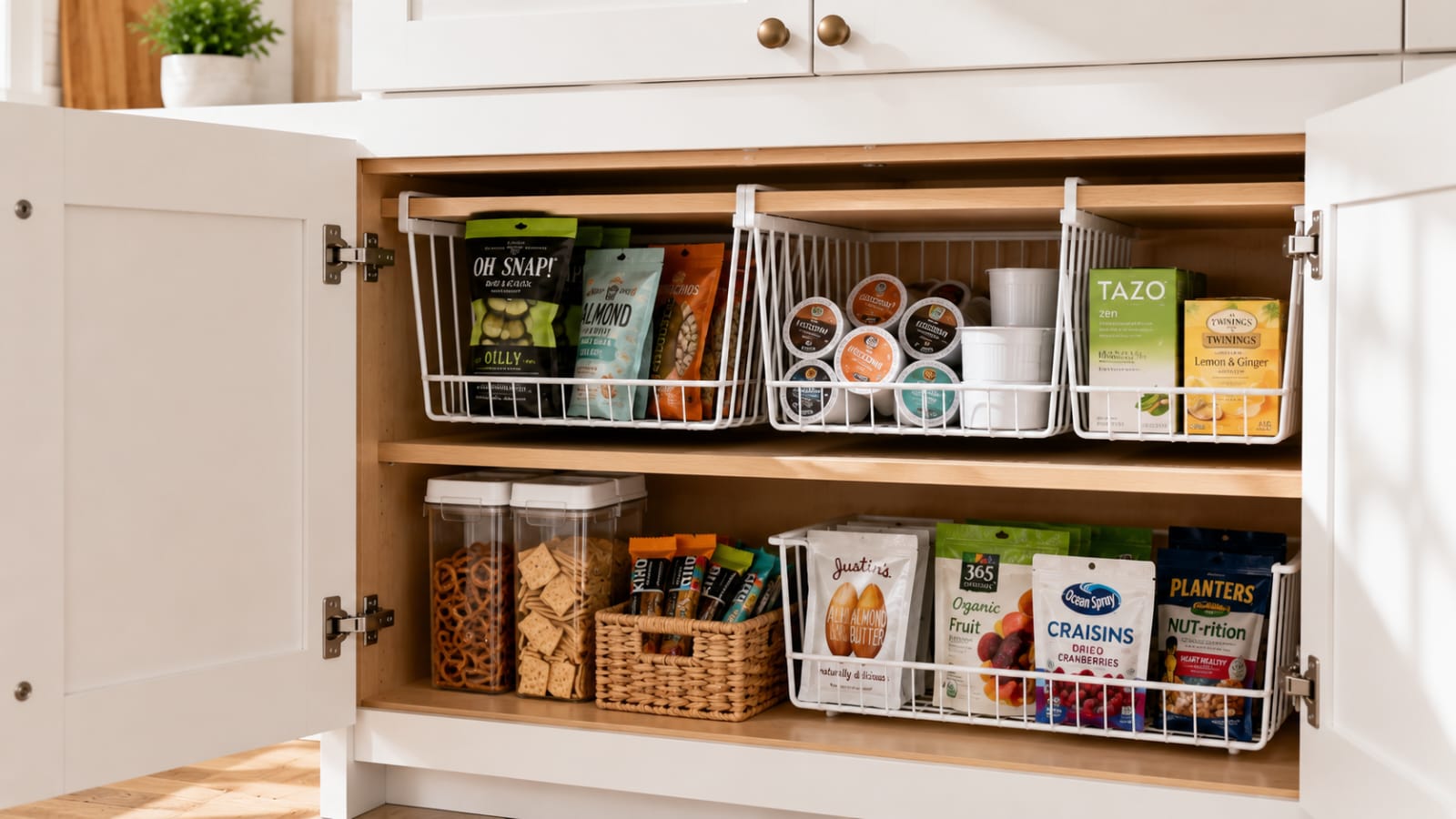
12. Create a Snack Zone at Eye Level
If you have kids or just like to grab things quickly, designating one shelf or cabinet as the snack zone makes daily life easier. Keep it stocked, easy to see, and accessible without climbing or digging. This small kitchen cabinet organization habit also makes grocery restocking faster since you always know what’s low.
13. Use Stackable Bins for Canned Goods
Canned goods stacked in a single row take forever to sort through. Stackable can organizers roll older cans to the front automatically so you always use the oldest one first. They keep the cabinet neat, make inventory obvious, and prevent the forgotten can buried in the back corner problem.
14. Mount a Spice Rack Inside a Cabinet
A countertop covered in spice jars is both cluttered and hard to clean around. Mounting a narrow spice rack on the inside wall of a cabinet or door keeps every spice visible, labeled, and off the counter. Alphabetizing them takes about ten minutes and saves real time every time you cook.
15. Keep a Step Stool Nearby for High Shelves
Upper cabinet shelves above eye level often become storage for things you never use because they’re too hard to reach. A small folding step stool stored nearby makes top shelves genuinely accessible. Use those upper shelves for lightweight items like paper plates, extra napkins, or seasonal serving pieces you use a few times a year.
16. Line Shelves With Easy-Clean Liners
Shelf liners prevent dishes and containers from sliding around and protect cabinet surfaces from moisture and scratches. The non-adhesive versions are especially practical since you can remove and rinse them in minutes. This small addition keeps cabinets cleaner longer and makes wiping down the interior a much faster task.
17. Use a Turntable for Oils and Condiments
A small lazy Susan turntable on a pantry shelf or inside a cabinet keeps oils, vinegars, sauces, and condiments spinning to the front without pulling everything out. It’s one of the most practical cabinet organizers for households that cook with a lot of different sauces and still want a tidy shelf.
18. Organize Tupperware by Nesting Containers
Mismatched food storage containers are one of the most common sources of cabinet chaos. Nest same-size containers together and store all lids vertically in a separate bin or organizer. This alone cuts the clutter in half. Donate any container that doesn’t have a matching lid or that you haven’t used in six months.
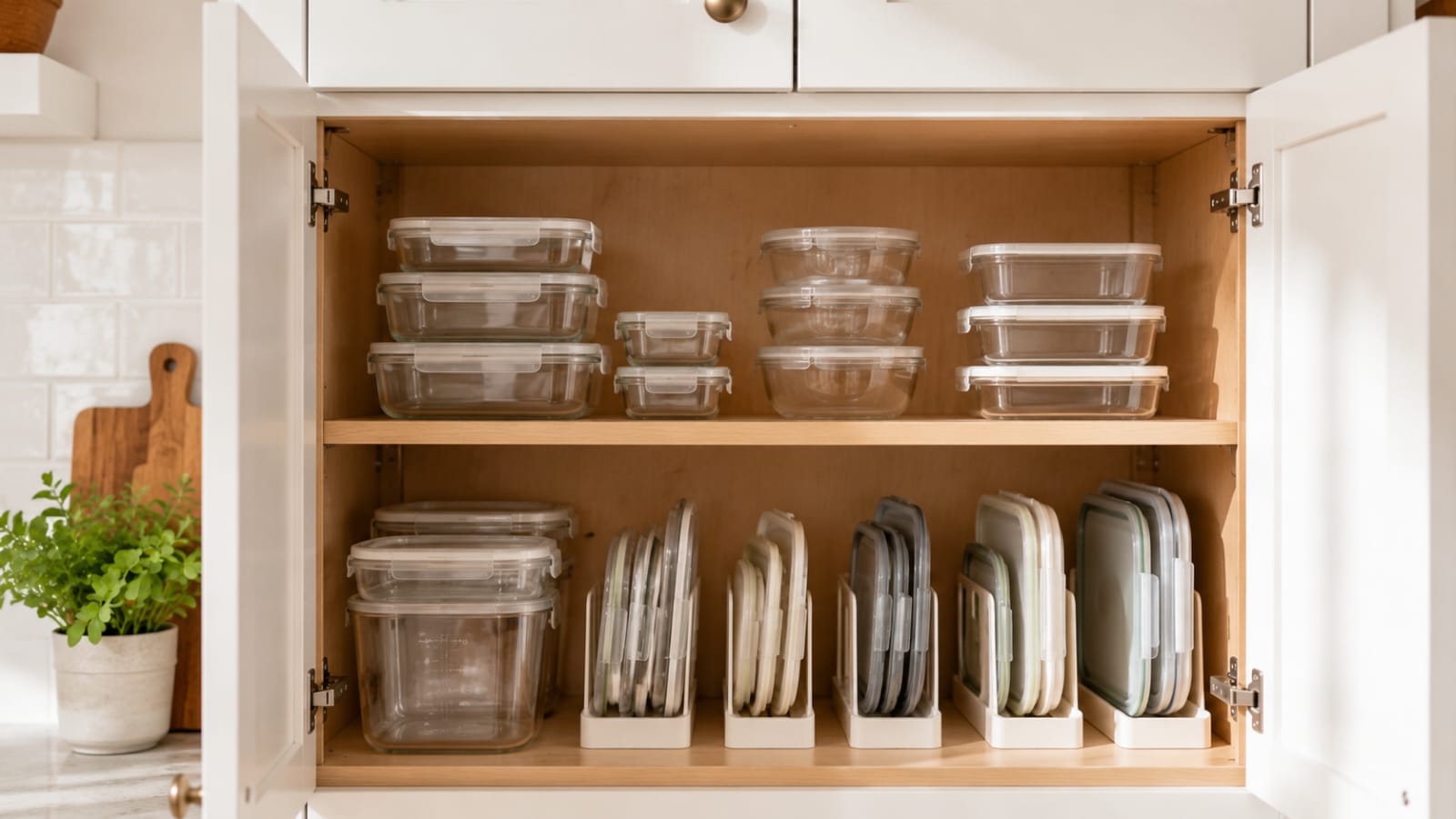
19. Add a Pot Rack for Heavy Cookware
Heavy pots and pans stacked inside a cabinet are hard to access without disturbing the whole stack. A ceiling-mounted or wall-mounted pot rack keeps cookware hanging and accessible without taking up any cabinet space at all. If a full rack isn’t practical, a cabinet pull-out with individual slots works as well.
20. Store Glasses Upside Down
Storing glasses right-side up collects dust inside the rim over time. Flipping them upside down keeps the drinking surface clean and also makes the cabinet look neater at a glance since rims are all at the same level. Use non-slip shelf liner underneath so they don’t slide when the cabinet opens.
21. Label Every Bin and Shelf Zone
Labels sound simple, but they’re what make organization systems survive past the first week. When every bin, basket, and shelf zone has a clear label, everyone in the household knows where things go and actually puts them back correctly. A label maker or chalk labels both work well in kitchen environments. The same labeling habit works just as well in the Laundry Room Organization Ideas guide, where labeled bins help keep detergent, dryer sheets, and other supplies neatly organized.
22. Use Under-Shelf Baskets for Extra Storage
Wire baskets that clip underneath an existing shelf hang in the dead space below and hold lightweight items like snack bags, coffee pods, or spice packets. They add a full layer of storage without installing anything permanently. This trick is especially useful in rental kitchens where drilling isn’t allowed. It works just as well inside bathroom cabinets too. For more smart storage inspiration, check out our Bathroom Organization Ideas guide, where the same baskets keep cotton balls, hair tools, and travel-size products neatly organized.
23. Keep One Cabinet for Daily Essentials Only
Designate the cabinet closest to where you prep food as the daily essentials cabinet. Keep only the items you reach for every single day, like your everyday plates, glasses, a cutting board, and your most-used spices. This reduces the number of cabinets you open during a typical meal and keeps the kitchen running smoothly.
24. Use Magazine Holders for Wraps and Foils
Plastic wrap, aluminum foil, and parchment paper boxes are awkward to stack and constantly fall over. Standing them upright in a magazine holder inside a lower cabinet or drawer keeps them organized, easy to grab, and stops the box avalanche every time you open the door.
25. Do a Quarterly Cabinet Reset
No organization system stays perfect forever. Every three months, pull everything out of your cabinets, wipe the shelves, toss expired items, and put things back where they belong. This quarterly reset takes less than an hour and prevents the slow creep of clutter that makes cabinets feel chaotic again within a few months.
Kitchen Cabinet Organizers Comparison Table
Choosing the right organizer depends on your cabinet type, budget, and how much time you want to spend installing it. Here’s a quick breakdown of the most common options.
| Organizer Type | Best For | Approximate Cost | Installation |
|---|---|---|---|
| Shelf risers | Dishes, mugs, canned goods | $10–$25 | None |
| Pull-out drawers | Deep lower cabinets | $25–$60 | Minimal |
| Lazy Susan turntable | Corner cabinets, oils, spices | $15–$40 | None |
| Door-mounted rack | Spices, lids, cleaning tools | $10–$30 | Adhesive or screws |
| Stackable can organizer | Canned goods | $10–$20 | None |
| Under-shelf basket | Lightweight extras | $8–$15 | Clip-on |
Common Kitchen Cabinet Organization Mistakes
Buying organizers before measuring is the most common mistake and usually leads to returns. Overfilling cabinets defeats the purpose of organizing since there’s no room to keep things tidy. Storing items based on category instead of use creates extra steps during meal prep. Ignoring vertical space wastes the most valuable real estate in any cabinet. Skipping labels means systems fall apart within weeks because nobody remembers the intended spots. And keeping duplicates or rarely used gadgets takes up space better used for the things you actually cook with.
Quick Tips
- Remove everything before reorganizing so you start with a clean slate
- Donate any item you haven’t used in the past year
- Store heavy items in lower cabinets and lighter items up high
- Keep the most-used items between hip and shoulder height
- Use consistent bin and basket styles for a cohesive look
- Wipe shelves down before putting anything back
- Take a photo of your organized cabinets so you have a reference when things drift
- Involve everyone in the household so they know where things live
- For more expert kitchen organization tips, visit Good Housekeeping.
Frequently Asked Questions
How do I organize kitchen cabinets efficiently? Start by emptying everything out and sorting items into keep, donate, and toss piles. Then group what remains by how you use it, not just by category. Add shelf risers, pull-out organizers, or lazy Susans where needed, and label everything so the system holds long term.
What should go in upper kitchen cabinets? Upper cabinets work best for lighter, everyday items like plates, glasses, mugs, and dry goods. Items you reach for multiple times a day should live between eye and shoulder height. Reserve the highest shelves for seasonal or rarely used pieces like holiday serving dishes or extra paper goods.
What should go in lower kitchen cabinets? Lower cabinets are ideal for heavier items like pots, pans, baking sheets, and small appliances. Pull-out drawers and lazy Susans make deep lower cabinets much more functional. Store cutting boards and sheet pans vertically using tension rods to avoid the stacking and unstacking problem.
How do I organize a small kitchen cabinet? Focus on vertical space first with shelf risers and under-shelf baskets. Use the inside of the door for extra storage. Keep only what you use regularly inside the cabinet and move infrequently used items to a less prime location. Clear containers help you see everything at a glance without opening multiple bins.
What are the best kitchen cabinet organizers? Shelf risers, pull-out drawers, lazy Susans, and door-mounted racks consistently deliver the most value across different cabinet types and budgets. For small kitchens, under-shelf baskets and tension rods for flat items are especially high-impact for the price.
How often should I reorganize kitchen cabinets? A quick tidy every few weeks keeps things manageable, but a full reorganization every three to four months is enough for most households. Use the quarterly reset to toss expired items, return things to their proper spots, and adjust the system if your cooking habits have changed.
Conclusion
Kitchen cabinet organization doesn’t have to be a weekend project. Start with the one cabinet that bothers you most, apply two or three ideas from this list, and see how much easier cooking feels with a system that actually makes sense. Once you experience cabinets where everything has a place and things are easy to find, the rest of the kitchen follows naturally. Small, smart changes are all it takes to turn a frustrating kitchen into one you actually enjoy cooking in.
If you’re ready to keep organizing your home, explore our Small Pantry Organization guide for pantry storage tips and our Entryway Organization Ideas guide to create a clutter-free entrance. Small improvements in every room can make your entire home feel more organized and functional.

Hi, I’m Shankar, the founder of Nestory Home. I share practical home organization, storage, and home decor ideas to help you create a clean, functional, and beautiful home. Every guide is designed to be simple, budget-friendly, and easy to put into practice.