
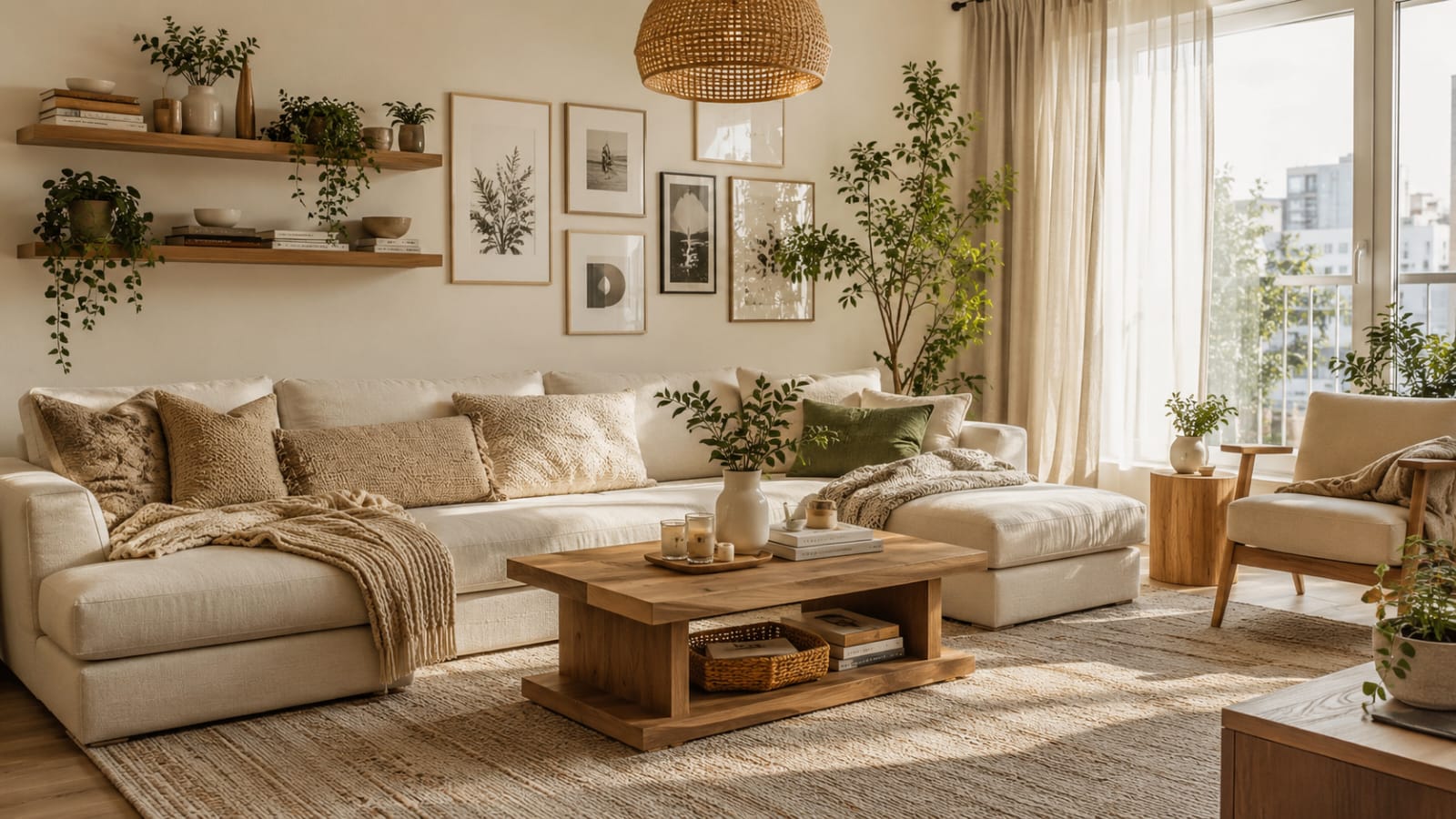
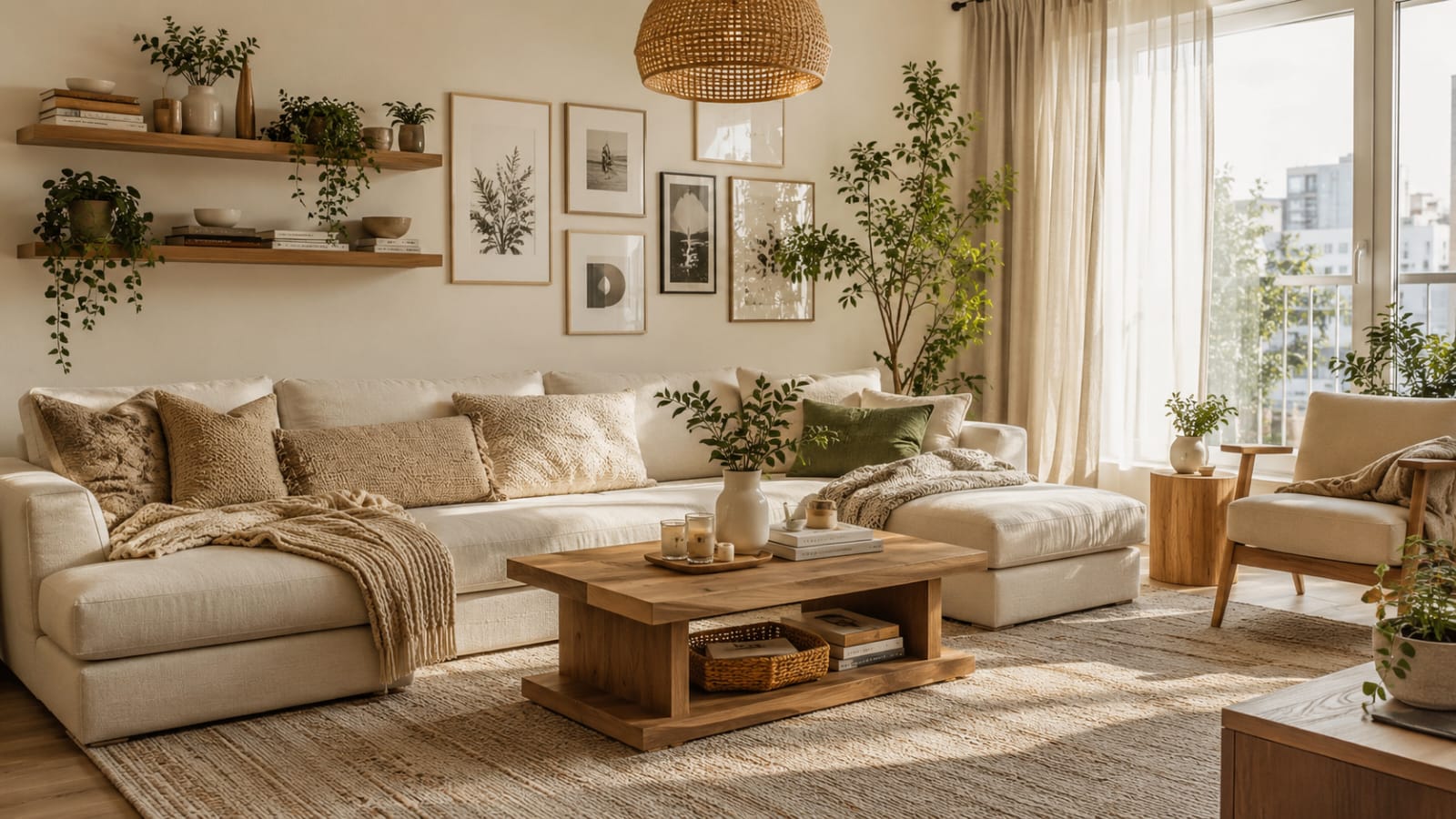
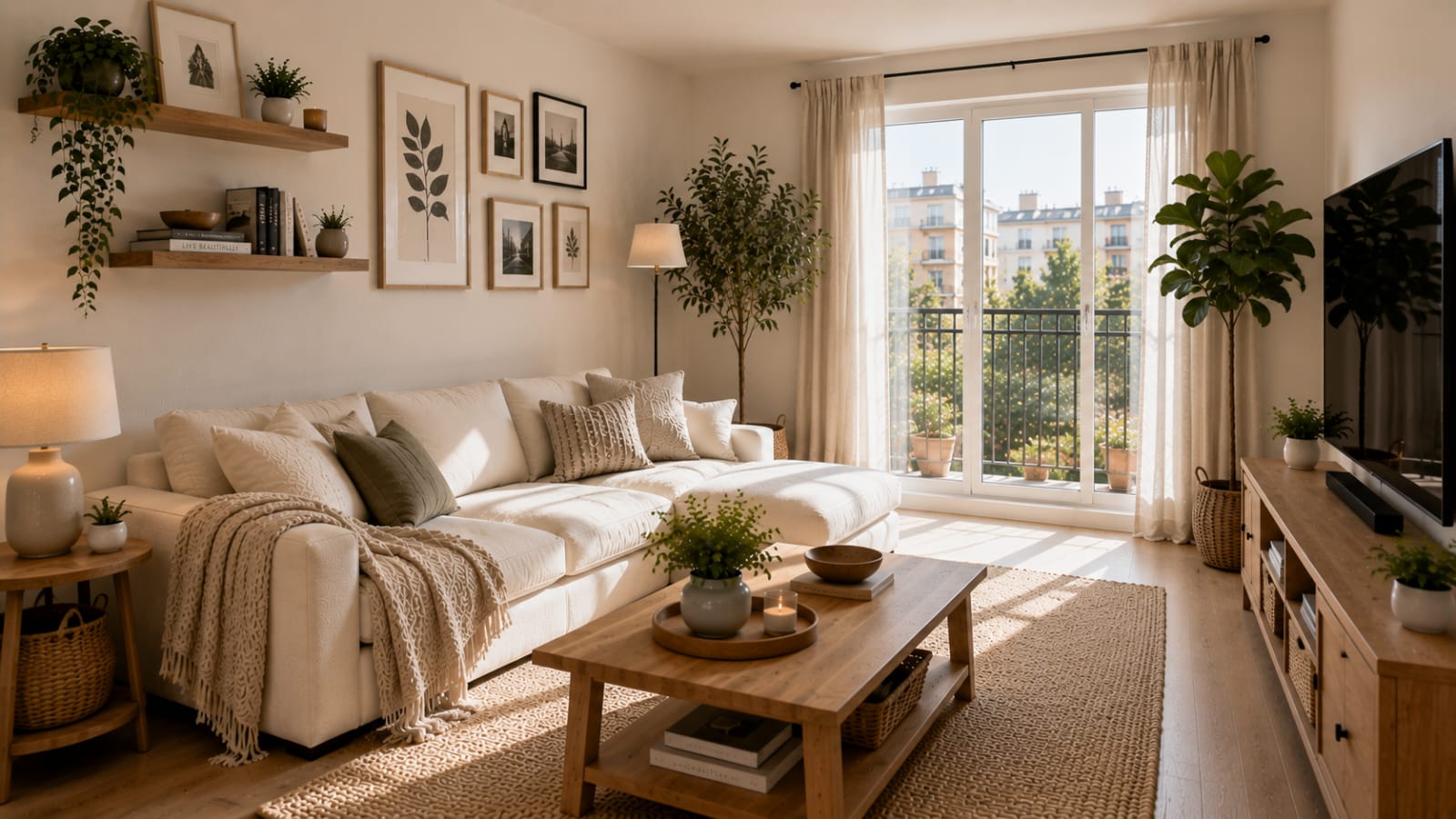
 Living in a small apartment does not mean sacrificing style. The right living room decor ideas for small apartments can make any compact space feel brighter and more spacious. You also do not need a large budget to create a beautiful home. With a few smart furniture and decor choices, you can maximize both style and function.
what are small apartment living room decor ideas? Small apartment living room decor ideas are styling and storage strategies that make a compact living space feel larger, more functional, and more personal. They focus on smart furniture choices, light colors, vertical storage, and layered decor to create a room that feels intentional rather than cramped.
This guide is for renters, first-time apartment dwellers, college students, and anyone working with a living room under 300 square feet. Whether your space is a studio or a one-bedroom apartment, these ideas will help you make the most of every inch.
These living room decor ideas for small apartments are practical, affordable, and easy to follow. Start with one idea today and improve your space step by step.
27 Living Room Decor Ideas for Small Apartments
1. Choose a Light, Neutral Color Palette
Light colors reflect natural light and make walls feel further away. Soft whites, warm creams, and pale grays are your best options. Stick to two or three tones from the same color family so the room feels calm, not busy.
- Warm white for walls
- Cream or oat for larger furniture
- Soft gray or sage for accent pieces
- Natural wood tones for warmth
Bonus Tip: If you rent and cannot paint, peel-and-stick wallpaper on one wall adds color and texture without damaging anything.
2. Use a Large Area Rug to Define the Space
A rug defines your living zone and makes the whole room feel intentional. I’ve found that most people choose rugs that are too small. Go bigger. The front legs of all seating should sit on the rug.
- Size up rather than down
- Light colors make floors feel larger
- Patterns add personality without wall clutter
- Low pile is easier to maintain in small spaces
Bonus Tip: Layer a smaller patterned rug over a larger neutral one for a cozy, collected look that costs less than buying one statement rug.
3. Float Furniture Away From the Walls
Pushing furniture against every wall is a common mistake. Floating the sofa even six inches away from the wall instantly creates more breathing room. I’ve found this single layout change makes more visual difference than almost anything else.
- Leave at least 18 inches between furniture pieces for traffic flow
- Float the sofa away from the wall
- Use a sofa table to fill the gap behind
- Keep a clear path from the entry to the seating area
Bonus Tip: Draw your room to scale on paper before moving any furniture. It takes 10 minutes and prevents hours of rearranging.
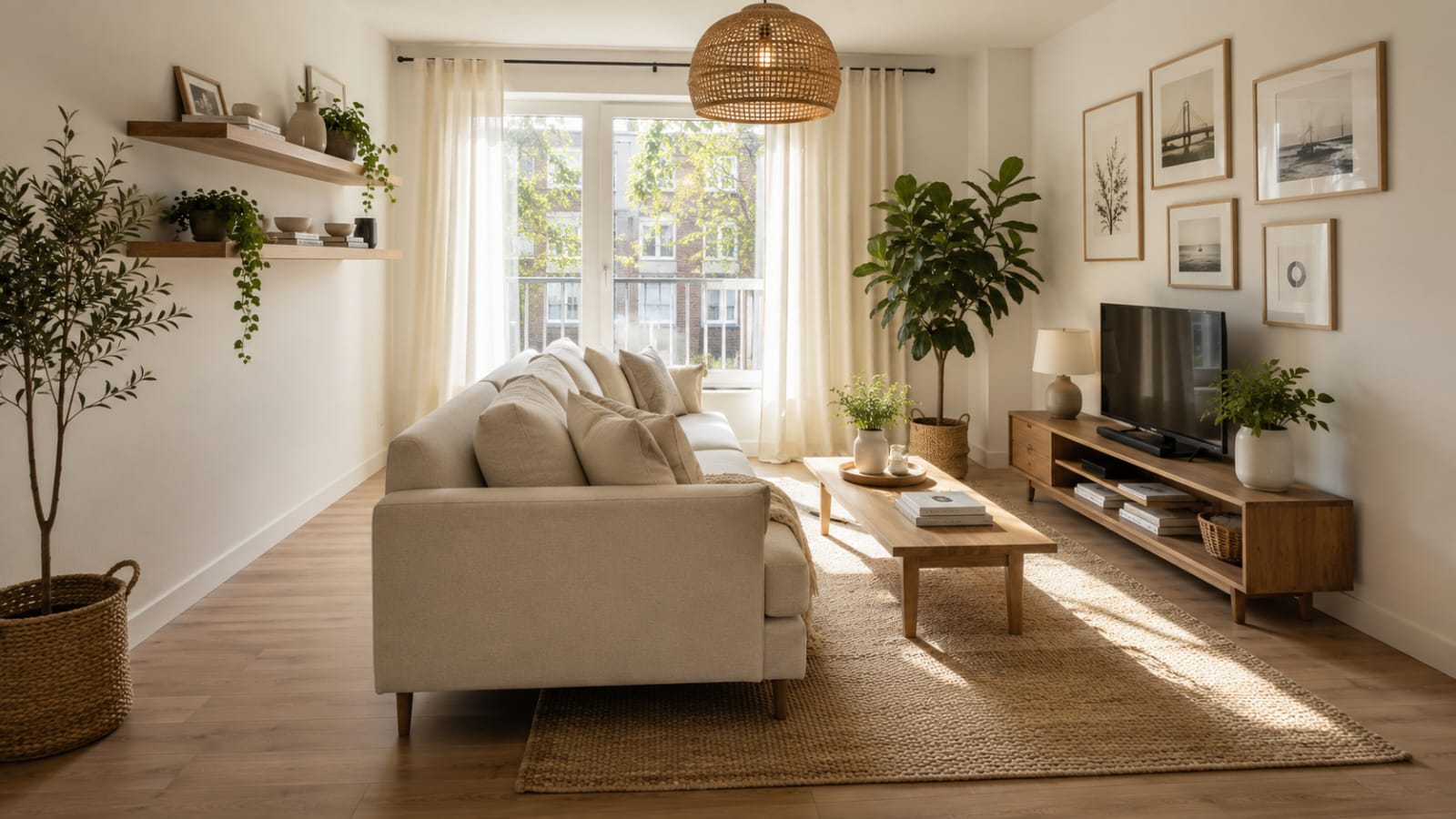
4. Invest in a Sofa With Storage
Every piece of furniture in a small apartment should do more than one job. A storage sofa holds blankets, pillows, and seasonal items underneath. I’ve found it is one of the most practical investments for apartment living.
- Lift-up seat base for bulky items
- Pull-out drawers for everyday storage
- Choose a neutral upholstery that hides minor wear
- Measure doorways before ordering
Bonus Tip: Ottoman storage is another excellent option. A large upholstered storage ottoman doubles as a coffee table, extra seating, and hidden storage all in one piece.
5. Add Mirrors to Bounce Light
A large mirror opposite a window reflects natural light and makes the room feel twice as spacious. I’ve found that leaning an oversized mirror against a wall is one of the quickest visual upgrades in a small apartment.
- Place a large mirror opposite the main window
- Lean an oversized mirror against a wall for impact
- Group smaller mirrors in a gallery arrangement
- Choose frames that match your decor style
Bonus Tip: Mirrored furniture like a side table or console reflects light from multiple angles and doubles the visual spaciousness of a small living room.
6. Use Vertical Space With Tall Bookshelves
When floor space is tight, go vertical. A tall bookshelf that reaches close to the ceiling draws the eye upward and adds significant storage. I’ve found that a six-foot shelf changes how the entire room feels without adding any floor footprint.
- Choose a bookshelf that reaches at least six feet high
- Style with a mix of functional and decorative items
- Use baskets on lower shelves to hide clutter
- Keep the top shelves lighter visually
Bonus Tip: Paint the inside back panel of a bookshelf a deeper shade than the walls. This creates depth and makes the bookshelf look like a built-in feature.
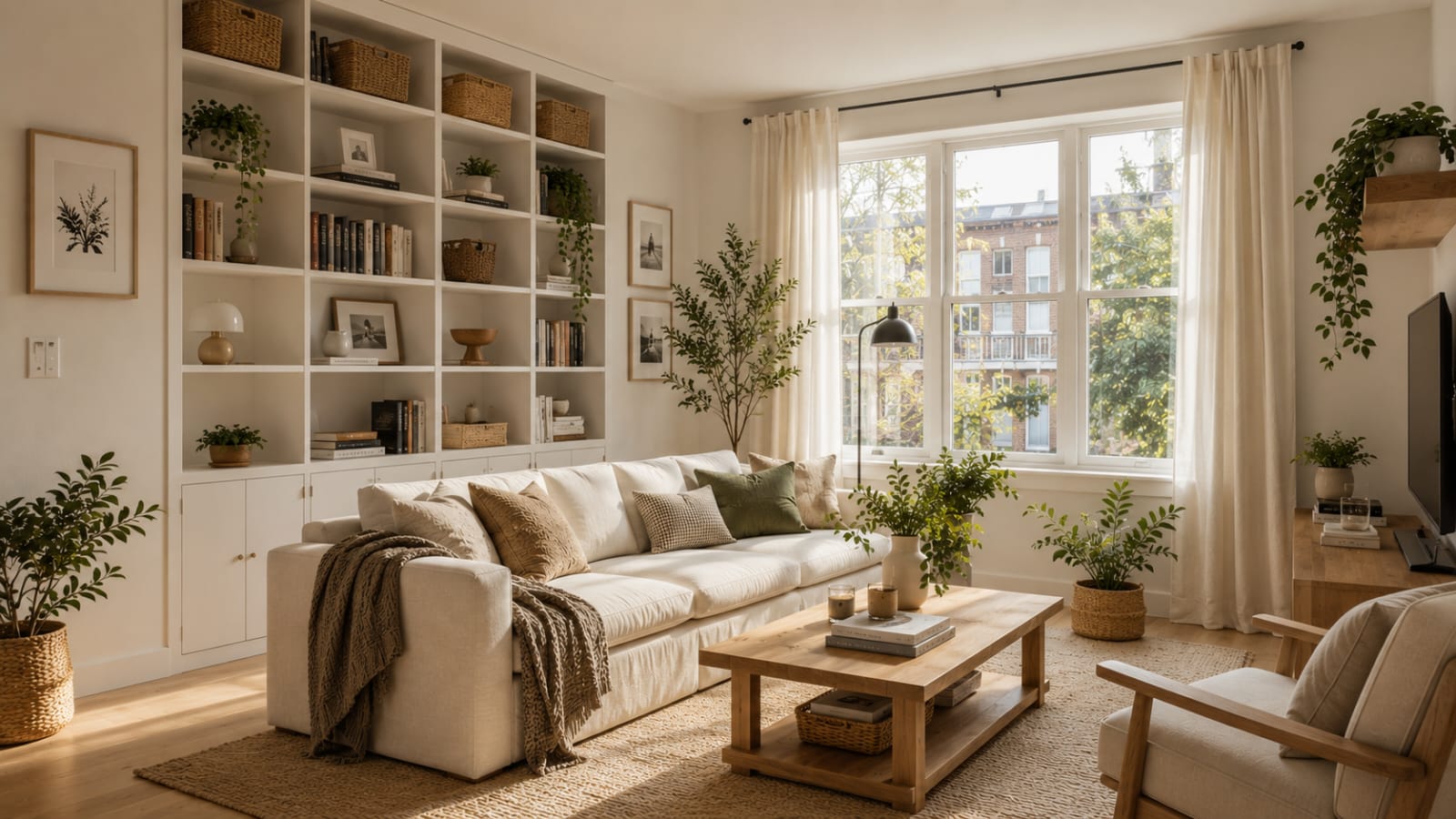
7. Choose a Glass or Lucite Coffee Table
A glass or acrylic coffee table lets the eye travel through it instead of stopping at a solid surface. I’ve found that swapping a dark wood table for a glass one is one of the quickest visual refreshes in a small apartment.
- Choose a simple round or rectangular shape
- Keep the table surface mostly clear
- Use a small tray to organize remote controls and coasters
- Clean glass regularly to keep it looking fresh
Bonus Tip: A round coffee table works better in a small living room than a rectangular one because it eliminates sharp corners and allows more traffic flow around it.
8. Layer Lighting for Warmth and Depth
One overhead light makes a small room feel flat. Layer in a floor lamp, a table lamp, and a sconce for warmth and depth. I’ve found that adding just one corner floor lamp changes the mood of the entire room at night.
- One floor lamp in a corner for ambient light
- Table lamps on side tables for task and accent light
- Wall sconces to free up surface space
- Warm bulbs throughout for consistency
Bonus Tip: A floor lamp with an adjustable arm frees up side table space and gives you flexible lighting for reading, working, or relaxing.
9. Hang Curtains High and Wide
Hang curtains close to the ceiling, not the window frame. Extend the rod six to twelve inches past each side of the window. I’ve found this single change makes ceilings feel noticeably higher and windows feel much larger.
- Mount the rod within a few inches of the ceiling
- Extend the rod at least six inches beyond the window on each side
- Choose sheer or light linen fabrics
- Floor-length curtains elongate the room
Bonus Tip: Even in a small apartment with standard eight-foot ceilings, floor-length curtains hung near the ceiling create the impression of a much taller room.
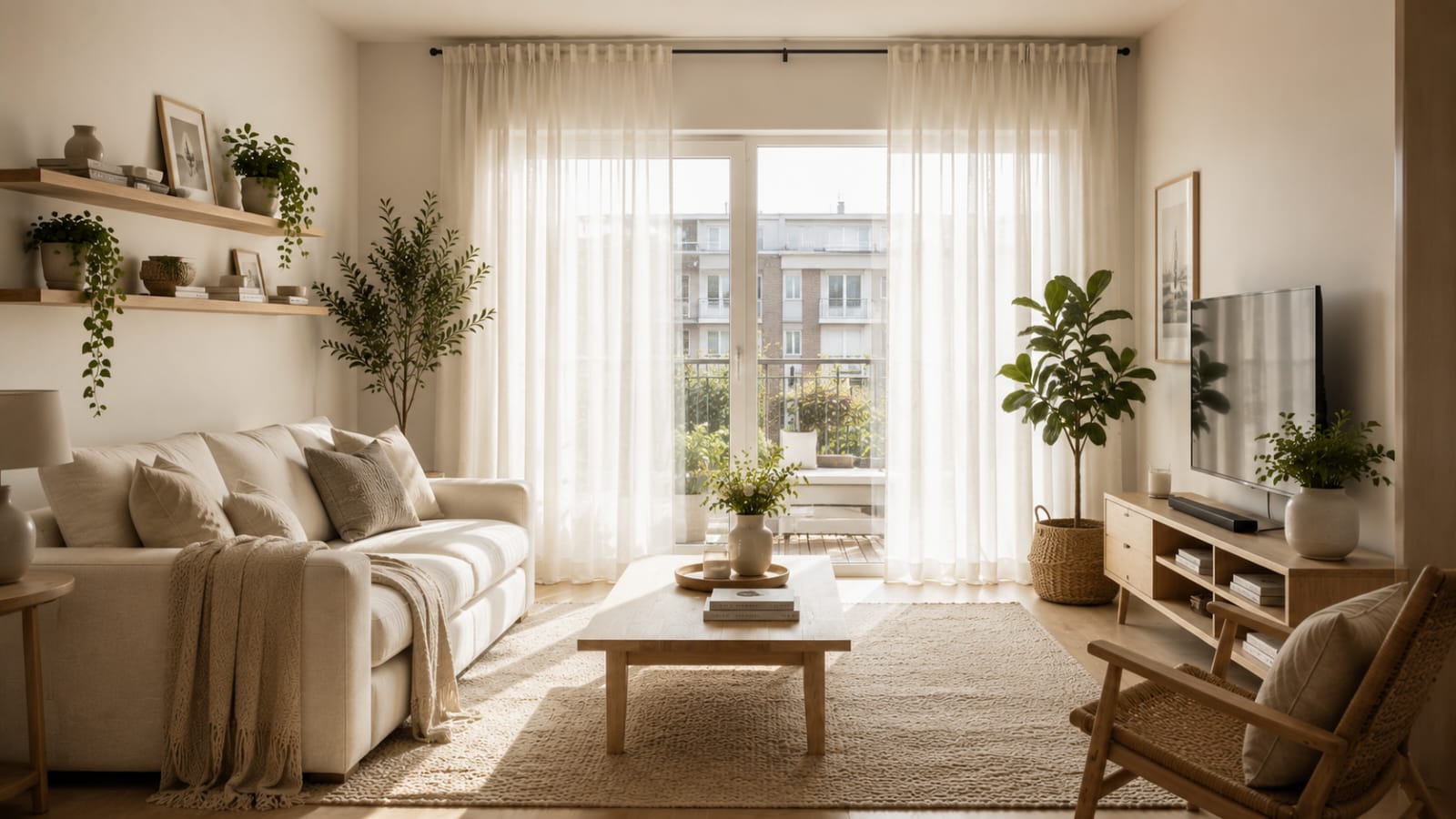
10. Add Plants for Life and Color
Plants add life and color without visual weight. One large floor plant in a corner fills dead space and draws the eye upward. I’ve found that even a single large plant completely changes the feel of a bare corner.
- One large floor plant in a corner
- Small trailing plants on shelves
- Cluster three plants of varying heights for impact
- Use pots that match your color palette
Bonus Tip: If you do not have a green thumb, high-quality faux plants work just as well visually. Modern faux plants are realistic enough that guests rarely notice the difference.
11. Create a Gallery Wall for Personality
A gallery wall above the sofa becomes the room’s focal point without using any floor space. I’ve found it eliminates the need for other large decor pieces on that wall. Mix prints, photos, and mirrors in one or two frame finishes.
- Plan the arrangement on paper or the floor first
- Use frames in one or two finishes (black and natural wood work well together)
- Mix sizes for visual interest
- Center the arrangement over the sofa at eye level
Bonus Tip: Use paper cutouts taped to the wall to plan your gallery arrangement before making any holes. This saves time and prevents unnecessary wall damage.
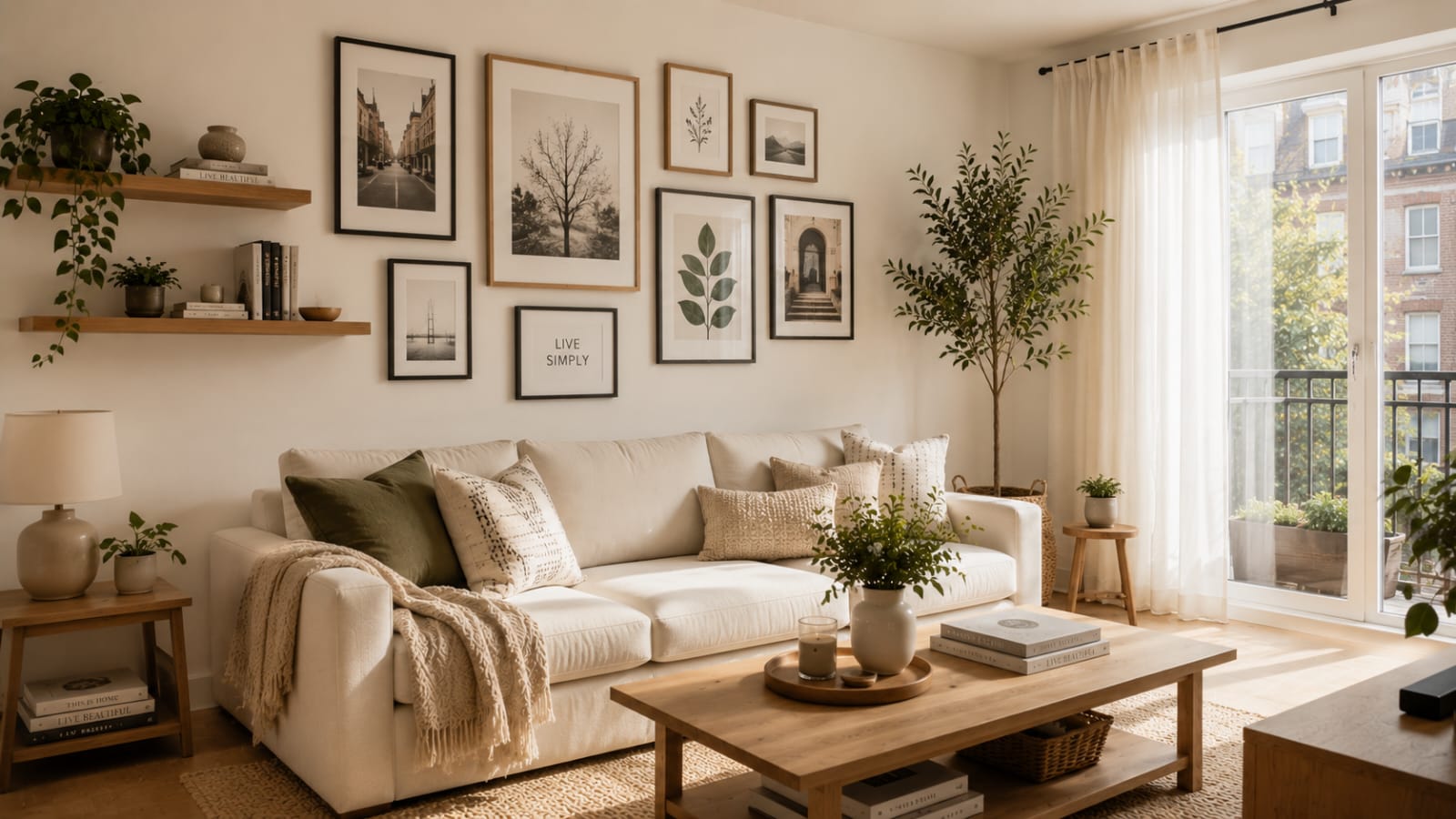
12. Use Multifunctional Furniture
Every furniture piece should serve at least two purposes. A storage ottoman works as a coffee table and a storage unit. A console behind the sofa adds surface and acts as a room divider. I’ve found that multifunctional pieces free up significant floor space.
- Storage ottoman as coffee table and storage
- Nesting tables that tuck away when not in use
- Sofa with storage underneath
- Console table that doubles as a desk
Bonus Tip: Nesting tables are one of the most versatile pieces for small living rooms. They provide surface space when needed and stack away neatly when you want more floor space.
13. Embrace Minimalist Decor
In a small apartment, less is more. A few carefully chosen pieces look more intentional than a crowd of small items everywhere. I’ve found that editing surfaces down to three to five items makes the room feel calm and designed.
- Edit surfaces down to three to five items
- Remove anything that does not bring you joy or serve a purpose
- Rotate seasonal decor to keep the space feeling fresh
- Group small items in threes for visual balance
Bonus Tip: A single large statement decor piece makes more impact than five small ones competing for attention. Choose one oversized vase, sculpture, or plant and let it breathe.
14. Add a Console Table Behind the Sofa
A slim console table behind a floating sofa fills wasted wall space and adds a surface for lamps, plants, and decor. In a studio, it also creates a subtle visual divide between the living and sleeping areas.
- Match the console height to the back of the sofa
- Add a lamp for ambient light
- Keep the surface styled but not overcrowded
- Use baskets underneath for hidden storage
Bonus Tip: In a studio apartment, a console table behind the sofa effectively creates a visual separation between the living area and the sleeping area without a wall or curtain.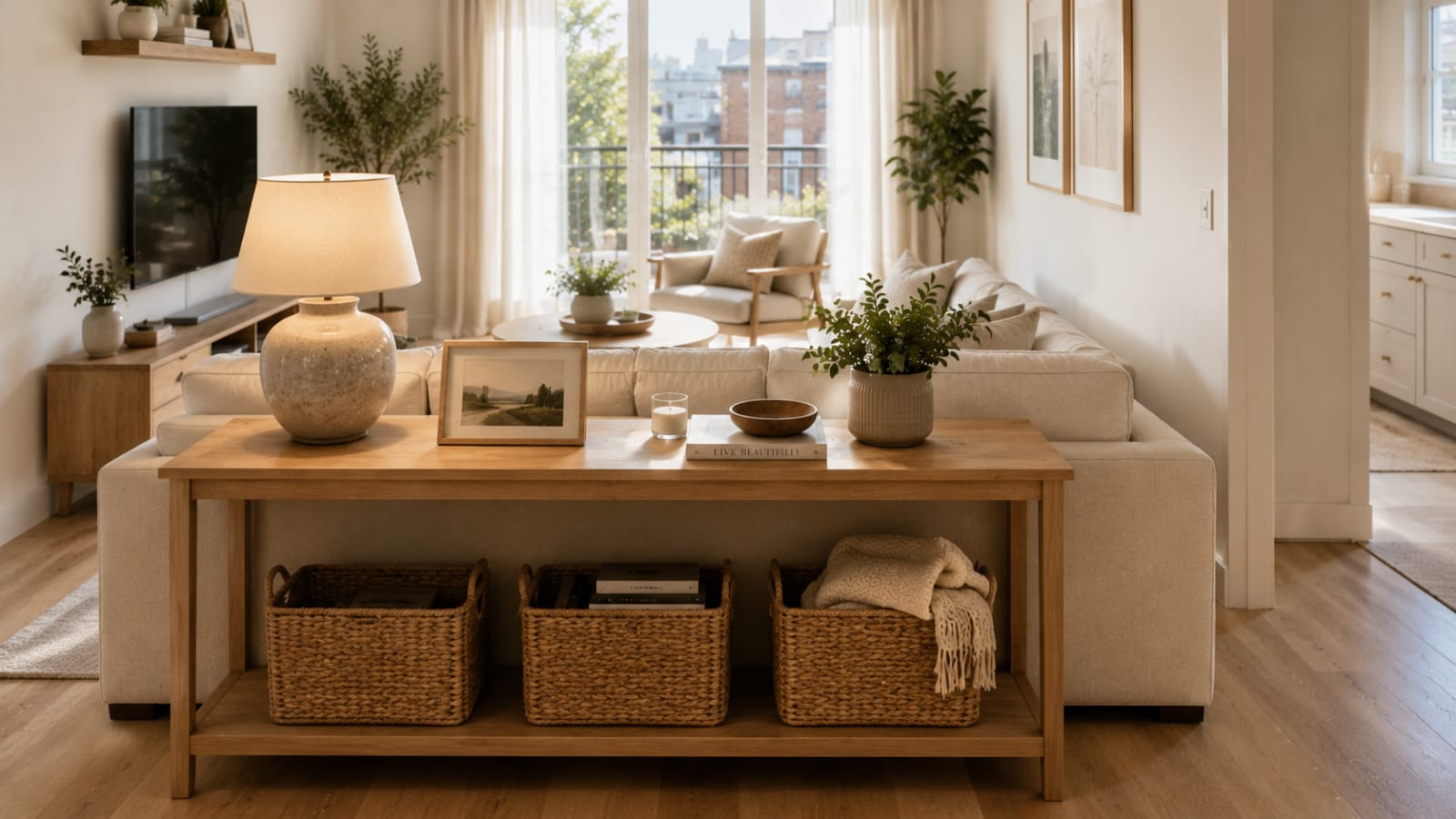
15. Use Floating Shelves for Display and Storage
Floating shelves add storage and display space without the bulk of a bookcase. Install them above the sofa, beside the TV, or flanking a window. I’ve found a cluster of three at varying heights is one of the most affordable and versatile decor moves in a small apartment.
- Install shelves at varying heights for visual interest
- Style with a mix of functional and decorative items
- Use wall anchors rated for the weight you plan to store
- Keep the color palette consistent with the rest of the room
Bonus Tip: Floating shelves on either side of a TV create a built-in entertainment wall look for a fraction of the cost of actual built-in cabinetry.
16. Incorporate Cozy Textures
Texture makes a small room feel warm and lived-in. A chunky knit throw, a woven pillow, and a jute rug add depth without adding color or clutter. I’ve found that layering three different textures creates a noticeably cozier atmosphere instantly.
- Chunky knit or faux fur throw on the sofa
- Woven or textured pillow covers
- Jute or wool area rug
- Linen curtains and ceramic or rattan decor
Bonus Tip: Changing pillow covers seasonally is one of the most affordable ways to refresh the look of your living room without buying new furniture.
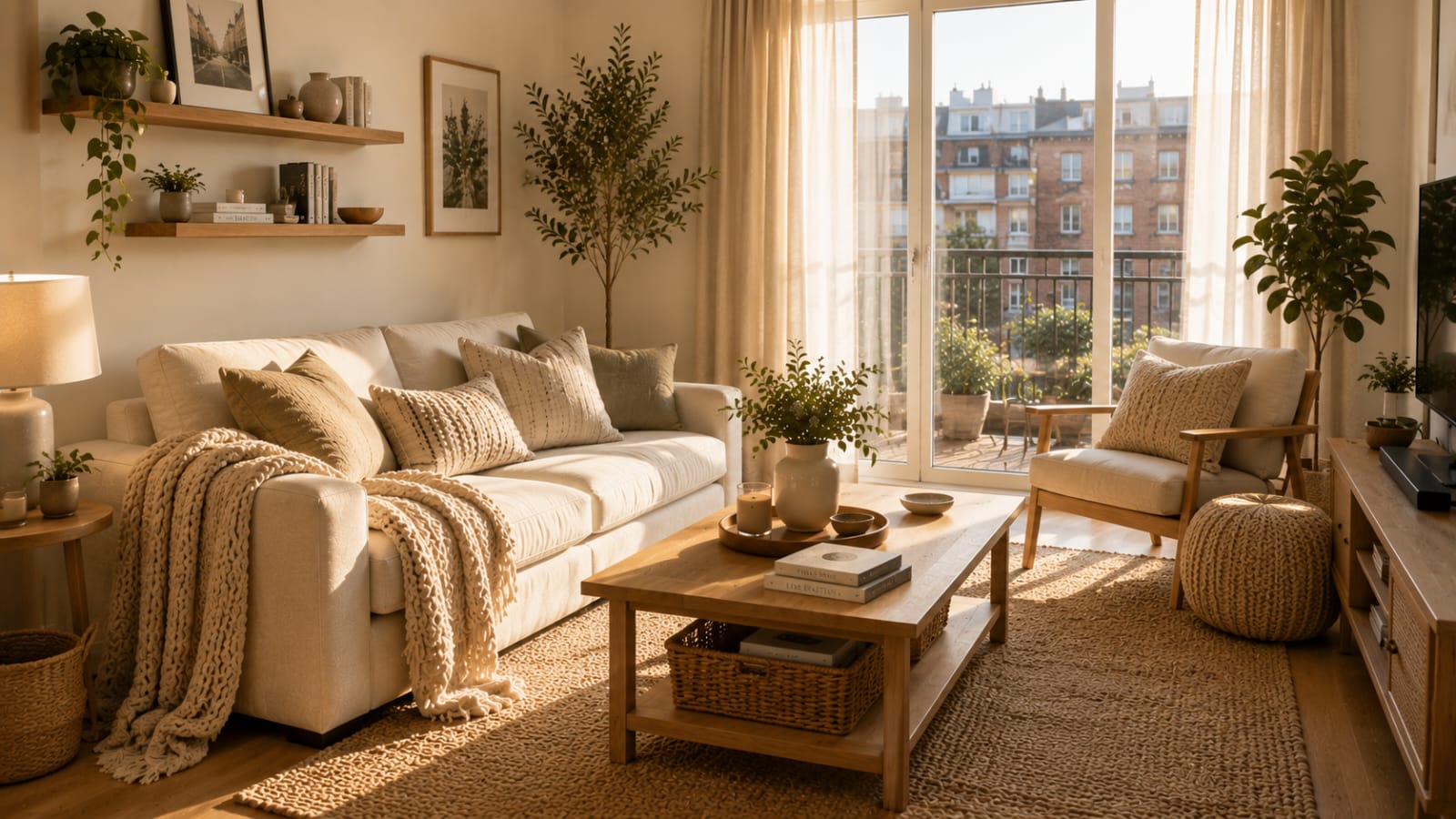
17. Mount the TV on the Wall
Wall-mounting the TV frees up the floor completely. I’ve found this is one of the most impactful single changes in a small apartment living room. Use the space below for a slim credenza or floating shelves.
- Mount the TV at seated eye level (center of screen at 42 to 48 inches from floor)
- Use a tilting mount for flexibility
- Hide cables in a cable management channel or in-wall kit
- Style the space below with a slim console or floating shelves
Bonus Tip: A gallery wall arrangement around a wall-mounted TV makes the screen feel like part of the decor rather than a black box dominating the wall.
18. Add a Small Accent Chair for Extra Seating
A small accent chair adds seating and personality without the footprint of a second sofa. Choose one with slim visible legs so it looks lighter in the space. I’ve found one well-chosen accent chair does more for a room’s personality than almost any other single piece.
- Choose a chair with exposed slim legs
- Pick a color or texture that contrasts slightly with the sofa
- Position it at an angle to the sofa to create a conversation arrangement
- Add a small side table beside it for function
Bonus Tip: A swivel accent chair is especially practical in a small apartment because it can rotate to face the TV, a guest, or a window view without moving the furniture.
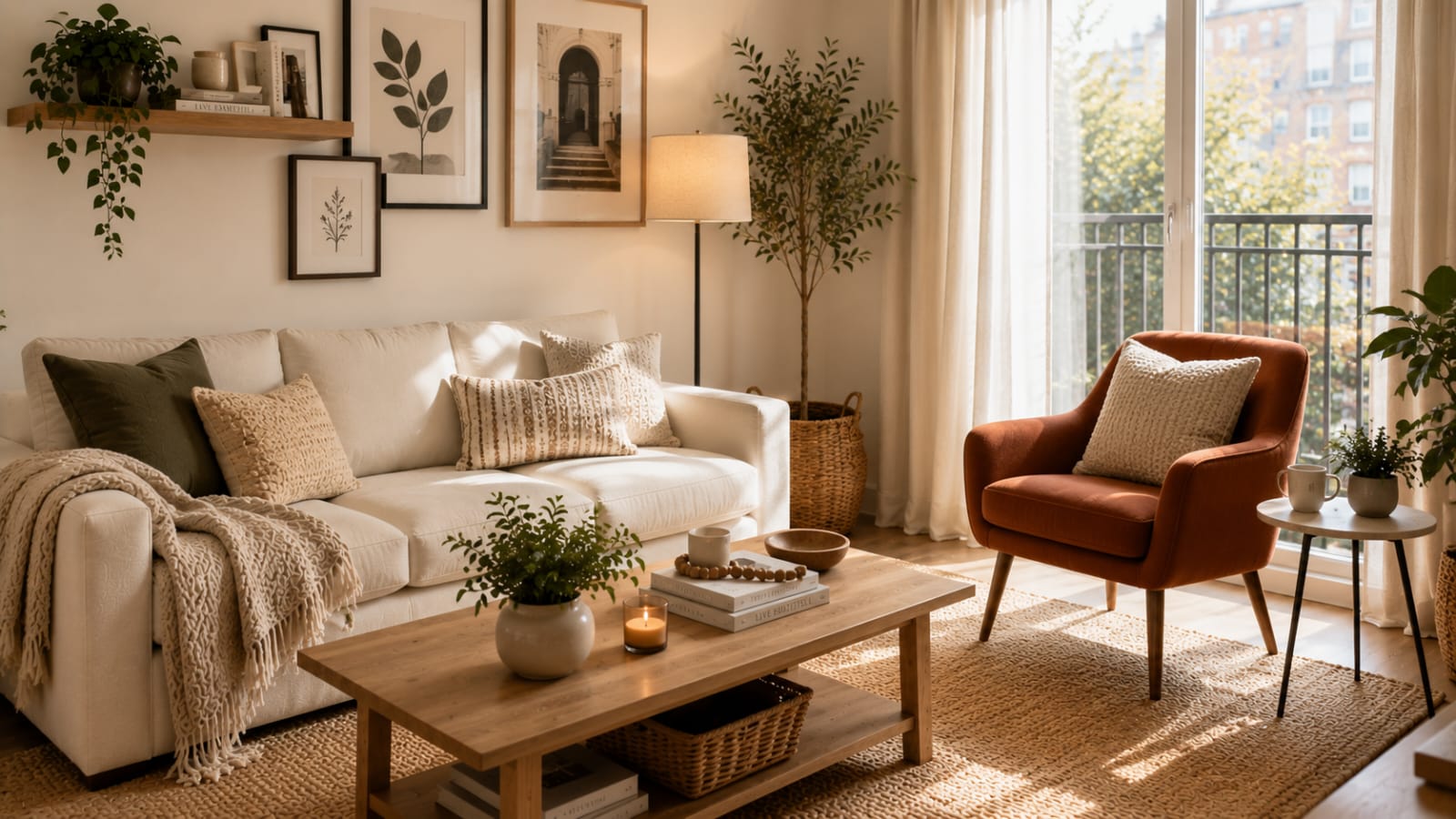
19. Use Storage Baskets and Bins
Woven baskets hide clutter while adding texture and warmth. Place a large one beside the sofa for throw blankets and smaller ones on shelves for remotes and small items. I’ve found that a few baskets instantly make a small room feel tidier.
- Use large baskets on the floor for throw blankets
- Use smaller baskets on shelves for remote controls and small items
- Choose a consistent material throughout the room
- Labeled baskets make finding items faster
Bonus Tip: A basket beside the sofa for throw blankets is one of those practical decor additions that looks intentional while solving a real daily storage problem.
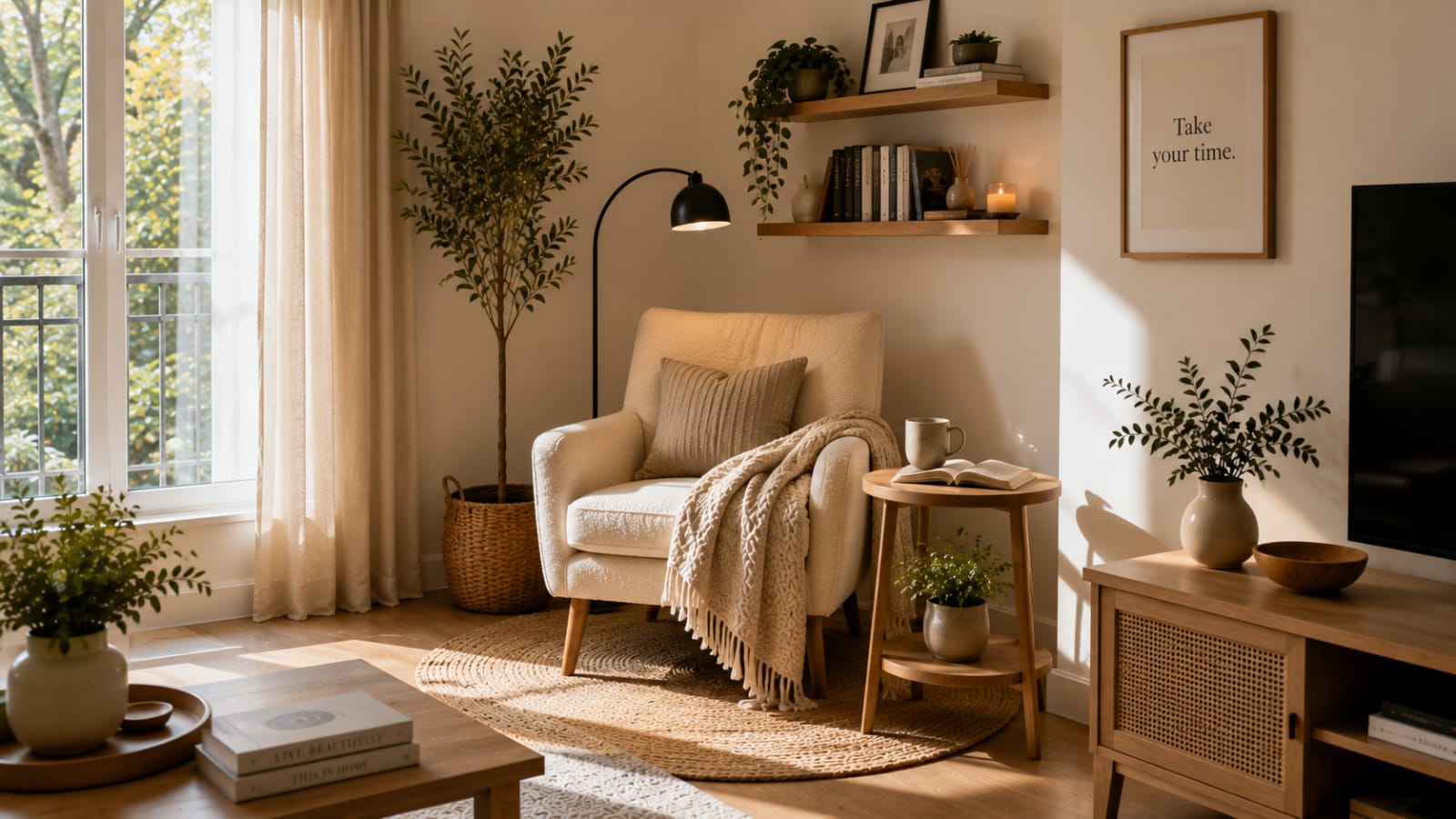
20. Create a Reading Nook in an Unused Corner
An unused corner is an opportunity. A comfortable chair, a floor lamp, and a small side table create a cozy reading nook. I’ve found that a defined reading zone makes a small living room feel purposeful and larger because it functions like two rooms in one.
- One comfortable chair with a supportive back
- A floor or arc lamp positioned over the shoulder
- Small side table for a drink and a book
- A plant or small shelf nearby to complete the zone
Bonus Tip: A reading nook also works as a remote work spot during the day. Adding a lap desk and keeping a charger in the basket beside the chair keeps the nook flexible without looking like an office.
21. Choose Low-Profile Furniture
Low-profile furniture keeps sightlines clear and makes ceilings feel taller. I’ve found that switching to a low sofa makes an eight-foot ceiling feel noticeably higher. Pair low furniture with tall curtains or a bookshelf to balance the vertical proportion.
- Sofa seat height around 16 to 17 inches from the floor
- Coffee table height matching or slightly lower than sofa seat
- Media console no taller than 20 inches
- Balance with tall vertical elements on at least one wall
Bonus Tip: The Scandinavian design tradition built its entire aesthetic around low-profile furniture in small spaces. Mid-century modern and Japandi styles follow the same principle and are both popular and widely available at accessible price points.
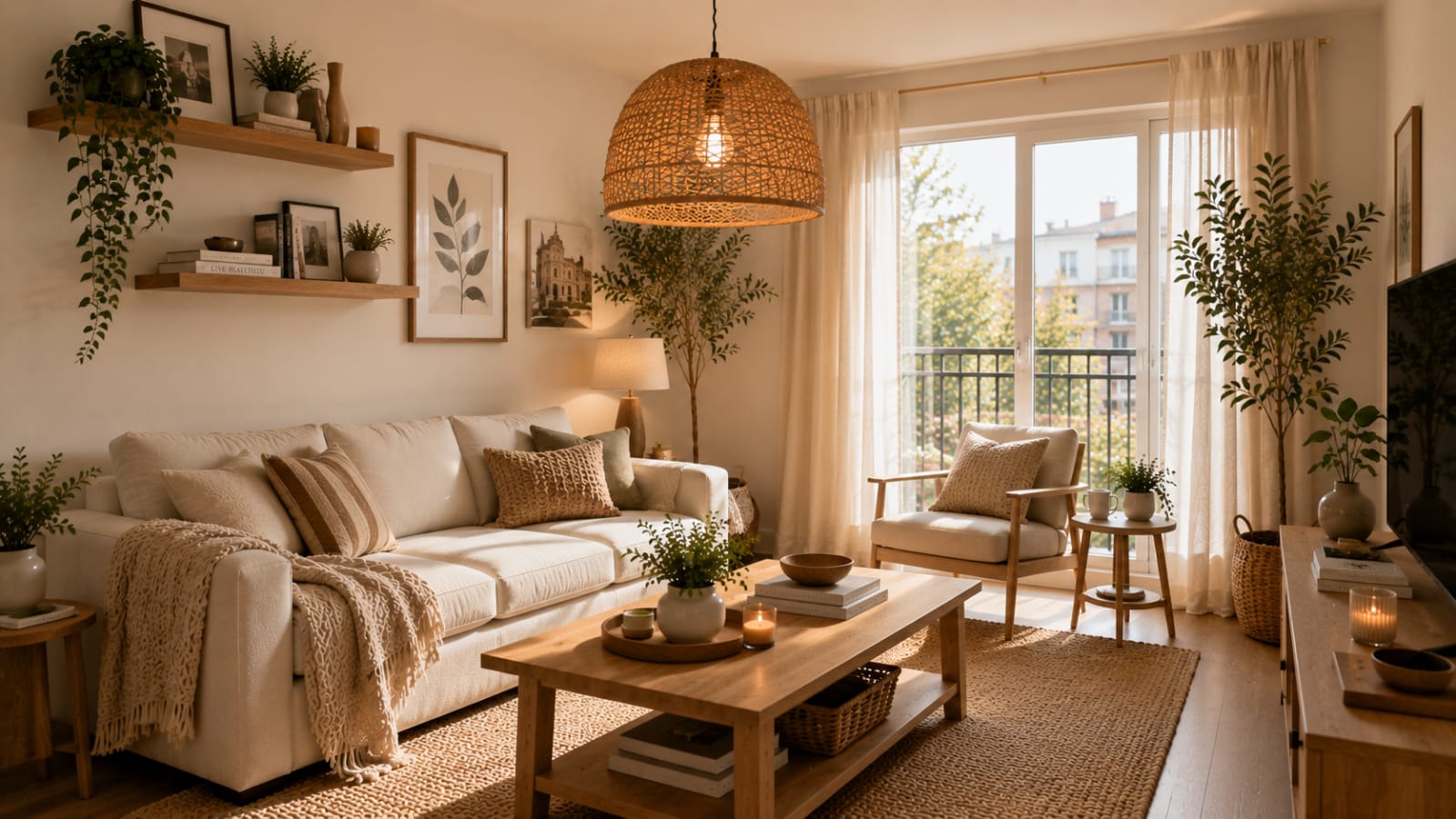
22. Add a Statement Lighting Fixture
Replacing a basic ceiling fixture with a statement pendant adds personality and visual height. I’ve found that an interesting light fixture is one of the highest-impact, lowest-cost upgrades in any apartment. An open rattan pendant works especially well in small spaces.
- Rattan or bamboo pendants add warmth
- Geometric metal fixtures add modern edge
- Drum shades are versatile and widely available
- Choose a fixture diameter roughly half the width of the seating area
Bonus Tip: Most apartment light fixtures use a standard mounting and can be swapped without an electrician. Save the original fixture and reinstall it when you move out to get your deposit back.
23. Use a Daybed or Sleeper Sofa
A daybed or sleeper sofa works as both seating and a guest bed. Style it with bolster pillows along the back and decorative pillows in front. I’ve found this is one of the most practical investments for studio apartments or anyone who hosts occasional overnight guests.
- Position it along the longest wall to maximize floor space
- Use bolster pillows along the back for sofa styling
- Choose a neutral upholstery that works day and night
- A quality mattress topper improves comfort for sleeping guests
Bonus Tip: A daybed with trundle storage underneath provides a second sleeping option for guests while keeping the primary living space clear during everyday use.
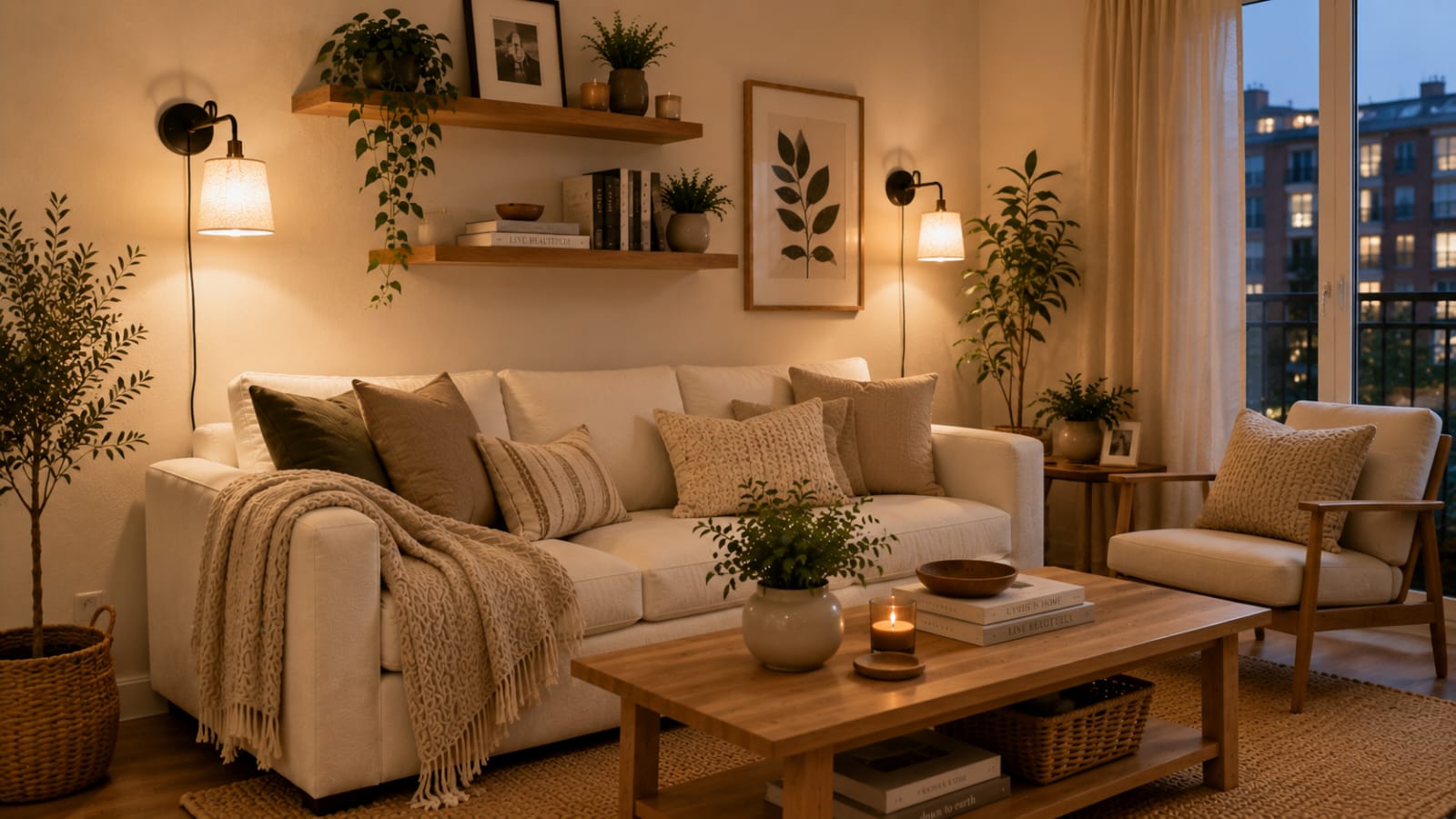
24. Incorporate Wall Sconces to Free Up Floor Space
Plug-in wall sconces provide warm lighting without using any floor or surface space. I’ve found that replacing two table lamps with sconces instantly frees up both side tables in a small living room. No hardwiring needed for renters.
- Install at shoulder height (around 60 inches from the floor)
- Choose plug-in sconces for renter-friendly installation
- Use a cord cover to keep the plug tidy
- Pair sconces on either side of the sofa for balanced light
Bonus Tip: Swing-arm wall sconces are especially practical because they can extend over a reading spot beside the sofa and fold flat against the wall when not in use.
 .
.
25. Add a Slim Entryway Piece Near the Door
Defining the entryway zone prevents shoes, bags, and coats from spreading into the living area. A slim console, a hook rail, or a small rug and a key tray is enough. I’ve found this small step makes the entire apartment feel more organized.
- A narrow console no deeper than twelve inches
- Wall hooks for bags and coats
- A small tray or bowl for keys
- A mirror above the console for light and function
Bonus Tip: A small entry rug that coordinates with the living room rug visually connects the two zones and makes the transition between spaces feel intentional.
26. Use Dark Accents Intentionally
All-light rooms can feel bland. A few dark accents add contrast and grounding. I’ve found the 80-20 rule works best: 80 percent light neutrals and 20 percent dark accents creates a balanced look that feels designed without feeling heavy.
- Black or dark picture frames on the gallery wall
- Dark wood side table or tray
- Two or three dark throw pillows among lighter ones
- A dark pot for a floor plant
Bonus Tip: Matte black hardware on cabinets, shelves, and fixtures ties dark accents together cohesively throughout a small space without adding any additional furniture.
27. Keep the Space Edited and Consistent
The most stylish small apartments have one thing in common: they are edited. Every item earns its place. I’ve found that a quick scan every few days and removing anything that does not belong keeps the room feeling calm and intentional.
- Remove items that do not serve a purpose or bring joy
- Keep surfaces mostly clear with just a few curated pieces
- Refresh the space seasonally with small swaps
- Stick to three colors and two materials throughout the room
Bonus Tip: A monthly living room reset where you clear every surface, clean underneath furniture, and return items to their homes takes about 30 minutes and maintains the look you worked to create.
Budget Decorating Tips
Decorating a small apartment on a budget is completely doable. Start with high-impact changes first and build gradually.
Start here before spending anything:
- Rearrange existing furniture using the floating-away-from-walls principle
- Swap furniture between rooms to find better fits
- Declutter and edit surfaces down to three to five items each
- Clean windows to maximize the natural light you already have
Affordable Living Room Decor Upgrades
Low-cost high-impact upgrades:
- A new area rug defines the space and adds warmth for under $100
- Peel-and-stick wallpaper on one wall adds personality without paint for under $50
- New throw pillow covers refresh the sofa for under $40
- A set of matching frames for a gallery wall costs under $60
- Thrift stores and Facebook Marketplace regularly have accent chairs, side tables, and decor for a fraction of retail prices
Smart Long-Term Investments
Medium-investment pieces worth saving for:
- A storage ottoman that replaces the coffee table
- Floor-length curtains and a tension rod set
- A statement pendant light fixture
- One large quality area rug
For more expert decorating inspiration, browse the latest small living room ideas from HGTV.
Common Decorating Mistakes to Avoid
Choosing furniture that is too large for the space makes a small living room feel stuffed. Always measure the room and the furniture before purchasing.
Hanging art too low is one of the most common decorating mistakes. Center art at eye level, which is approximately 57 to 60 inches from the floor to the center of the piece.
Using too many patterns in a small room creates visual chaos. Stick to one or two patterns and let the rest of the room breathe in solid neutrals.
Neglecting lighting leaves a small apartment feeling flat and cold. Layered lighting using at least three light sources makes a dramatic difference in the evening atmosphere.
Buying decor without a plan leads to a room that looks collected rather than designed. Decide on a color palette and style before purchasing a single item and stick to it.
Expert Decorating Tips
These are the principles that professional interior designers consistently apply to small apartment living rooms.
The visual line rule: Unbroken horizontal lines across a room make it feel narrower. Break them up with varying heights of furniture, plants, and decor to create visual movement.
The 60-30-10 color rule: Use 60 percent of a dominant neutral (walls and large furniture), 30 percent of a secondary color (rug, curtains, accent chair), and 10 percent of an accent (throw pillows, art, decor objects).
The odd number rule: Group decor items in odd numbers. Three or five items grouped together looks more natural and balanced than two or four.
The scale rule: Mix at least one large-scale item in every room. A large plant, an oversized mirror, or a statement pendant prevents a small room from looking like it was furnished entirely from the kids’ section.
The sightline rule: Stand in the doorway of your living room and notice what you see first. That is your focal point. Intentionally style it to be the most attractive element in the room.
Best Amazon Products for Small Apartment Living Room Decor
Storage Ottoman
Best For: Replacing a standard coffee table while adding hidden storage for blankets, pillows, and everyday items
Key Benefits:
- Multifunctional as coffee table, extra seating, and storage
- Keeps the floor clear of extra furniture
- Available in neutral upholstery that suits any palette
- Easy to move for flexible floor arrangements
Buying Tips: Choose a version with a firm lid that supports a serving tray. Measure your sofa height first and match the ottoman top to within one to two inches of the seat height.
Check the latest price on Amazon.
Large Area Rug
Best For: Anchoring the seating area and making the living room feel more defined and intentional
Key Benefits:
- Defines the living zone in an open-plan apartment
- Adds warmth and texture to a hard floor
- Light colors visually expand the floor space
- Low pile is easier to clean and maintain
Buying Tips: For a standard sofa and two chairs, choose an 8×10 or larger rug. The front legs of all seating should rest on the rug.
Check the latest price on Amazon.
Floating Wall Shelves
Best For: Adding display and storage space on empty walls without the footprint of a bookcase
Key Benefits:
- Frees up floor space completely
- Creates visual interest on bare walls
- Holds plants, books, candles, and small decor
- Easy to install with basic tools
Buying Tips: Choose shelves rated for at least 20 pounds and always anchor into wall studs for secure installation. Buy a set of three at varying lengths for the most flexibility.
Check the latest price on Amazon.
Plug-In Wall Sconces
Best For: Adding layered lighting to a small living room without hardwiring or electrician costs
Key Benefits:
- Frees up side table surfaces completely
- Adds warm ambient light at the ideal wall height
- No hardwiring required for renters
- Cord covers keep the installation tidy
Buying Tips: Look for sconces with a swing arm for flexibility. Choose a warm bulb (2700K) for the coziest atmosphere.
Check the latest price on Amazon.
Rattan or Woven Pendant Light
Best For: Replacing a basic apartment ceiling fixture with a statement piece that adds warmth and personality
Key Benefits:
- Adds visual height and character to a plain ceiling
- Natural materials work with any neutral palette
- Available in a range of sizes for different room scales
- Easy to install in any standard light socket
Buying Tips: Choose a pendant with a diameter between 16 and 20 inches for a standard small living room. Go larger in rooms with higher ceilings.
Check the latest price on Amazon.
Storage Baskets Set
Best For: Hiding everyday clutter on open shelves and adding texture to the living room
Key Benefits:
- Functional and decorative simultaneously
- Natural materials add warmth and texture
- Available in sets for a consistent look throughout the room
- Easy to move and repurpose as needs change
Buying Tips: Choose a set with at least two sizes. Larger baskets work on the floor beside the sofa for blankets. Smaller ones fit on shelves for remotes and small items.
Check the latest price on Amazon.
Frequently Asked Questions
How do I make a small apartment living room look bigger? Use light neutral colors on the walls, hang curtains close to the ceiling, choose low-profile furniture with visible legs, add a large mirror opposite the main window, and keep surfaces mostly clear. These five changes together create a significantly more spacious feel.
What colors make a small living room look larger? Soft whites, warm creams, pale grays, and light beige tones reflect light and make walls feel further away. Stick to one dominant neutral and layer in texture rather than color for depth without visual weight.
How do I decorate a small apartment living room on a budget? Start by rearranging existing furniture for free. Then invest in a large area rug, new throw pillow covers, matching picture frames for a gallery wall, and floor-length curtains. These four additions deliver the highest visual impact for the lowest cost.
What size rug should I use in a small living room? Go larger than you think. For most small living rooms with a sofa and two chairs, an 8×10 foot rug is the minimum. The front legs of all seating should sit on the rug. A rug that is too small makes the room feel disjointed.
How do I add storage to a small apartment living room without it looking cluttered? Use storage that doubles as decor: storage ottomans, woven baskets, floating shelves with styled arrangements, and console tables with baskets underneath. The goal is to make storage invisible by making it attractive.
What furniture works best in a small apartment living room? Choose multifunctional pieces with slim profiles and visible legs. A storage sofa or ottoman, a glass or acrylic coffee table, nesting side tables, and a slim console table deliver function without bulk.
How do I make a small living room feel cozy? Layer textures using throw blankets, woven pillows, and a soft area rug. Add warm lighting with floor lamps and table lamps. Include a few plants and personal items. Cozy is about warmth and texture, not size.
Can I use dark colors in a small apartment living room? Yes, in small doses. Use the 80-20 rule: 80 percent light neutrals and 20 percent dark accents. Dark picture frames, throw pillows, and a dark wood side table add contrast and depth without making the room feel heavy.
Conclusion
A small apartment living room can be one of the most stylish spaces in your home. It just takes a thoughtful approach to furniture, color, lighting, and storage. Start with the ideas that address your biggest pain points first, whether that is too much clutter, not enough light, or furniture that does not fit the space. Build the rest of your living room decor ideas for your small apartment gradually and with intention.
You do not need a bigger apartment or a bigger budget. You need a better system and a clearer vision. Start with one idea today and see how quickly the space starts to feel like home.
Related Reads
If you enjoyed these ideas, here are more guides to help you organize and decorate your home room by room:
- [Bedroom Organization Ideas]: for a calmer, more organized sleeping space
- [Kitchen Cabinet Organization Ideas]: to maximize storage in your kitchen
- [Toy Organization Ideas]: for families looking to tame the clutter
- [Kids Room Organization Ideas]: practical ideas for children’s bedrooms of any size

Hi, I’m Shankar, the founder of Nestory Home. I share practical home organization, storage, and home decor ideas to help you create a clean, functional, and beautiful home. Every guide is designed to be simple, budget-friendly, and easy to put into practice.