
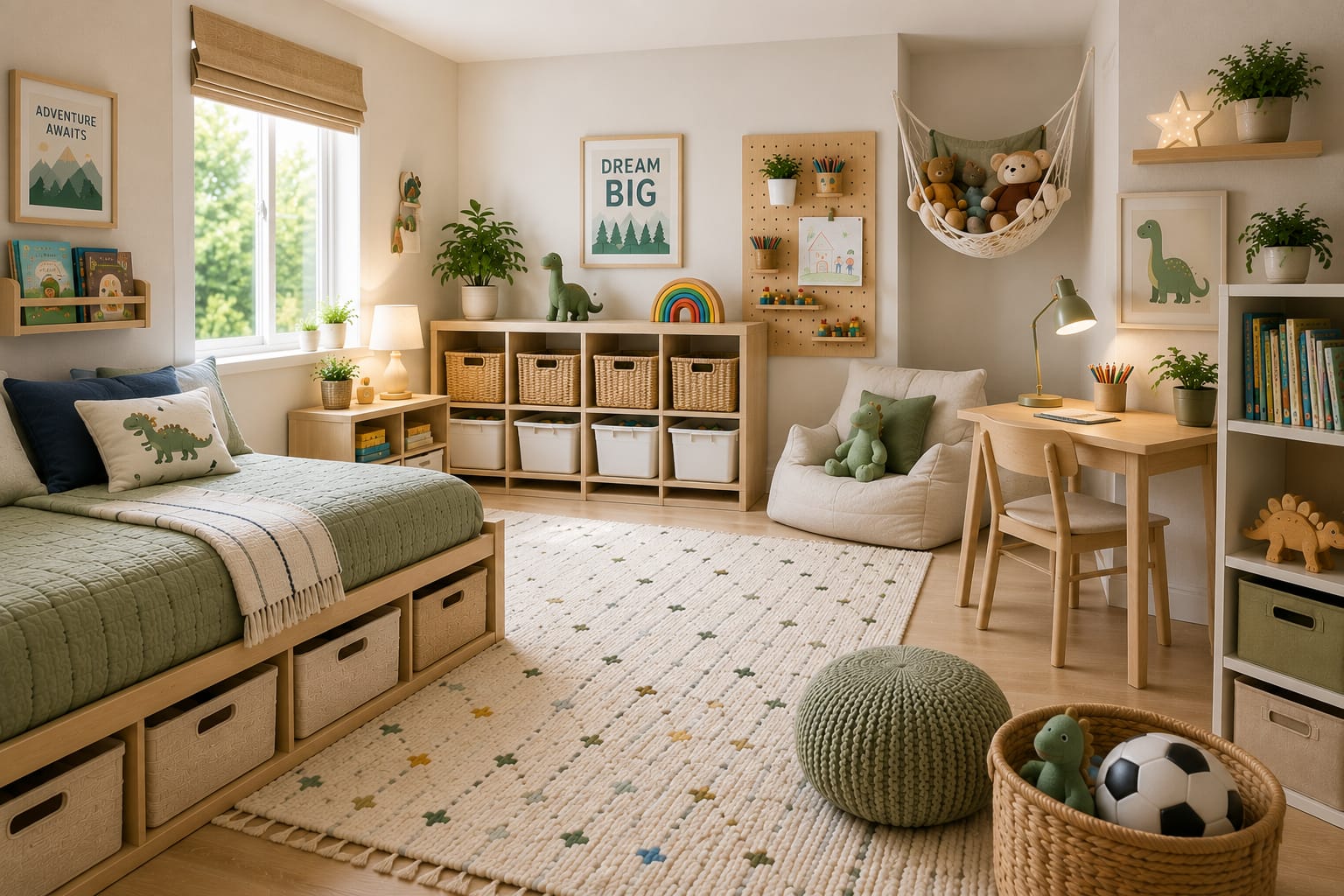
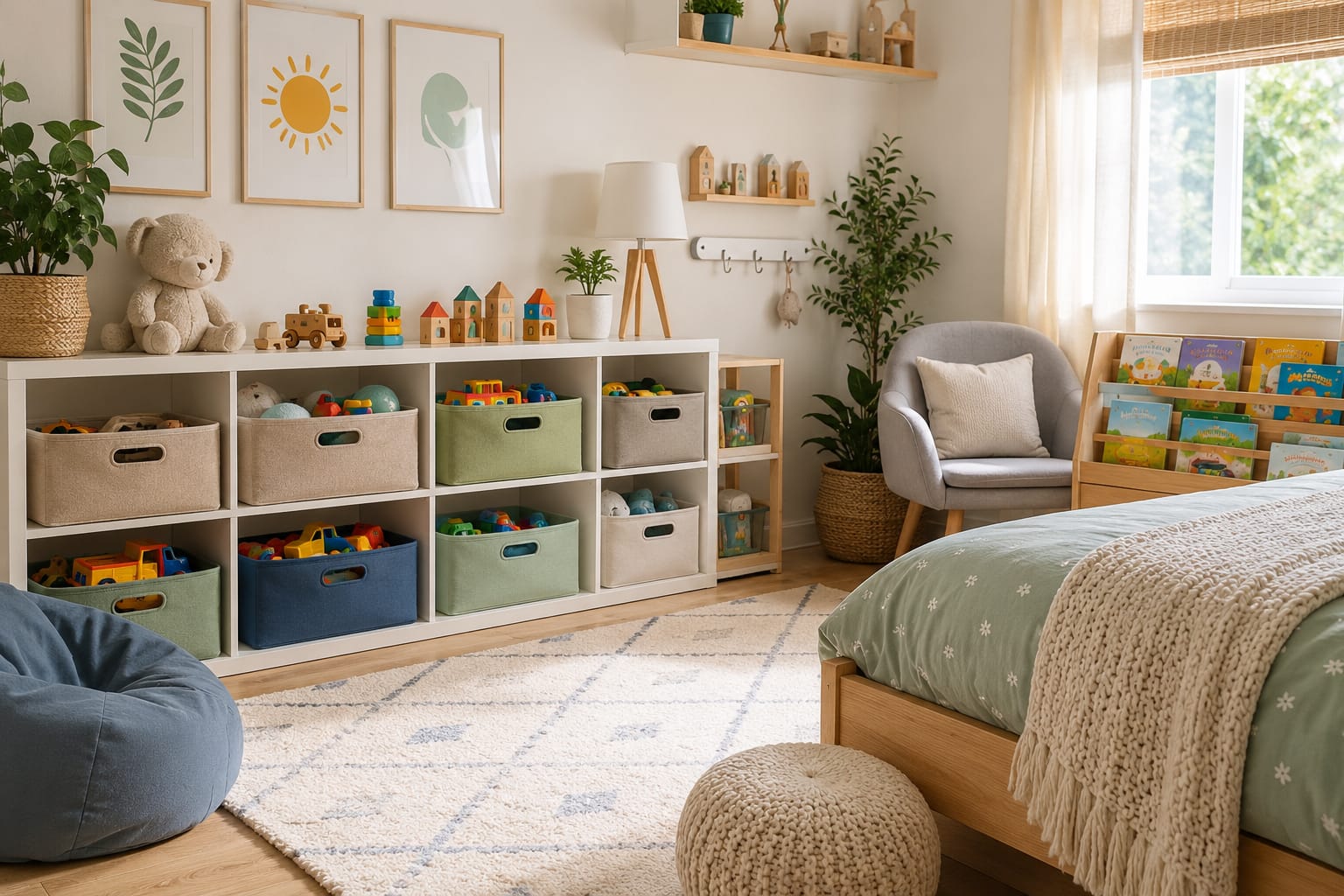
 If your child’s bedroom looks like a toy store exploded, you are not alone. Kids rooms are hard to keep organized. The contents change constantly as children grow and collect new things. The good news is that the right kids room organization ideas make a real difference. A well-organized kids room means kids can clean up on their own. That means less work for parents and more pride for children in their own space. These 23 ideas work for toddlers, school-age children, and tweens alike. The best part is that you do not need a bigger bedroom. A few smart storage changes can completely transform the space.
What are kids room organization ideas? Kids room organization ideas are storage strategies, furniture choices, and daily habits that keep a child’s bedroom functional, clutter-free, and age-appropriate. A well-organized kids room uses labeled bins, accessible storage at kids’ height, vertical wall space, and flexible systems that grow with the child.
This guide is for parents, caregivers, and anyone setting up or refreshing a child’s bedroom. These ideas are practical and affordable. They work in tiny shared bedrooms, large family rooms, and everything in between.
23 Kids Room Organization Ideas
1. Start With a Full Toy and Clutter Purge
Before buying a single bin, pull everything out and sort it with your child. I’ve found that most kids rooms hold toys, books, and clothes that are broken or outgrown. Removing the excess first makes organizing much faster and saves money on storage you don’t need.
Bonus Tip: Make the purge a positive experience by letting your child choose which items to donate. Giving kids ownership of the process makes them more invested in keeping the organized space tidy afterward.
2. Assign Every Category Its Own Bin
Clear labeled bins are the foundation of any organized kids room. Assign one bin per category. For example, one for blocks, one for art supplies, one for stuffed animals. I’ve found that when every category has a home, cleanup becomes a simple sorting game instead of a battle.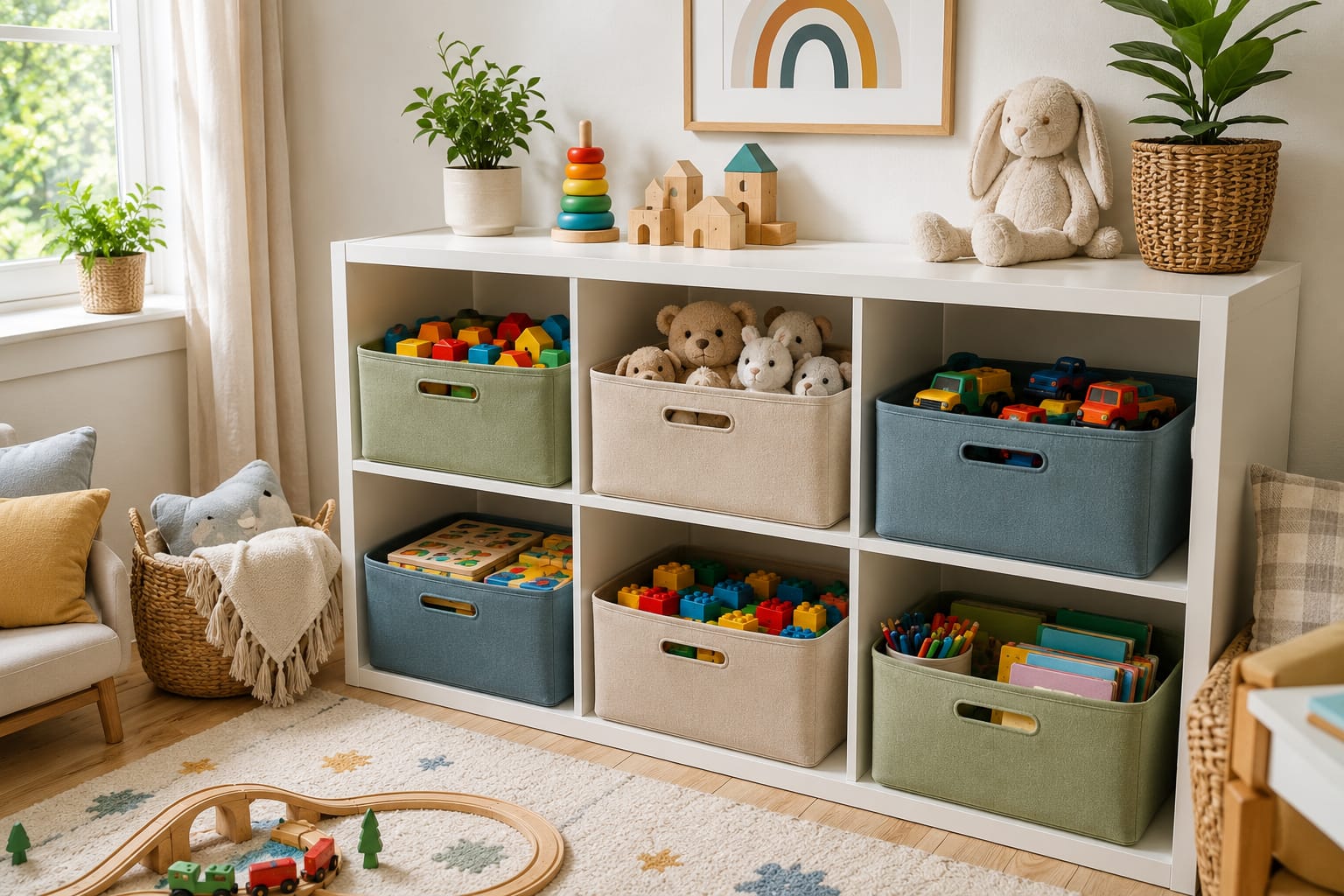
Bonus Tip: Use picture labels alongside word labels for younger children who cannot read yet. A photo of blocks on the blocks bin means even a two-year-old knows exactly where things go.
3. Mount Low Shelves Kids Can Reach Independently
Storage kids cannot reach gets ignored. Wall-mounted shelves at 18 to 24 inches from the floor put toys within easy reach. As a result, I’ve found that kids are far more likely to put things away when they can do it without asking for help.
Bonus Tip: Reserve higher shelves for items you control access to, like craft supplies, board games with small pieces, or items that need supervision. The accessible zone should hold only age-appropriate items kids can manage independently.
Expert Tip: Use rounded-corner shelves or add corner guards to low shelves in young children’s rooms. Sharp shelf corners at toddler eye level are a safety concern that is easy and inexpensive to address before it becomes a problem.
4. Use a Bookshelf Turned Toy Organizer
A standard bookshelf with fabric bins creates a tidy toy system. Each bin holds one category. The shelf keeps everything off the floor. I’ve found that a three-shelf bookcase with six bins handles most kids under eight perfectly.
Bonus Tip: Angle one shelf at a slight forward tilt using small wooden wedges so books face outward with their covers visible rather than their spines. Children are far more likely to choose and return books when they can see the covers.
5. Create a Cozy Reading Nook With Built-In Storage
A floor cushion, a low bookshelf, and a good lamp are all you need. I’ve found that kids with a cozy reading spot read more on their own and take better care of their books.
Bonus Tip: Add a small basket or magazine rack beside the reading cushion specifically for library books. Keeping borrowed books separate from owned books prevents the frantic pre-return-date search through the entire room.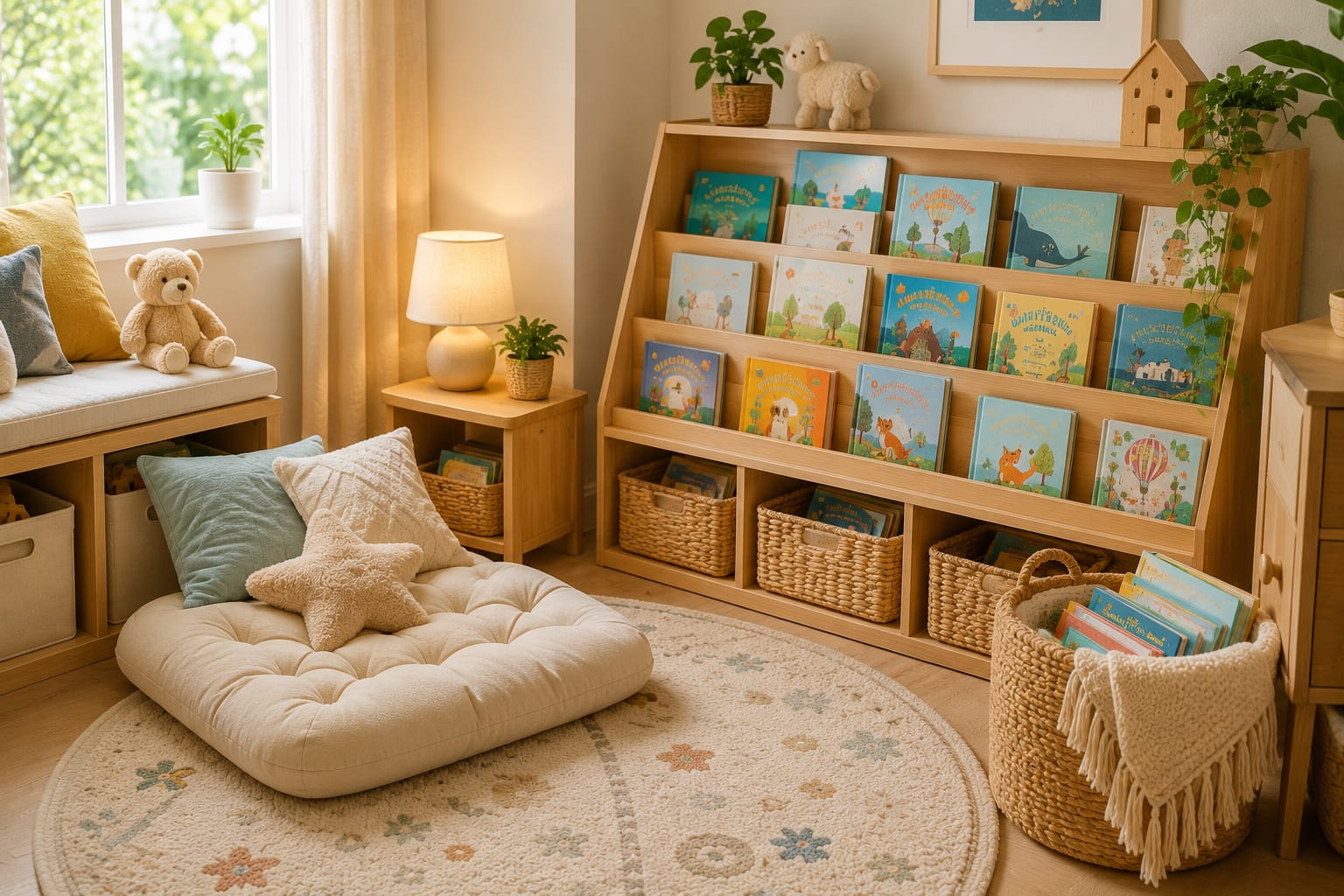
Expert Tip: Position the reading nook near a window for natural light during the day and add a small clip-on lamp for evening reading. Good lighting in a reading nook makes it genuinely inviting rather than just decorative.
6. Use an Over-the-Door Organizer for Small Items
The back of the door is free storage that most people never use. An over-the-door organizer with clear pockets holds art supplies, small toys, and hair accessories. Plus, I’ve found it especially helpful in small kids rooms where every inch already counts.
Bonus Tip: Assign specific pockets to specific categories and add a small label to each pocket. Without labels, the pockets gradually fill with random items and the organizer loses its usefulness within weeks.
7. Designate a Homework and Art Zone
School-age children need a dedicated space for homework, drawing, and creative projects. A small desk or table with a chair, a pencil cup, and a simple supply organizer keeps school work separate from play. I’ve found that children with a consistent homework spot finish assignments more independently. Working at the kitchen table surrounded by household activity makes focus much harder. These organization tips also work for adults. Explore our Small Home Office Organization Ideas for more workspace inspiration.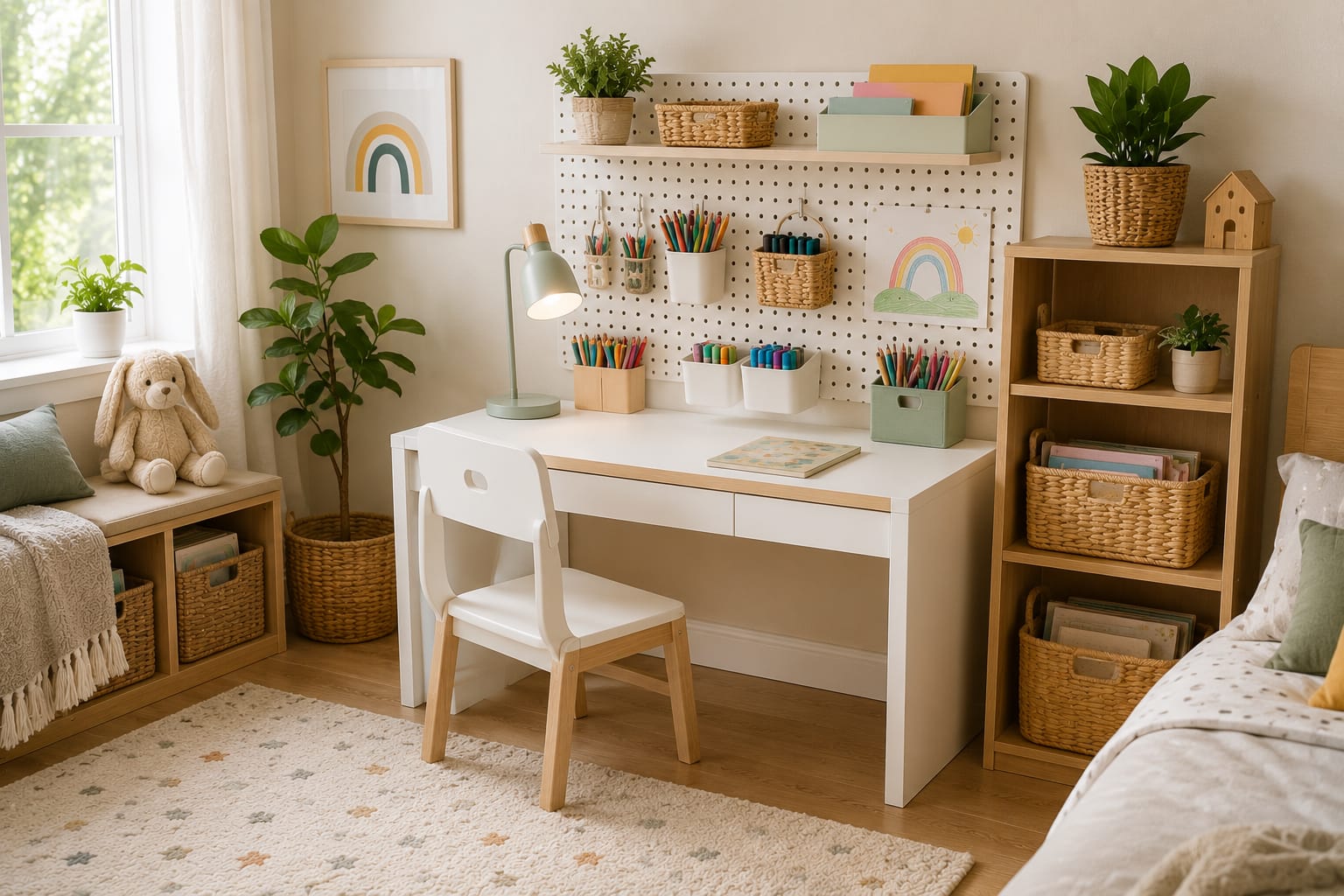
Bonus Tip: Keep the homework zone stocked with only school supplies. Art supplies, craft kits, and hobby materials belong in their own separate storage so the homework zone stays clean and focused.
8. Store Stuffed Animals in a Hammock or Net
Stuffed animals are one of the biggest space problems in any kids room. A corner hammock holds dozens of them without touching the floor, shelves, or bed. In addition, I’ve found that kids enjoy seeing their stuffed animals displayed up high and are happy to keep them there.
Bonus Tip: Mount the hammock high enough that the stuffed animals clear the bed and furniture below. A hammock hung too low creates a cluttered visual rather than a clean display.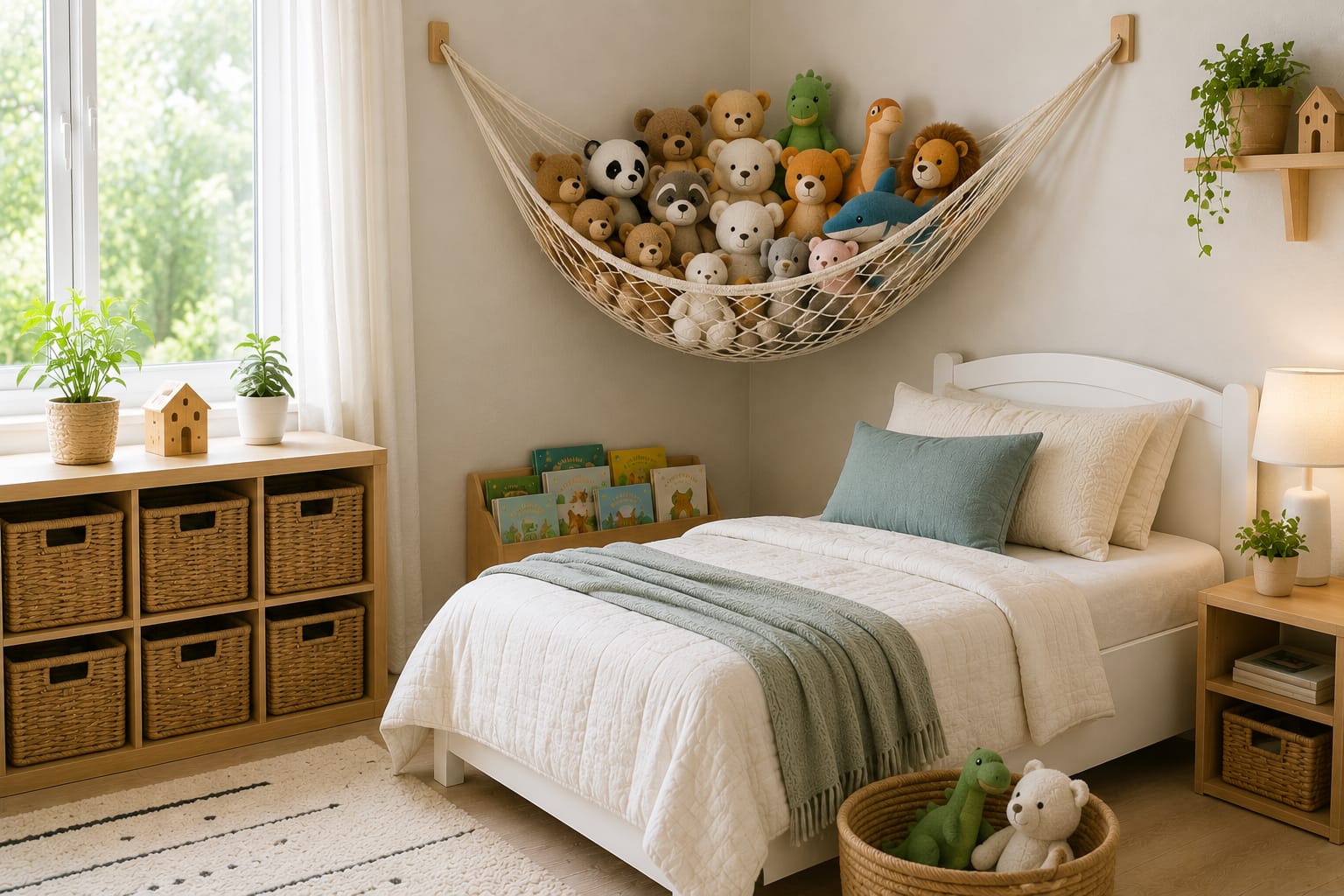
Budget Tip: A bungee cord toy hammock costs $10 to $20 at most home goods stores and holds far more stuffed animals than most parents expect. It installs in minutes with two corner hooks and requires no tools beyond a stud finder.
9. Maximize Space With Under-Bed Storage
The space under the bed is one of the most underused spots in any kids room. Low rolling bins fit under most bed frames and hold seasonal clothes, extra bedding, or rotation toys. I’ve found under-bed storage works best for things kids don’t need every single day.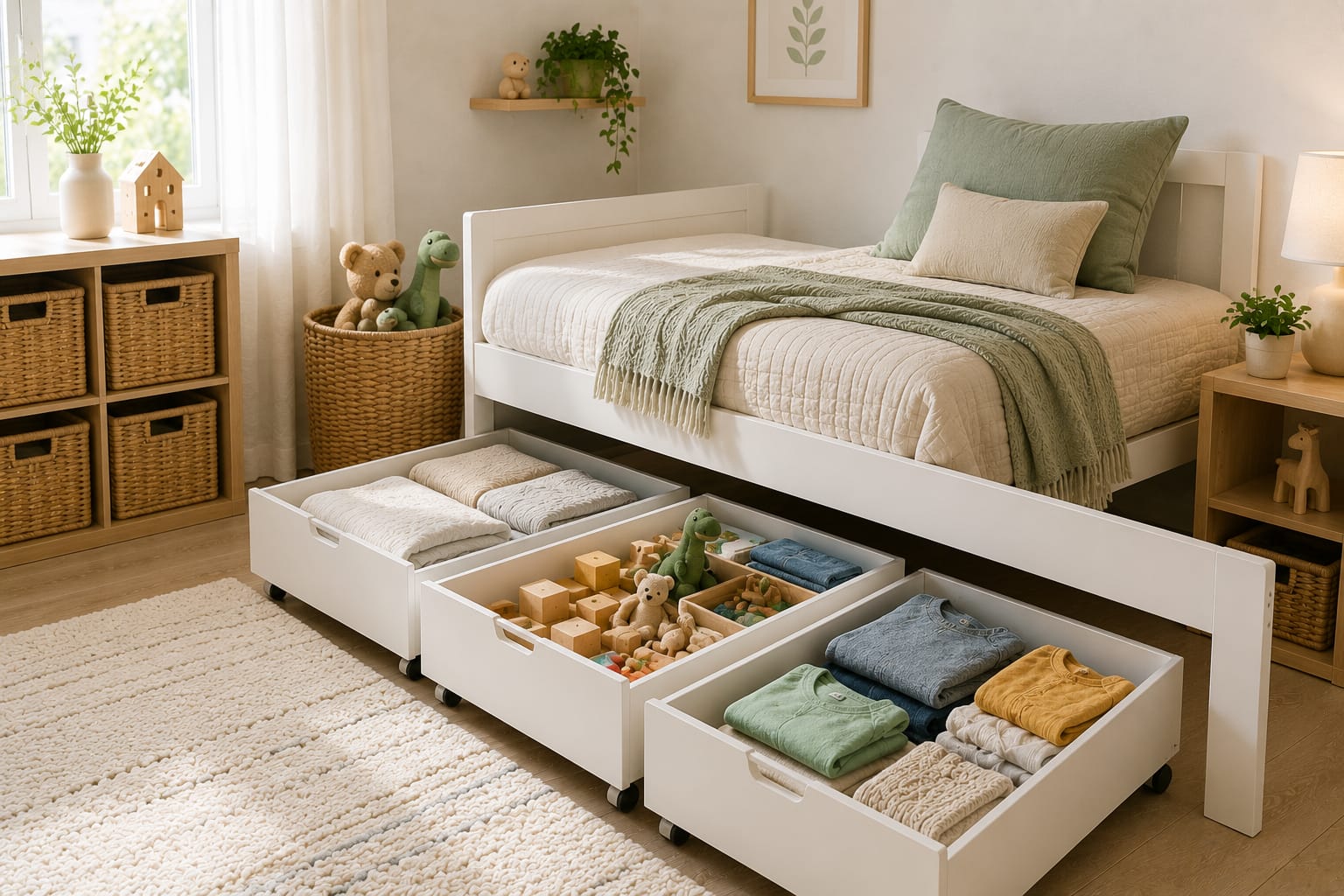
Bonus Tip: Choose under-bed storage containers with wheels so children can pull them out independently. Fixed containers that require an adult to retrieve create more work and discourage kids from using the system.
10. Create a Dress-Up Station
If your child loves dress-up play, a dedicated dress-up station keeps costumes, accessories, and props organized in one place. A low coat rack for costumes, a small bin for accessories, and a child-height mirror create a complete play zone. It contains the mess rather than letting it spread across the room.
Bonus Tip: Rotate dress-up items seasonally to keep the station fresh and manageable. Store off-season costumes in a labeled bin in the closet and swap them out every few months to keep the active collection from becoming overwhelming.
Expert Tip: Mount the child-height mirror at the dress-up station with safety mirror film or use a shatter-resistant plastic mirror. Standard glass mirrors in young children’s rooms are a safety risk that is easily avoided with safer alternatives.
11. Install a Pegboard to Organize Art and Craft Supplies
A small pegboard in the art zone keeps scissors, tape, markers, and rulers visible and accessible without taking up counter or drawer space. I’ve found that children are more creative during art time when supplies are easy to see and reach. They don’t need to ask for help every few minutes.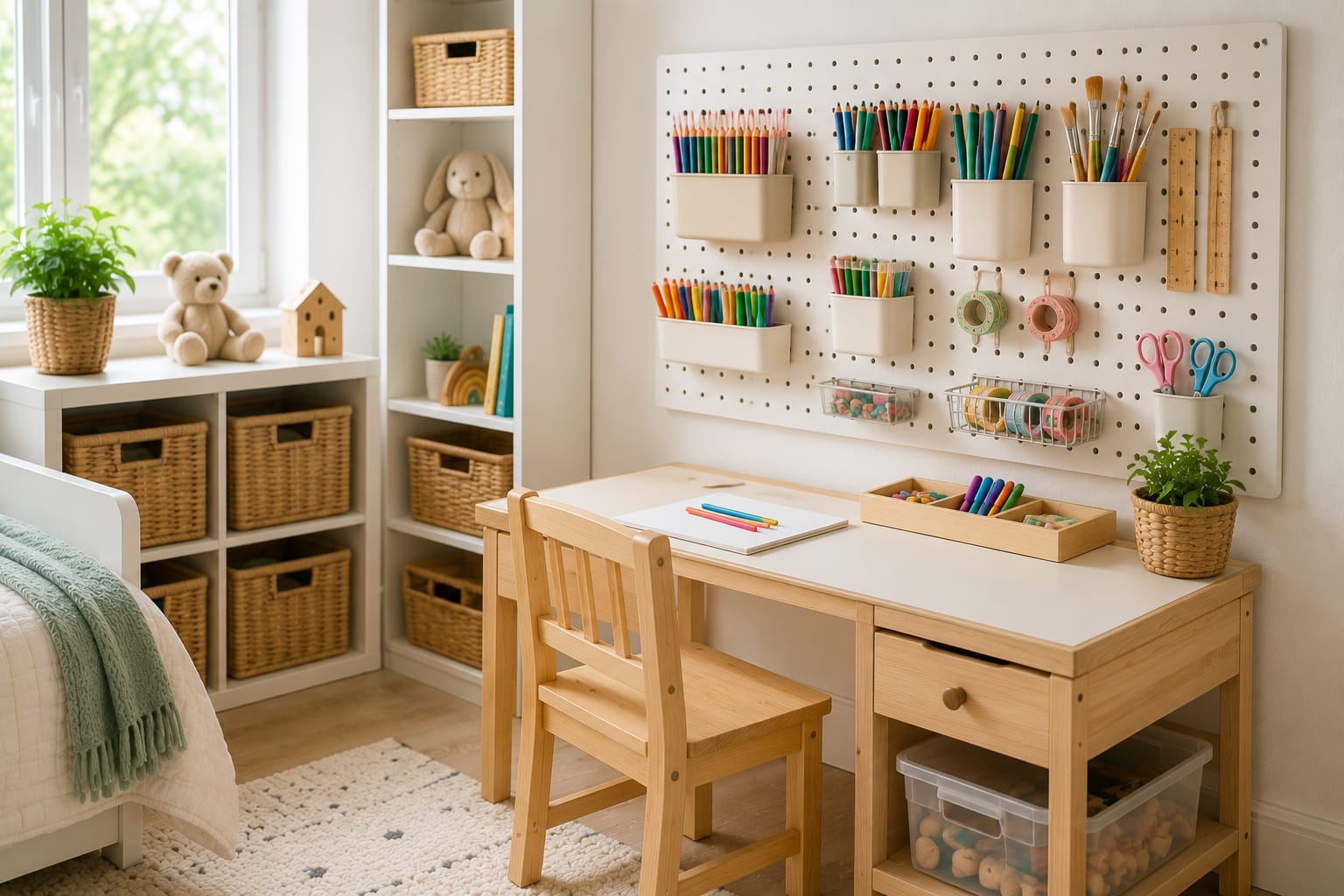
Bonus Tip: Use a pegboard with small shelves for jars holding markers, colored pencils, and brushes rather than relying on hooks alone. Upright storage for writing tools prevents them from rolling off surfaces and getting lost under furniture.
12. Use a Clothing Cubby System for Easy Outfit Selection
A cubby system with one slot per day of the week lets children pick their own outfits in advance. It takes the morning rush completely out of the equation. I’ve found that families who use a weekly clothing cubby system experience significantly fewer morning battles. That way, children make their clothing choices the night before with more time and less pressure. Need more clothing storage inspiration? Explore our Closet Organization Ideas for practical ways to maximize closet space.
Bonus Tip: Label each cubby with the day of the week and let your child fill it on Sunday evenings. Giving children ownership of this task builds independence and reduces the cognitive load on parents during busy school mornings.
13. Mount a Wall-Mounted Desk to Save Floor Space
In a small kids room, a wall-mounted fold-down desk takes up zero floor space when closed and provides a full work surface when open. This works especially well in shared kids rooms where two children need separate workspace but the room cannot accommodate two full desks on the floor.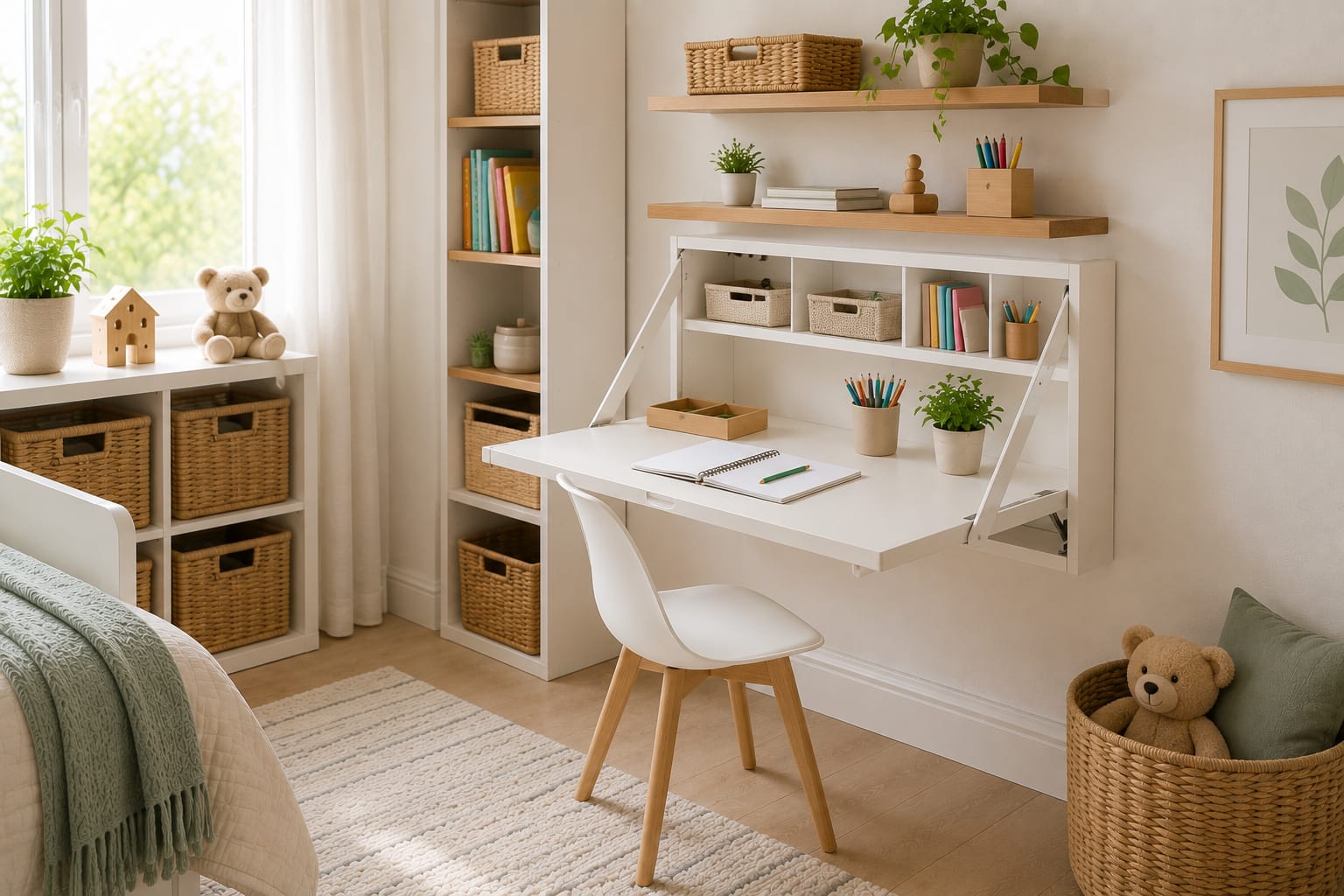
Bonus Tip: Add a pegboard or small shelf above the fold-down desk so supplies are stored on the wall rather than on the desk surface itself. A wall-mounted desk works best when the wall does the storage work and the desk surface stays clear for active use.
Expert Tip: Mount a fold-down desk at the correct height for your child’s current age and adjust as they grow. A desk that is too high causes shoulder tension, and a desk that is too low causes slouching. The ideal desk height puts the child’s arms at a 90-degree angle when seated.
14. Label Everything at Kids’ Eye Level for Better Independence
Labels in a kids room serve a different purpose than labels in an adult space. They are not just organizational tools. They are reading practice, independence builders, and communication devices. I’ve found that labeled storage in kids rooms maintains itself far longer than unlabeled storage because children at every reading level, even pre-readers with picture labels, know exactly where things belong.
Bonus Tip: Involve your child in making the labels. Whether they draw a picture, choose a sticker, or type a word, personalizing the labels gives children ownership of the system and increases the likelihood they will actually use it consistently.
15. Create a Book Return Bin Near the Door
A small bin or basket near the kids room door specifically for library books, school books, and items that need to leave the house prevents these items from getting mixed in with personal books and toys. I’ve found that a dedicated “things that go back” bin eliminates most of the pre-school morning panic about missing permission slips and overdue library books. Looking for more smart storage ideas? Explore our Laundry Room Organization Ideas for practical ways to organize everyday essentials
Bonus Tip: Check the return bin every Sunday evening as part of the weekly room reset. Anything that needs to go back to school gets placed in the backpack or school bag immediately so nothing is forgotten on Monday morning.
16. Use Vertical Space Smartly With a Tall Bookcase
In a small kids room, a tall narrow bookcase uses vertical space efficiently without expanding the floor footprint. A 72-inch tall bookcase with five or six shelves provides significant storage for books, bins, games, and display items in a footprint as small as 24 inches wide. I’ve found that tall bookcases are one of the most space-efficient storage solutions for kids rooms of any size.
Bonus Tip: Secure all tall bookcases to the wall with anti-tip straps. This is a critical safety measure for any bookcase over 36 inches tall in a room used by children. Anti-tip straps cost under $10 and install in minutes.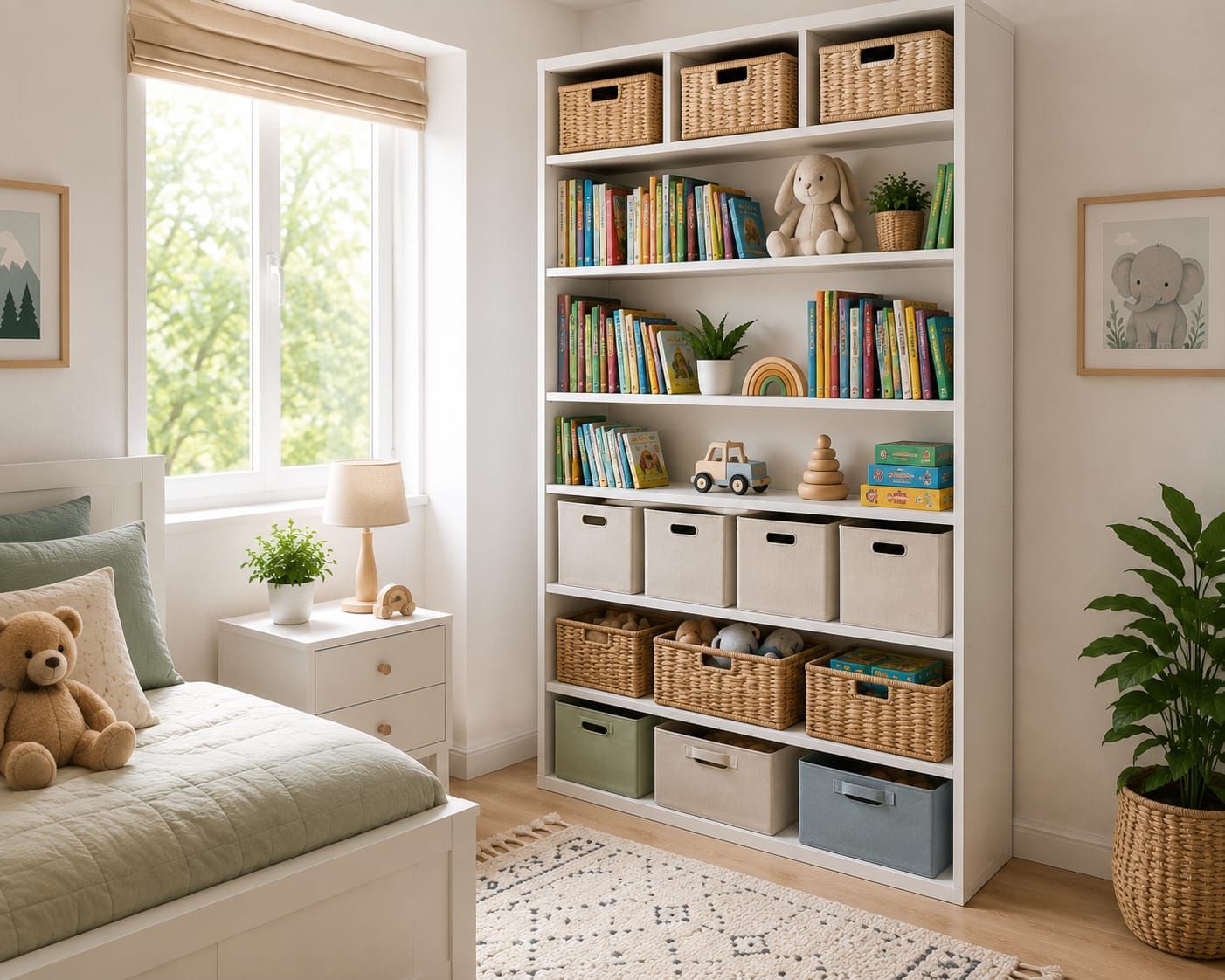
Safety Tip: The Consumer Product Safety Commission recommends anchoring all freestanding furniture over 30 inches tall to wall studs in children’s rooms. Unsecured furniture is one of the leading causes of furniture-related injuries in young children. Always anchor first before adding items to the shelves.
17. Organize Toys by Play Type, Not by Appearance
Group toys by how they are played with, not by color or size. Blocks with blocks. Vehicles with vehicles. Art supplies with art supplies. I’ve found that kids navigate this kind of system naturally. That is because they think about what they want to do, not what things look like.
Bonus Tip: Rotate toy categories in and out of accessible storage every few weeks. Toys that have been out of sight for a month feel new again when they reappear, which extends the life of your child’s existing toy collection significantly.
18. Store Board Games Vertically
Board games stacked flat on a shelf create an unstable pile that collapses every time you remove one from the middle. Storing board games vertically like books, spine facing out, keeps them stable, readable, and easy to pull out without disturbing the others. I’ve found that a vertical board game shelf dramatically reduces the floor-level mess that happens when a collapsed game stack sends pieces everywhere.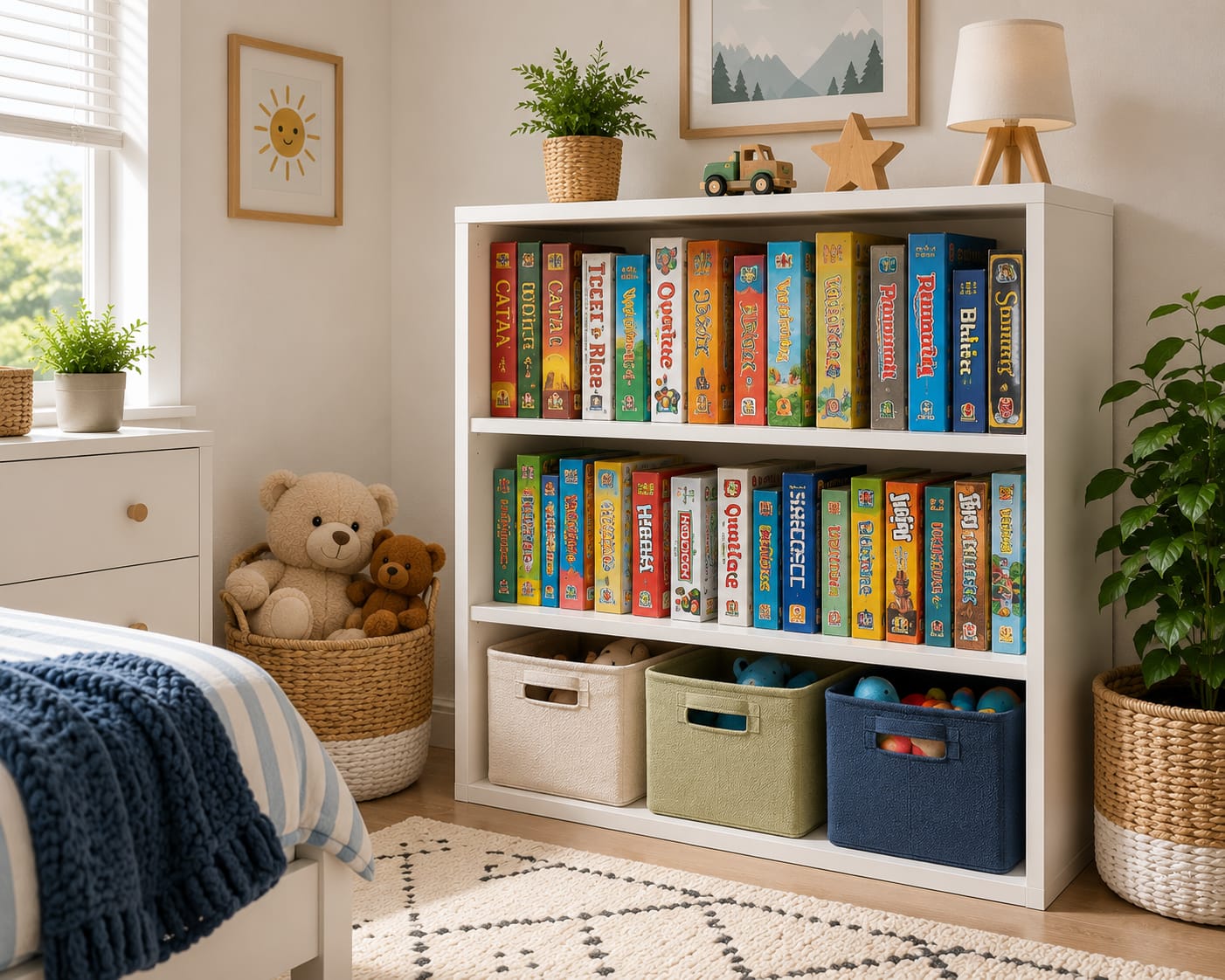
Bonus Tip: Use a strip of velcro on the back of each game box to keep the lid attached to the base during storage. Loose lids that separate during storage lead to mixed-up pieces and lost components that render games unplayable.
19. Build a Dedicated Lego and Small Parts Station
Lego and other small building toys require their own dedicated storage system because loose bricks scattered in a general toy bin are nearly impossible to sort through. A set of shallow, clearly labeled drawers sorted by color or piece type keeps Lego accessible and the floor clear of stray pieces. I’ve found that children build more creatively and more independently when their pieces are sorted and easy to find.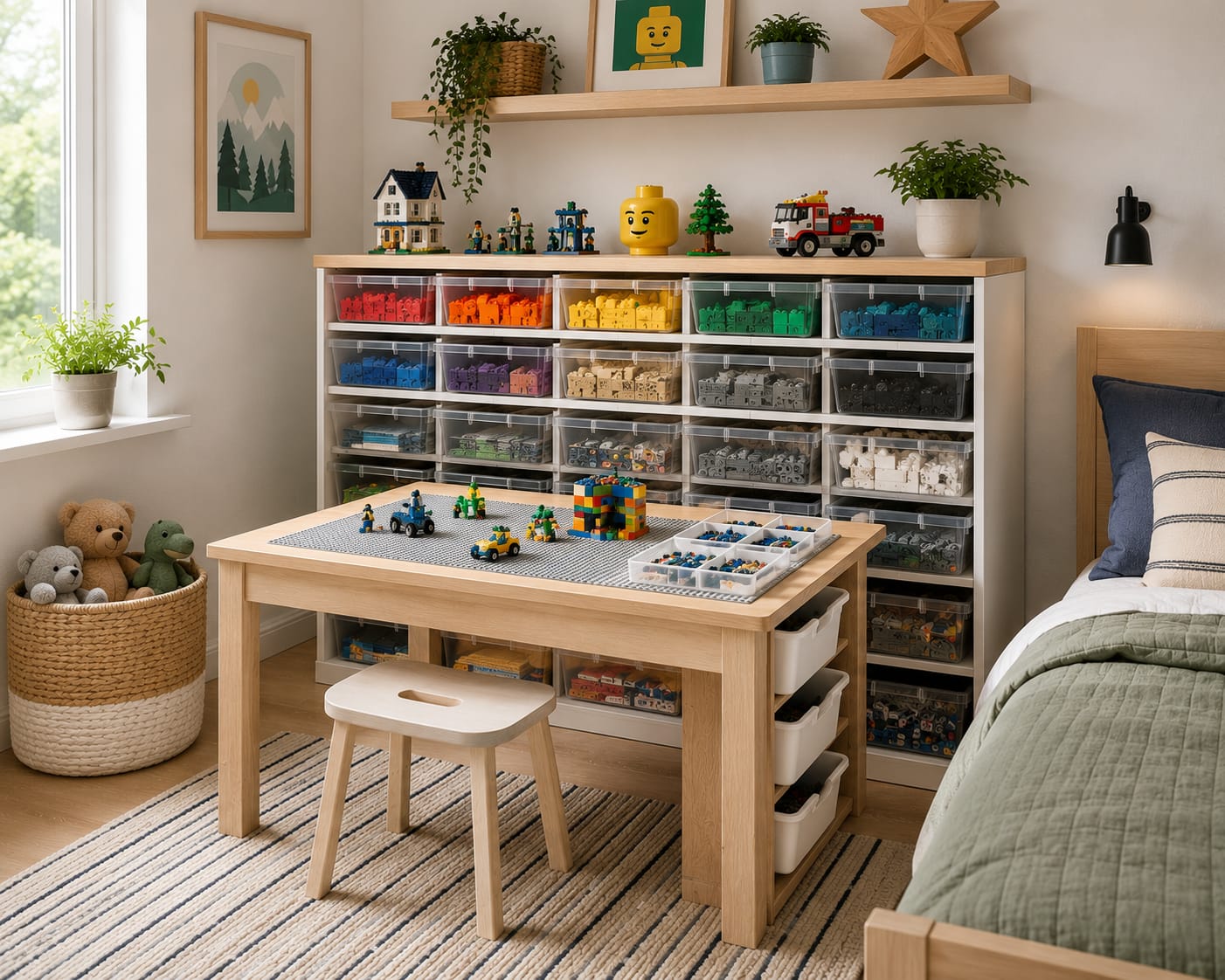
Bonus Tip: Add a large flat tray or a dedicated Lego mat to the building station so construction happens in a contained area. When play is done, the tray or mat slides back to its spot with the day’s creation still intact and the floor stays clear.
Pro Tip: The most important thing you can do for kids room organization is to match the system to the child, not to a magazine photo. An organization system that works for a seven-year-old obsessed with art looks completely different from one that works for a nine-year-old who collects sports cards. Ask your child what frustrates them about the current setup before making changes.
20. Add a Low Hook Rail for Bags and Jackets
A low hook rail inside the kids room or just inside the closet gives children a place to hang their backpack, jacket, sports bag, and reusable water bottle holder within easy reach. I’ve found that children who have a dedicated hook for their school bag are far more consistent about hanging it up rather than dropping it on the floor when they come home.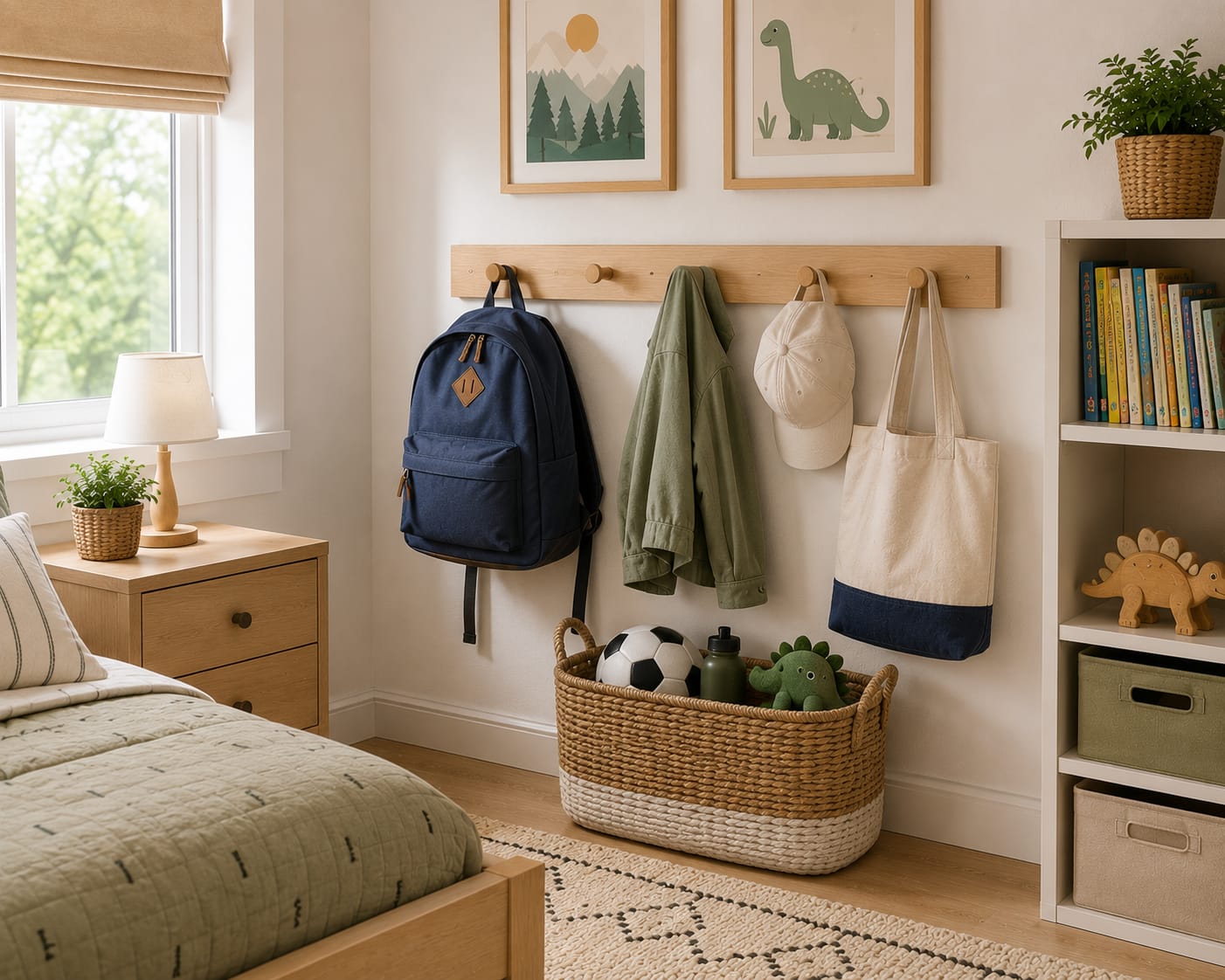
Bonus Tip: Mount the hook rail at 36 to 42 inches from the floor for children between ages four and ten. Hooks that are too high become an adult storage area by default, and hooks that are too low create a trip hazard when bags hang to the floor.
21. Try a Monthly Toy Rotation System to Keep Things Fresh
A toy rotation system keeps only a portion of your child’s toys accessible at any given time while storing the rest out of sight. When accessible toys are rotated out every three to four weeks, the “stored” toys feel brand new when they return. I’ve found that children play more deeply and more imaginatively with a smaller, rotated selection than with access to everything at once.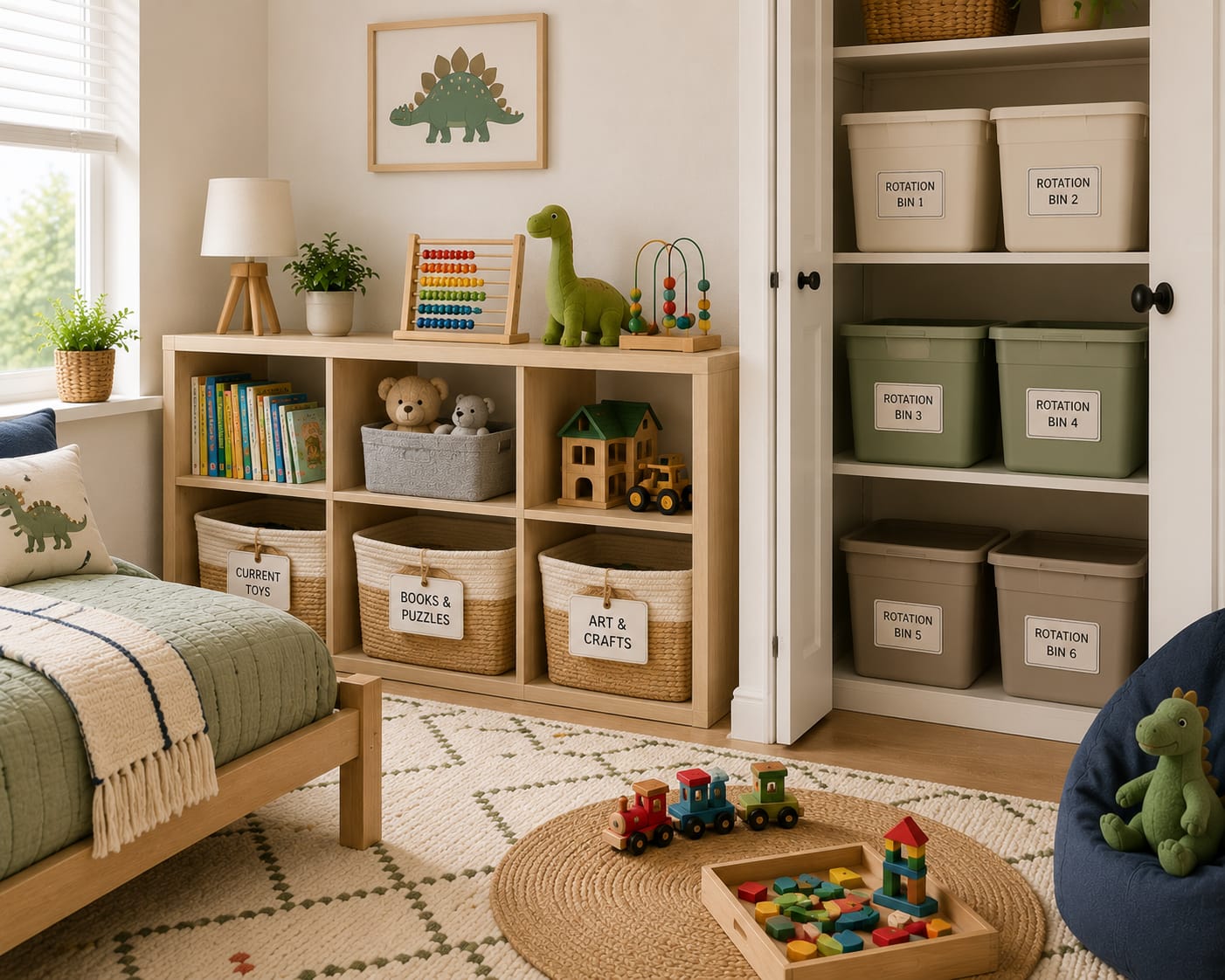
Bonus Tip: Store rotation bins in a closet, under the bed, or in a garage storage area. Out-of-sight bins are essential for the rotation to work. If children can see or reach the stored toys, the rotation loses its effectiveness almost immediately.
22. Involve Kids in the Weekly Room Reset
A five-minute weekly room reset done together with your child reinforces organizational habits and prevents the slow accumulation of clutter that leads to major weekend cleanups. I’ve found that children who participate in weekly resets develop a stronger sense of ownership over their space. As a result, they maintain tidier rooms between resets than children who have their rooms cleaned for them For more bedroom decluttering tips, explore our Bedroom Organization Ideas.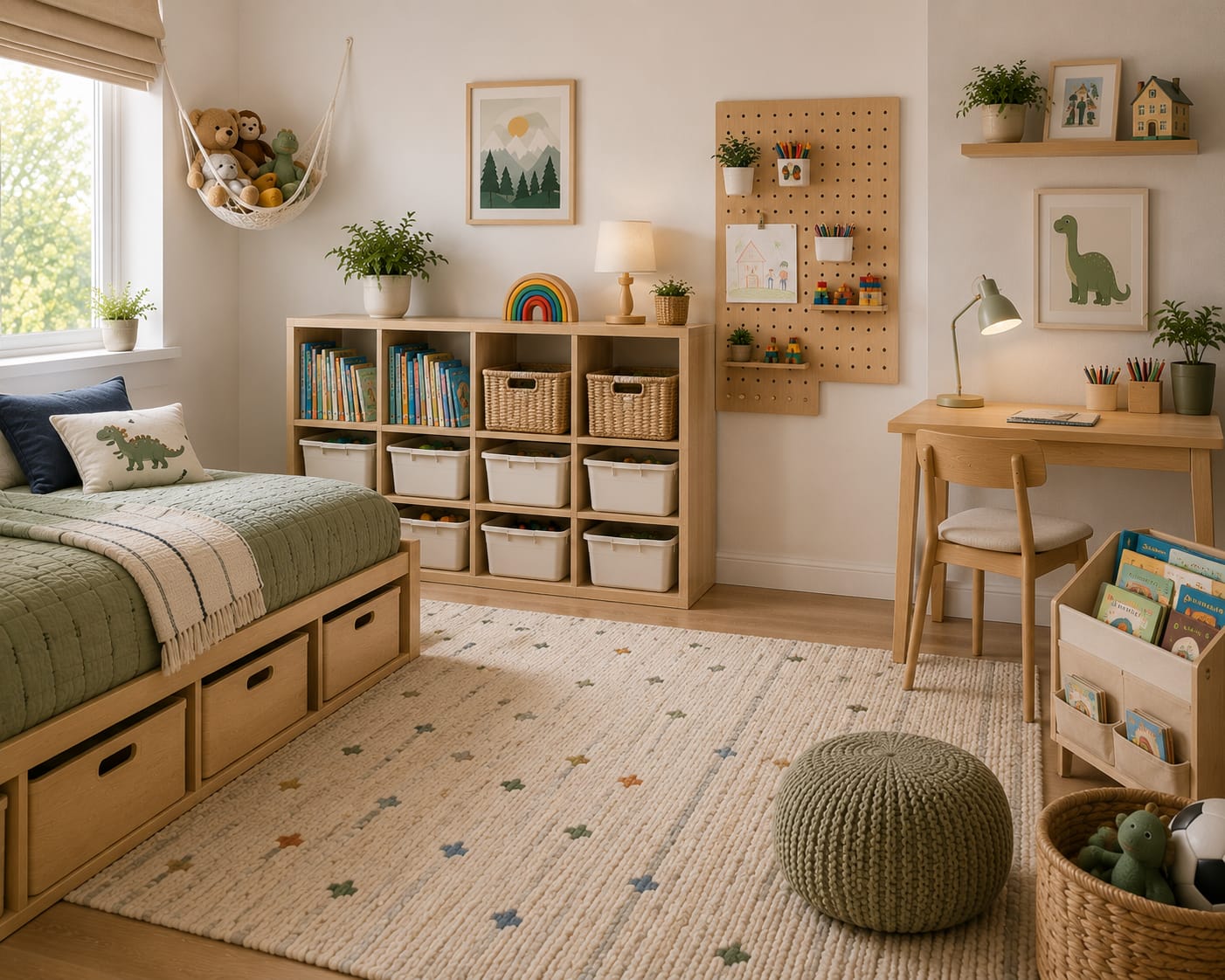
Bonus Tip: Turn the weekly reset into a game with a timer. Seeing how much the room can be tidied in five minutes makes it feel manageable rather than overwhelming and is often genuinely fun for younger children.
23. Reassess the System Every Six Months
Children change rapidly, and the organizational system that worked perfectly for a four-year-old will be completely wrong for a six-year-old. I’ve found that a twice-yearly room reset catches outgrown toys, ill-fitting clothes, and storage systems that no longer match how the child uses the room. Meanwhile, it also gives you a natural moment to donate or sell items before they pile up.
Bonus Tip: Use the twice-yearly reassessment as an opportunity to involve your child in setting new goals for their space. Asking a child what they wish was easier about their room often reveals simple fixes that parents would never have thought of on their own.
Common Mistakes to Avoid
Buying storage products before decluttering first is the most common kids room mistake. Organizing clutter just creates tidier clutter. Always purge first.
Choosing storage based on appearance rather than function leads to systems that look great but children never use. Prioritize accessibility and simplicity over aesthetics.
Putting storage out of kids’ reach means children cannot maintain the system independently and will always need adult help to put things away.
Skipping labels means even the best-intentioned organization system falls apart within weeks as items drift to wherever is most convenient.
Trying to organize everything at once overwhelms both parents and children. Tackle one zone at a time and let the system develop gradually rather than attempting a complete transformation in a single weekend.
Quick Maintenance Tips
- Do a five-minute room tidy together every evening before bed to prevent overnight accumulation
- Rotate toys every three to four weeks to keep the accessible selection manageable
- Reassess and purge outgrown items at the start of each new school year
- Check under the bed and in closet corners monthly for items that have migrated out of their zones
- Celebrate tidy room habits with specific praise rather than rewards to build intrinsic motivation
Quick Reference Checklist
- ✅ Every toy category has its own labeled bin or container
- ✅ All storage is accessible at kids’ height for independent use
- ✅ Stuffed animals, books, and board games each have a dedicated home
- ✅ A weekly five-minute reset is part of the household routine
- ✅ The system is reassessed every six months as the child grows
Recommended Products for Kids Room Organization
Fabric storage bins with labels: Soft-sided bins are safer in kids rooms than hard plastic, hold a large volume of toys, and look tidy on open shelves when kept in matching sets.
Wall-mounted low shelving: Open shelves at kids’ height create accessible, visible storage for books and frequently used items without requiring children to open drawers or lift lids.
Corner stuffed animal hammock: A bungee net hammock mounted in a high corner displays stuffed animals attractively and keeps them completely off the floor and furniture.
Under-bed rolling storage bins: Low-profile bins on wheels slide easily under standard bed frames and give children independent access to seasonal and rotation items.
Toy rotation bins with lids: Opaque bins with secure lids stored in a closet or garage keep rotation toys out of sight and out of mind until it is time to swap them back in.
Anti-tip furniture straps: A critical safety product for any bookcase, dresser, or shelf over 30 inches tall in a child’s room. Every piece of tall furniture should be anchored before anything is placed on it.
Frequently Asked Questions
How do I organize a kids room on a budget? Start with labels, a toy purge, and repositioning existing storage to kids’ height. These three steps cost nothing and make an immediate difference. Add bins and shelves gradually as budget allows.
What is the best storage for a small kids room? Vertical shelving, under-bed rolling bins, and over-the-door organizers maximize storage in a small footprint. Focus on wall space and under-furniture space before adding any floor-level furniture.
How do I get kids to keep their room clean? Make cleanup easier than mess-making by providing labeled, accessible, simple storage. Children maintain tidy rooms when the system matches their age and abilities, not when it matches adult organizational standards.
How often should I reorganize a kids room? A quick tidy daily, a full reset weekly, and a thorough reassessment every six months keeps most kids rooms functional without major overhauls. The twice-yearly reassessment is the most important maintenance step.
At what age can kids organize their own room? Children as young as two can participate in cleanup when storage is accessible and categories are clear. By age five or six, most children can maintain a simple organizational system with minimal adult prompting if the system was designed with their abilities in mind.
Conclusion
An organized kids room is not about perfection. It is about building a system kids can actually use. Start with one idea today. Add picture labels to the toy bins or install a low hook rail for backpacks. Let the system grow from there. These kids room organization ideas work for every age, every budget, and every bedroom size.
Ready to organize the rest of your home? Explore our guides on [Bedroom Organization Ideas], [Laundry Room Organization Ideas], [Home Office Organization Ideas], and [Garage Organization Ideas] to create a clutter-free home one room at a time.

Hi, I’m Shankar, the founder of Nestory Home. I share practical home organization, storage, and home decor ideas to help you create a clean, functional, and beautiful home. Every guide is designed to be simple, budget-friendly, and easy to put into practice.